




How to Gain Muscle Over 60: What Actually Works
If you’ve hit 60 and started wondering whether building muscle is still possible, the short answer is yes — and the longer answer is what this guide is all about.
This is for anyone in their 60s or beyond who wants to get stronger, feel better in their body, and stop feeling like age is working against them. You don’t need to be an athlete. You don’t need a gym membership from day one. You just need the right information and a plan that actually fits your life.
Here’s what we’ll walk through together: how muscle building after 60 actually changes (so you’re not comparing yourself to your 30-year-old self), which strength training methods for seniors are proven to deliver real results without wrecking your joints, and how protein intake for muscle gain over 60 plays a bigger role than most people expect.
No fluff, no bro-science, no advice that ignores how aging actually works. Just practical stuff you can start using this week.
Table of Contents
Understanding How Muscle Building Changes After 60
Why Muscle Loss Accelerates With Age and What It Costs You
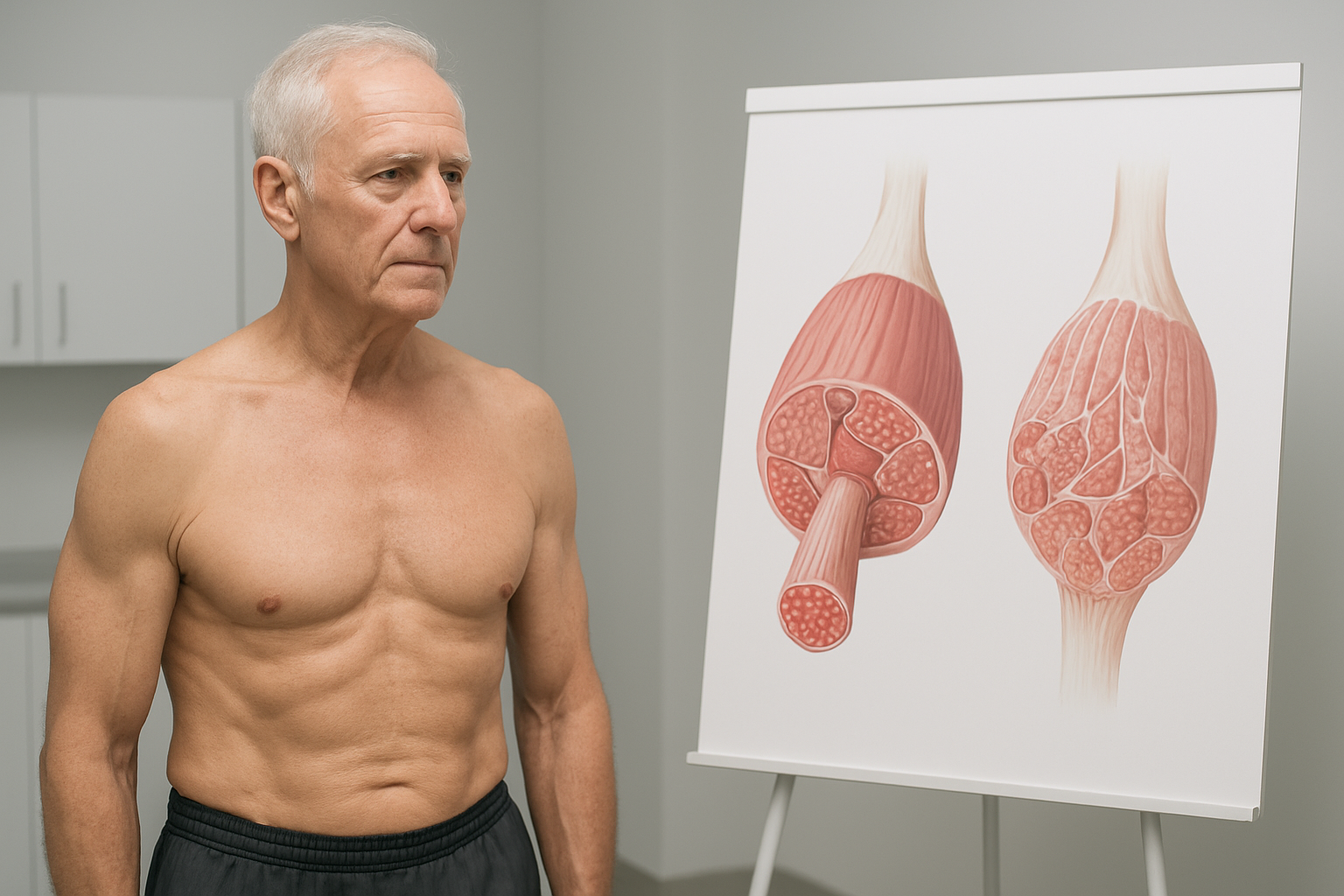
Starting somewhere around your 35th birthday, your body begins slowly losing muscle mass. By the time you hit 60, that process has picked up serious speed. The medical term is sarcopenia, and it’s not just a fitness problem — it’s a quality-of-life problem.
After 60, most people lose somewhere between 1% and 3% of their muscle mass every single year if they’re not actively doing something to fight it. That might not sound dramatic, but run the numbers over a decade and you’re looking at a very different body — one that’s weaker, slower, and more vulnerable to injury.
Here’s what that muscle loss actually costs you in real life:
- Reduced strength — Everyday tasks like carrying groceries, getting up from a chair, or climbing stairs become noticeably harder
- Slower metabolism — Muscle is metabolically active tissue, so losing it means your body burns fewer calories at rest, making weight gain easier
- Increased fall risk — Weaker legs and reduced balance dramatically raise the chances of a fall, which is one of the leading causes of serious injury in older adults
- Loss of independence — Over time, sarcopenia is directly linked to difficulty with basic self-care activities
- Higher disease risk — Low muscle mass is associated with insulin resistance, cardiovascular disease, and a shorter lifespan overall
The good news? This is not inevitable. Muscle building after 60 is absolutely possible, and strength training has been shown in study after study to reverse sarcopenia even in people in their 70s and 80s. The key is understanding what’s changed so you can train smarter, not just harder.
How Hormonal Shifts Affect Your Ability to Build Muscle
Hormones play a massive role in how your body builds and maintains muscle, and after 60, the hormonal landscape shifts in ways that make muscle growth harder — but not impossible.
The Main Hormonal Changes to Know About
| Hormone | What Happens After 60 | How It Affects Muscle |
|---|---|---|
| Testosterone | Declines significantly in both men and women | Less testosterone means reduced muscle protein synthesis and slower recovery |
| Growth Hormone (GH) | Production drops sharply | GH drives muscle repair and fat metabolism; lower levels slow both |
| IGF-1 | Decreases alongside GH | IGF-1 directly stimulates muscle cell growth and repair |
| Estrogen | Drops rapidly in women after menopause | Affects muscle function, inflammation, and bone density |
| Cortisol | Can become relatively elevated compared to anabolic hormones | High cortisol promotes muscle breakdown, especially with poor sleep or high stress |
What this hormonal picture creates is a state called anabolic resistance — your muscles become less sensitive to the signals that normally trigger growth. When you eat protein, your body doesn’t generate the same muscle-building response it would have at 30. When you lift weights, the anabolic hormone spike is smaller and shorter.
This doesn’t mean building muscle in your 60s is a lost cause. It means you have to be more deliberate about the inputs — specifically, how much protein you eat, how you structure your training, and how well you recover. The biology has changed, but the levers are still there to pull.
What You Can Actually Do About It
- Lift heavy enough to matter — Moderate to high resistance loads (not light bands and endless reps) are the most potent stimulus for triggering muscle protein synthesis even in the presence of lower anabolic hormones
- Prioritize protein at every meal — Because of anabolic resistance, older adults need more protein per meal, not less, to get the same muscle-building response
- Manage stress actively — Chronically elevated cortisol is a muscle killer; sleep, recovery, and stress reduction aren’t optional extras
- Talk to your doctor about hormone levels — If you’re feeling exhausted, losing muscle rapidly, or struggling to make any progress, getting bloodwork done is worth the conversation
Why Recovery Takes Longer and How to Work With It
One of the most frustrating parts of strength training for seniors is discovering that what worked at 40 no longer works at 60. You hit the gym hard, feel great in the moment, and then spend the next three days barely able to walk down stairs. Recovery has genuinely changed, and pretending otherwise is a recipe for injury.
Why Does Recovery Slow Down?
Several things happen simultaneously as you age that extend the time your body needs between training sessions:
- Reduced muscle protein synthesis rate — After a workout, older muscles rebuild more slowly than younger muscles, even with adequate protein intake
- Decreased satellite cell activity — Satellite cells are the repair crew for muscle tissue; their population and responsiveness decline with age
- Increased inflammation — Exercise creates controlled inflammation as part of the adaptation process, but aging tips the inflammatory balance, making the cleanup take longer
- Slower glycogen replenishment — Your muscles take more time to refuel after being depleted during exercise
- Stiffer connective tissue — Tendons and ligaments are less elastic and more injury-prone, requiring more careful and gradual stress application
A Smarter Approach to Recovery After 60
The instinct many people have is to push through fatigue or feel guilty about rest days. That’s the wrong instinct entirely. Recovery is where muscle growth happens — training is just the trigger.
Practical ways to work with your recovery, not against it:
- Allow 48–72 hours between training the same muscle group — A Monday/Thursday or Monday/Wednesday/Friday split works better than training every day
- Sleep 7–9 hours every night — Growth hormone is released primarily during deep sleep, and sleep is when the bulk of muscle repair occurs
- Eat protein within 1–2 hours after training — The post-workout window matters more for older adults because the anabolic response is shorter and less robust
- Use active recovery on off days — Light walking, stretching, or swimming keeps blood moving through muscles without adding stress
- Listen to joint pain specifically — Muscle soreness is normal; sharp or persistent joint pain is not and deserves immediate attention
- Hydrate consistently — Older adults have a reduced thirst sensation, which means dehydration sneaks up faster and slows cellular recovery processes
The athletes who make the best long-term progress with resistance training for aging adults are almost always the ones who treat recovery as seriously as the training itself. It’s not laziness — it’s biology, and working with your biology is how you keep building muscle over 60 for years without burning out or getting hurt.
Setting Realistic and Motivating Muscle-Building Goals

What Meaningful Progress Looks Like at This Stage of Life
When you’re building muscle after 60, progress doesn’t always look the way it did at 35. And honestly, that’s not a bad thing — it just means you need to reframe what “winning” actually means.
For older adults, meaningful muscle-building progress shows up in ways that are genuinely life-changing:
- Carrying groceries without getting winded or sore the next day
- Getting up from a chair or floor with noticeably more ease
- Climbing stairs without your knees complaining
- Sleeping better because your body is actually tired from good work
- Feeling more stable and confident on your feet
These aren’t consolation prizes. They’re the real markers of strength gains that matter — the kind that directly improve your daily life and protect your independence as you age.
Yes, you can absolutely build visible muscle in your 60s. Research consistently shows that older adults respond to resistance training and can increase muscle mass, even well into their 70s and 80s. But the timeline looks different. Instead of dramatic body composition changes in 4–6 weeks, you might see meaningful strength improvements in 6–8 weeks and visible changes in muscle tone closer to 3–4 months of consistent training.
Setting goals that reflect this reality keeps you motivated rather than frustrated. Think in terms of what your body can do, not just how it looks.
How to Measure Gains Beyond Just the Scale
The scale is arguably the least useful tool for tracking muscle-building progress after 60. Here’s why: as you build muscle while losing fat (which is extremely common when you start strength training), your weight might barely budge — yet your body composition is shifting significantly in your favor.
Relying only on the scale will make you feel like nothing is working when everything is actually going exactly right.
Here are far more useful ways to track your progress:
Functional Strength Markers
| Test | What to Measure |
|---|---|
| Chair stand test | How many times you can stand from a chair in 30 seconds |
| Grip strength | Use a hand dynamometer or notice changes in how firmly you grip things |
| Stair climbing | How winded you get walking up two flights |
| Carry test | How far and how long you can carry a moderately heavy bag |
These functional tests give you a real-world picture of how your strength is improving in ways that actually matter day to day.
Body Measurements
Take measurements every 4 weeks in these areas:
- Upper arms (flexed)
- Chest
- Thighs
- Waist
You might notice your arms and thighs getting larger while your waist shrinks — that’s muscle growth happening right in front of you, invisible to the scale.
Performance in the Gym
Track what you’re lifting. Even small increases in weight or reps are genuine evidence of muscle adaptation. Going from a 15-pound dumbbell to a 20-pound dumbbell on a bicep curl isn’t small — that’s a 33% strength increase.
Keep a simple workout log. It doesn’t need to be fancy — even a notes app on your phone works. Look back every 6–8 weeks and you’ll often be surprised by how far you’ve come.
How You Feel Day to Day
This one doesn’t get enough credit. Ask yourself:
- Do I feel less sore after physical activity than I used to?
- Am I sleeping more deeply?
- Do I have more energy in the afternoons?
- Am I less stiff in the mornings?
These are signs that your muscles and nervous system are adapting — which is exactly what you want when building strength after 60.
Why Consistency Beats Intensity for Long-Term Results
Here’s one of the biggest mistakes people make when they start strength training for seniors: they go too hard, too fast, end up injured or burned out, and then quit. And then they feel like they failed when really it was just a flawed approach.
The truth about muscle growth in older adults is that your ability to recover is the real limiting factor — not your effort or your desire to work hard. Recovery slows with age. Connective tissue takes longer to repair. Your nervous system needs more rest between intense sessions than it did 20 or 30 years ago.
This doesn’t mean you should train lightly. It means you should train smart and consistently.
Think About It This Way
Two workouts a week, every single week, for a year = 104 workouts
Three intense workout weeks followed by two weeks off due to an injury or burnout = significantly fewer workouts, slower progress, and a frustrating experience that makes you less likely to get back to it.
Consistency compounds. Every session adds a small layer of strength and muscle adaptation. Miss a week here and there and it’s no big deal. But showing up reliably over months is what actually transforms your body.
Practical Tips to Stay Consistent With Strength Training
- Schedule workouts like appointments — put them in your calendar and treat them as non-negotiable
- Start with 2 sessions per week if you’re new or returning to training; that’s enough to see real muscle-building results
- Keep sessions manageable — 30 to 45 minutes of focused resistance training is plenty
- Don’t chase soreness — the “more sore = better workout” idea is a myth and is especially counterproductive for older adults
- Build in deload weeks — every 4–6 weeks, cut your training volume in half for a week to let your body fully recover and come back stronger
- Have a backup plan — if you can’t make it to the gym, have a home workout ready so you don’t lose your rhythm
The people who make the most impressive strength and muscle gains after 60 aren’t necessarily the ones training hardest. They’re the ones who show up week after week, year after year, adjusting and adapting as needed — and never quitting.
That long game is where real, lasting results live.
Proven Strength Training Methods That Work for Older Adults

Why Resistance Training Is the Foundation You Cannot Skip
Cardio has its place, but when it comes to actually building muscle after 60, resistance training is the one thing you simply cannot work around. Here’s why: as you age, your body naturally loses muscle mass through a process called sarcopenia. After 60, this can accelerate to roughly 1–2% of muscle mass lost per year if you’re not actively working against it. The only proven way to reverse that trend is to give your muscles a reason to grow — and that reason is resistance.
When you lift weights, use resistance bands, or work against your own bodyweight, you create tiny micro-tears in your muscle fibers. Your body repairs those tears and builds the fibers back slightly thicker and stronger. That process doesn’t stop working just because you’re older. It slows down a little, sure, but it absolutely still works. Studies consistently show that adults in their 60s, 70s, and even 80s can make significant strength and muscle gains through regular resistance training.
Beyond pure muscle growth, resistance training for seniors delivers a stack of other benefits:
- Improved bone density — which directly reduces your risk of fractures
- Better balance and coordination — helping you stay steady on your feet
- Increased metabolic rate — making it easier to manage body weight
- Reduced joint pain — stronger muscles act as natural shock absorbers
- Better insulin sensitivity — supporting blood sugar control
- Sharper cognitive function — research links strength training to improved brain health
If you only had time for one type of exercise, resistance training would win by a wide margin for anyone focused on building muscle in their 60s.
The Best Exercises for Building Muscle Safely After 60
Not all exercises are created equal, especially once you’re past 60. The goal is to choose movements that deliver the biggest muscle-building payoff while putting the least unnecessary stress on your joints. That usually means prioritizing compound movements — exercises that work multiple muscle groups at once — while being smart about how you load them.
Top Compound Movements to Build Around
| Exercise | Primary Muscles Worked | Why It Works for Over 60 |
|---|---|---|
| Goblet Squat | Quads, glutes, hamstrings, core | Easier on knees than barbell squats; natural depth control |
| Romanian Deadlift | Hamstrings, glutes, lower back | Builds posterior chain strength with lower spinal load |
| Dumbbell Bench Press | Chest, shoulders, triceps | More joint-friendly range of motion than barbell |
| Seated Cable Row | Back, biceps, rear delts | Controlled resistance, reduces lower back strain |
| Dumbbell Shoulder Press | Shoulders, triceps, upper traps | Allows neutral grip, reducing shoulder impingement risk |
| Step-Ups | Quads, glutes, balance | Functional, unilateral strength — great for stability |
| Lat Pulldown | Lats, biceps, rhomboids | Safe pulling movement, highly scalable in weight |
| Plank Variations | Core, shoulders, glutes | Builds core strength without spinal compression |
Smart Exercise Swaps Worth Knowing
Some classic gym exercises that younger lifters love can be rough on aging joints. Here are some practical swaps:
- Barbell back squat → Goblet squat or leg press (less spinal compression)
- Behind-the-neck press → Dumbbell or landmine press (protects rotator cuff)
- Conventional deadlift → Trap bar deadlift or Romanian deadlift (more forgiving on the lower back)
- Barbell bench press → Dumbbell bench or chest press machine (adjustable range of motion)
- Crunches → Dead bugs or plank variations (less cervical strain)
Machines are not a step backward — they’re actually a smart tool for older adults. They guide your movement pattern, which reduces the chance of form breakdown when you’re fatigued, and they’re easier to load and unload safely.
Don’t Ignore Unilateral Training
Single-leg and single-arm exercises deserve a permanent spot in your routine. Movements like single-leg deadlifts, split squats, and single-arm rows correct muscle imbalances, improve balance, and force each side of your body to do its own work. As you age, imbalances between your dominant and non-dominant sides tend to increase — unilateral training helps keep things even.
How to Structure Your Weekly Workout Schedule
Consistency beats intensity every time, especially for muscle building after 60. The goal is to train enough to give your muscles a consistent growth signal, but not so often that you prevent them from recovering. Recovery takes longer as you age, which actually makes your schedule design more important — not less.
Recommended Weekly Training Frequencies
| Experience Level | Sessions Per Week | Suggested Split |
|---|---|---|
| Beginner (0–6 months) | 2–3 days | Full body each session |
| Intermediate (6+ months) | 3–4 days | Upper/lower split |
| Advanced (2+ years consistent) | 4 days | Push/pull or body part focus |
Most older adults do really well on a 3-day full-body program or a 4-day upper/lower split. These approaches hit every muscle group at least twice a week — which research consistently shows is the sweet spot for muscle growth — without piling on too much volume in a single session.
A Sample 3-Day Full-Body Schedule
Day 1 (Monday)
- Goblet Squat — 3 sets × 10–12 reps
- Dumbbell Bench Press — 3 sets × 10–12 reps
- Seated Cable Row — 3 sets × 10–12 reps
- Romanian Deadlift — 3 sets × 10 reps
- Plank — 3 sets × 30–45 seconds
Day 2 (Wednesday)
- Leg Press — 3 sets × 12–15 reps
- Lat Pulldown — 3 sets × 10–12 reps
- Dumbbell Shoulder Press — 3 sets × 10–12 reps
- Step-Ups — 2 sets × 10 reps each leg
- Dead Bug — 3 sets × 8 reps each side
Day 3 (Friday)
- Romanian Deadlift — 3 sets × 10 reps
- Chest Press Machine — 3 sets × 12 reps
- Single-Arm Dumbbell Row — 3 sets × 10–12 reps
- Split Squat — 2 sets × 10 reps each leg
- Farmer’s Carry — 3 sets × 30 meters
Rest days between sessions give your body the time it needs to repair muscle tissue and come back stronger. Light walking, gentle stretching, or yoga on off days keeps you active without digging into recovery time.
How Long Should Each Session Be?
Aim for 45 to 75 minutes per session including warm-up. Going longer rarely produces better results and tends to increase injury risk. Quality reps with good form beat marathon sessions every single time.
How to Progressively Overload Without Risking Injury
Progressive overload is the core principle behind any successful strength training program. It simply means gradually increasing the demand on your muscles over time so they keep adapting and growing. Without it, your body gets comfortable and stops changing. With it, you keep making progress month after month.
The common mistake people make is thinking progressive overload only means adding more weight. It doesn’t. There are several ways to make your workouts harder, and for older adults, rotating through these methods is both safer and more effective than just piling on plates.
Five Ways to Progressively Overload Safely
- Add more weight — the most obvious method. Even small increases matter. Going from 20 lbs to 22.5 lbs on a dumbbell press counts.
- Add more reps — if you did 3 sets of 10 last week, try 3 sets of 12 this week before increasing weight.
- Add more sets — going from 2 sets to 3 sets of an exercise increases total volume significantly.
- Reduce rest periods — doing the same work in less time increases training density.
- Improve your range of motion — squatting a little deeper or pressing through a fuller range recruits more muscle.
The Double Progression Method — Simple and Effective
One of the easiest overload systems to follow looks like this:
- Pick a rep range, say 10–12 reps
- Start at the lower end — 10 reps per set
- Each session, try to add 1–2 reps until you hit 12 on all sets
- Once you hit 12 reps on all sets with good form, add a small amount of weight and drop back to 10 reps
- Repeat the process
This approach keeps progress moving forward while reducing the temptation to jump weight too quickly — which is exactly where most injuries happen.
Watch for These Warning Signs
Pushing too hard, too fast is the number one reason older adults get sidelined. Pay close attention to your body:
- Sharp or stabbing pain during an exercise → stop immediately
- Joint pain that persists for more than 24–48 hours after training → reduce load or modify the exercise
- Excessive soreness that’s still bad 4–5 days later → you’re likely doing too much volume, too soon
- Fatigue that builds week over week → you need a deload week — reduce volume and weight by about 40–50% for one week
A deload week every 4–8 weeks is not a sign of weakness. It’s a planned recovery period that lets your tendons, ligaments, and joints catch up with the progress your muscles have been making. Most experienced lifters swear by them.
The Role of Warm-Up in Injury Prevention
Never skip a proper warm-up. Joints need time to lubricate, and muscles need blood flow before you ask them to perform heavy work. A good warm-up for strength training doesn’t mean jumping on a treadmill for 10 minutes — it means:
- 5 minutes of light movement (walking, cycling, arm circles)
- Dynamic stretching for the muscle groups you’re about to train
- 1–2 warm-up sets of each exercise at about 50% of your working weight
That 10–15 minutes of prep work dramatically reduces your injury risk and actually improves your performance on the working sets that follow.
Fueling Muscle Growth With the Right Nutrition
Why Protein Needs Increase as You Age
Here’s something most people don’t realize until it’s too late: your body becomes less efficient at processing protein as you get older. This phenomenon is called anabolic resistance, and it basically means that the same amount of protein that worked perfectly well at 35 simply won’t trigger the same muscle-building response at 65.
Research consistently shows that older adults need significantly more protein than younger people to achieve the same rate of muscle protein synthesis. While general guidelines often recommend 0.8 grams of protein per kilogram of body weight, that number is woefully inadequate for anyone over 60 who is serious about building or preserving muscle.
For active older adults focused on muscle building after 60, most sports nutrition researchers now recommend:
- 1.2 to 1.6 grams of protein per kilogram of body weight for those doing moderate strength training
- Up to 2.0 grams per kilogram for those training harder or recovering from illness or injury
- Spreading protein across meals rather than loading it all in one sitting
So if you weigh 75 kilograms (about 165 pounds), you’re looking at a daily protein target somewhere between 90 and 150 grams — a far cry from the old standard of 60 grams that was considered “enough.”
The reason this matters so much for building muscle in your 60s comes down to a few biological shifts:
- Reduced muscle protein synthesis rates at rest and after eating
- Lower levels of anabolic hormones like testosterone and IGF-1, which help drive muscle building
- Slower digestion and absorption of amino acids from food
- Increased muscle protein breakdown, especially if you’re not eating enough throughout the day
The good news? You can absolutely overcome anabolic resistance through smart eating strategies. The muscle growth is still there for the taking — your body just needs a stronger nutritional signal to trigger it.
The Best High-Protein Foods to Prioritize Daily
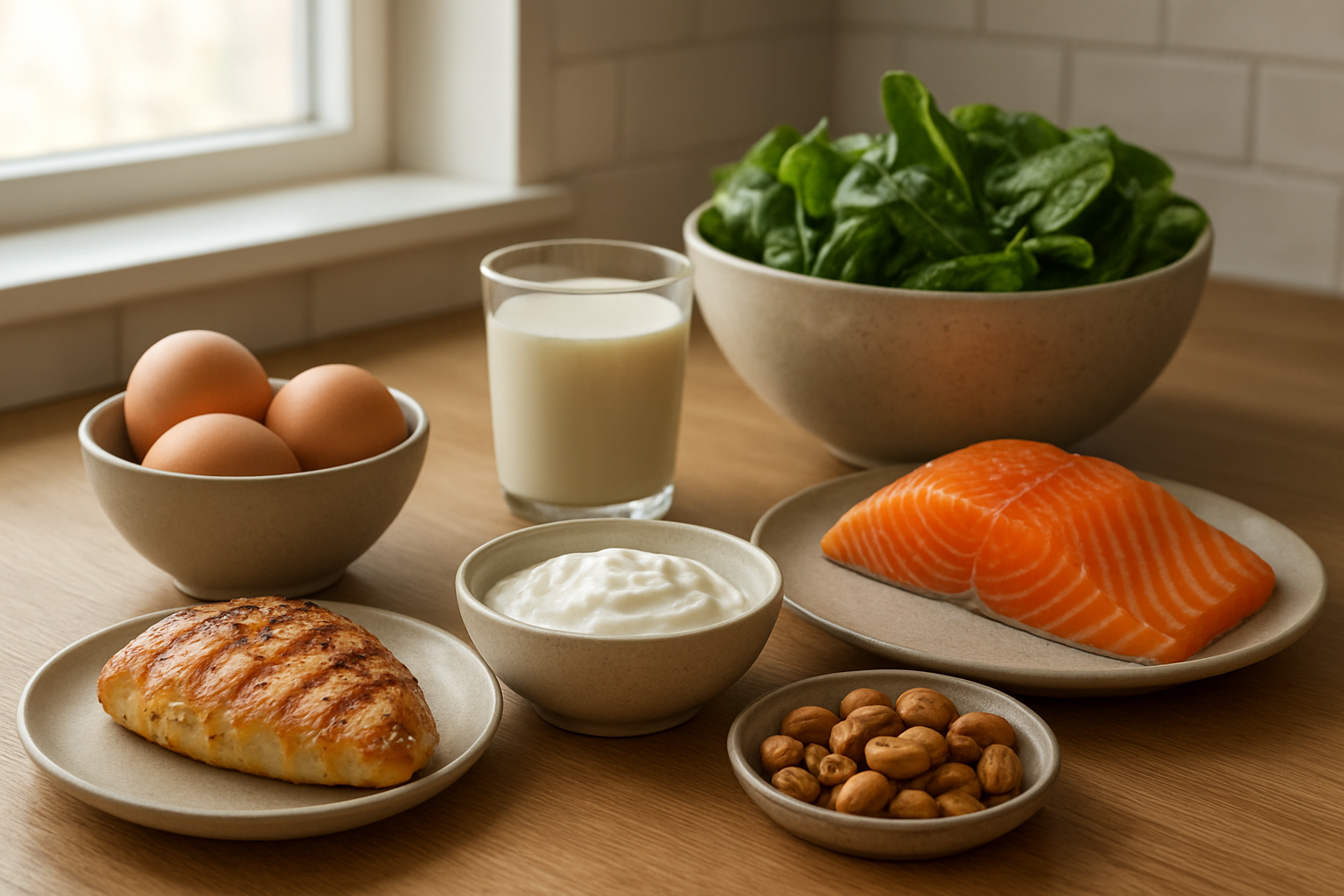
Not all protein sources are created equal, especially when it comes to supporting muscle growth in older adults. What you’re really looking for is leucine content — leucine is the key amino acid that flips the switch on muscle protein synthesis. Animal-based proteins tend to be richer in leucine and more bioavailable overall, but a well-planned plant-based diet can work too with some extra attention to variety and quantity.
Top Animal-Based Protein Sources
| Food | Serving Size | Protein Content | Notes |
|---|---|---|---|
| Chicken breast | 3.5 oz (100g) | ~31g | Lean, versatile, high leucine |
| Salmon | 3.5 oz (100g) | ~25g | Adds omega-3s for joint health |
| Eggs | 2 large | ~13g | Complete amino acid profile |
| Greek yogurt | 1 cup (200g) | ~17-20g | Great for meal timing strategies |
| Cottage cheese | 1 cup (225g) | ~25g | Slow-digesting casein protein |
| Canned tuna | 3 oz (85g) | ~22g | Affordable and easy to prep |
| Lean beef | 3.5 oz (100g) | ~26g | Also rich in creatine and zinc |
Top Plant-Based Protein Sources
| Food | Serving Size | Protein Content | Notes |
|---|---|---|---|
| Edamame | 1 cup (155g) | ~17g | Complete protein, high leucine |
| Lentils | 1 cup cooked (200g) | ~18g | Also rich in iron |
| Tempeh | 3.5 oz (100g) | ~19g | Fermented for better absorption |
| Black beans | 1 cup cooked (172g) | ~15g | Pair with rice for complete amino acids |
| Hemp seeds | 3 tbsp (30g) | ~10g | Easy to add to smoothies or yogurt |
| Tofu (firm) | 3.5 oz (100g) | ~8-17g | Varies by brand, check labels |
Practical Tips for Hitting Your Protein Goals
- Build every meal around a protein anchor. Instead of asking “what should I eat?” ask “what’s my protein source for this meal?”
- Keep easy proteins accessible. Hard-boiled eggs in the fridge, Greek yogurt on the shelf, canned fish in the pantry — convenience drives consistency.
- Don’t fear red meat. Lean cuts of beef provide creatine, zinc, and B12 alongside high-quality protein. Two to three servings per week is perfectly reasonable for most people.
- Use protein powder strategically, not as a crutch. A whey or pea protein shake can fill gaps, but whole foods should make up the majority of your intake. Whey protein is particularly effective for older adults because of its rapid absorption and high leucine content.
How Meal Timing Can Maximize Muscle Protein Synthesis
Timing your protein intake matters more than most people think, especially once you’re over 60. Because anabolic resistance blunts your muscle-building response, spreading protein thoughtfully throughout the day gives your muscles more chances to switch on and start building.
The Case for Spreading Protein Evenly
Studies comparing different protein distribution patterns have found consistently that spreading protein across four to five meals or eating occasions produces better muscle protein synthesis than front-loading or back-loading. Eating 40 grams of protein at dinner won’t compensate for eating only 10 grams at breakfast.
A practical daily protein distribution for someone targeting 120 grams per day might look like this:
- Breakfast: 30g protein
- Mid-morning snack: 15g protein
- Lunch: 30g protein
- Afternoon snack or pre-workout: 15g protein
- Dinner: 30g protein
The Post-Workout Window
After a strength training session, your muscles are primed and ready to absorb amino acids. This is the one time when protein timing really becomes a priority. Consuming 30 to 40 grams of high-quality protein within one to two hours after training is linked to better muscle protein synthesis rates in older adults compared to younger lifters — probably because the exercise itself temporarily overcomes some of that anabolic resistance.
Practical post-workout protein options:
- Whey protein shake mixed with milk (fast-absorbing, high leucine)
- Greek yogurt with fruit (convenient, tasty, effective)
- Chicken or tuna sandwich on whole grain bread
- Cottage cheese with nuts and berries
Don’t Skip Breakfast
Skipping breakfast or eating a low-protein breakfast (think: toast, fruit, or a plain bagel) is one of the most common mistakes older adults make. Research from the Journal of Nutrition found that older adults who consumed at least 25-30 grams of protein at breakfast showed significantly better rates of muscle protein synthesis compared to those who ate small morning meals. Starting strong sets the tone for the whole day.
Pre-Sleep Protein
One underused strategy for building muscle in your 60s is consuming a slow-digesting protein source before bed. Casein protein — found in cottage cheese, Greek yogurt, or a casein protein powder — releases amino acids slowly throughout the night, giving your muscles something to work with during the overnight repair and rebuilding process.
A pre-sleep snack of cottage cheese or a casein shake containing around 30-40 grams of protein has been shown in multiple studies to increase overnight muscle protein synthesis without negatively affecting morning appetite.
Key Vitamins and Minerals That Support Muscle Health
Protein gets most of the attention, and rightfully so, but there’s a group of vitamins and minerals that are working behind the scenes to make muscle growth possible. Without adequate levels of these nutrients, even a perfect training program and high protein intake will fall short.
Vitamin D
Vitamin D is arguably the most important micronutrient for muscle health in older adults, and deficiency is shockingly common — especially in people who spend limited time outdoors or live in northern climates.
- Plays a direct role in muscle fiber development and strength
- Low levels are strongly linked to muscle weakness, falls, and slower recovery
- The recommended range for adults over 60 is typically 800 to 2,000 IU per day, though many researchers argue optimal levels require higher supplementation
- Get your blood levels tested (25-OH vitamin D test) to know where you stand — aim for a serum level between 40-60 ng/mL
Sources: Fatty fish, egg yolks, fortified dairy, and direct sun exposure. Supplementation is often necessary for adequate levels in older adults.
Calcium
Everyone knows calcium is tied to bone health, but it also plays a critical role in muscle contractions. Without sufficient calcium, your muscles simply can’t fire properly.
- Recommended intake for adults over 60: 1,000-1,200 mg per day
- Best absorbed from food rather than supplements
- Spread intake across the day since your body can only absorb about 500mg at a time
Sources: Dairy products, fortified plant milks, leafy greens (kale, bok choy), sardines, and almonds.
Magnesium
Magnesium is involved in over 300 enzymatic reactions in the body, including protein synthesis and muscle function. Many older adults are chronically low in magnesium without realizing it.
- Supports muscle relaxation and reduces cramping
- Plays a role in sleep quality, which directly impacts muscle recovery
- Recommended intake: 320-420 mg per day depending on sex
Sources: Pumpkin seeds, spinach, black beans, almonds, dark chocolate, and whole grains.
Omega-3 Fatty Acids
Omega-3s get talked about mostly in the context of heart health, but they’re also an incredibly effective tool for senior fitness and nutrition. They have anti-inflammatory properties that aid recovery and, interestingly, have been shown to directly enhance muscle protein synthesis in older adults.
- Aim for 2-3 grams of EPA and DHA combined per day
- Particularly helpful for reducing muscle soreness and joint stiffness
- Can help overcome some degree of anabolic resistance
Sources: Fatty fish (salmon, mackerel, sardines), fish oil supplements, algae-based omega-3 supplements for those avoiding fish.
B Vitamins
B12 and folate deserve special mention for older adults. B12 absorption often declines with age due to reduced stomach acid production, and deficiency can lead to muscle weakness, fatigue, and nerve damage — none of which help your training.
- B12: Found in meat, fish, dairy, and eggs. Older adults should consider a supplement or fortified foods.
- Folate: Supports DNA repair and cell production, critical for muscle tissue regeneration
Creatine
While technically not a vitamin or mineral, creatine is one of the most research-backed supplements for building muscle in your 60s and beyond.
- Increases strength output during resistance training
- Has been shown to improve lean mass gains in older adults specifically
- A standard dose of 3-5 grams per day is safe, effective, and inexpensive
- Works especially well when paired with a consistent strength training program
How to Stay Hydrated for Better Performance and Recovery
Water rarely gets the credit it deserves when it comes to muscle building, but dehydration has a measurable and surprisingly quick impact on both training performance and recovery. Even mild dehydration — as little as 1-2% of body weight — can reduce strength, endurance, and coordination.
This is especially relevant for older adults, because the sensation of thirst diminishes with age. By the time you feel thirsty after 60, you’re likely already mildly dehydrated. Waiting for thirst to tell you to drink is not a reliable strategy.
How Much Water Do You Actually Need?
A common starting point is the “half your body weight in ounces” rule — so a 160-pound person would aim for around 80 ounces (about 2.4 liters) of water daily. But this is just a baseline. If you’re training hard, living in a hot climate, or sweating significantly, you’ll need more.
General guidelines for active older adults:
- Baseline: 8-10 cups (2-2.5 liters) per day
- Add 1.5-2.5 cups for every hour of moderate exercise
- More if you live in heat or humidity, or if your diet is high in fiber (which requires more water for digestion)
Signs You May Need More Water
- Urine is dark yellow or amber colored (pale yellow is the goal)
- Feeling fatigued or foggy even after adequate sleep
- Muscle cramps during or after workouts
- Slower recovery than usual
- Dry mouth or persistent headaches
Practical Hydration Habits That Actually Stick
- Start the day with water before coffee. Drink one full glass (8-12 oz) right when you wake up. You’ve been fasting and losing moisture overnight.
- Keep a water bottle visible at all times. Out of sight, out of mind — a bottle on your desk or kitchen counter is a constant reminder.
- Drink a glass before each meal. This adds at least three cups per day without much effort and can also support better portion control.
- Don’t rely on thirst — set reminders on your phone if needed, especially during the early stages of building this habit.
- Eat water-rich foods. Cucumbers, watermelon, oranges, and leafy greens contribute meaningfully to daily fluid intake.
Electrolytes Matter Too
Hydration isn’t just about water — it’s about electrolyte balance. When you sweat during resistance training, you lose sodium, potassium, and magnesium. Replacing these electrolytes helps maintain muscle function and prevents cramping.
If you’re training frequently or sweating heavily:
- Add a pinch of sea salt to your water or meals
- Eat potassium-rich foods like bananas, potatoes, and avocados
- Consider an electrolyte tablet or powder (look for low-sugar options) on harder training days
Hydration and Protein Work Together
One last thing worth mentioning: higher protein intake increases your body’s water requirements. Protein metabolism produces nitrogen waste products that your kidneys must flush out — and that process requires water. If you’re ramping up protein intake as part of your muscle-building strategy, your water intake should go up proportionally as well. This isn’t a reason to be afraid of protein, just something to be aware of and plan around.
Protecting Your Joints and Avoiding Setbacks

How to Warm Up Properly to Reduce Injury Risk
Skipping a warm-up when you’re over 60 isn’t just lazy — it’s genuinely risky. As you age, your connective tissues become less pliable, your joints produce less synovial fluid, and your muscles take longer to reach an optimal working temperature. A cold start into heavy resistance training is one of the fastest ways to pull something you didn’t even know could be pulled.
A solid warm-up has two phases:
Phase 1: General Warm-Up (5–10 minutes)
Get your heart rate up and blood flowing to your muscles before you touch a single weight. Options include:
- Brisk walking or light cycling
- Arm circles and leg swings
- Bodyweight squats (slow and controlled)
- Hip circles and shoulder rolls
The goal here isn’t to tire yourself out — it’s to wake your body up. Think of it as giving your engine a few minutes to idle before you hit the highway.
Phase 2: Movement-Specific Warm-Up
Before each exercise, do a lighter version of that same movement. If you’re about to do dumbbell rows, start with a set using 30–40% of your working weight. This primes the exact muscles and joints you’re about to load.
| Warm-Up Type | What It Does | Time Needed |
|---|---|---|
| Light cardio | Raises core temperature, increases blood flow | 5–10 minutes |
| Dynamic stretching | Improves range of motion, loosens joints | 5 minutes |
| Movement-specific sets | Activates target muscles, reduces injury risk | 1–2 sets per exercise |
One thing older adults often skip: dynamic stretching before training and static stretching after. Don’t reverse these. Holding long static stretches before lifting can temporarily reduce muscle force output, which is the opposite of what you want heading into strength training for seniors.
When to Push Through Discomfort and When to Rest
This is where a lot of people over 60 get into trouble — either they push through real pain and end up sidelined for weeks, or they back off at the first sign of any sensation and never make real progress. Learning to read your body accurately is one of the most valuable skills you can develop in building muscle in your 60s.
Here’s a simple framework to help you tell the difference:
Green Light — Keep Going
- Muscle burn during the last few reps of a set
- General tiredness or breathing hard
- Mild muscle soreness 24–48 hours after training (called DOMS — Delayed Onset Muscle Soreness)
- Slight tightness that loosens up as you warm up
Yellow Light — Modify or Reduce Load
- Persistent joint stiffness that doesn’t improve after warming up
- Unusual fatigue that lingers for more than 48 hours
- Soreness that’s still sharp on day three or four
- A feeling that your form is breaking down due to fatigue or weakness
Red Light — Stop and Seek Guidance
- Sharp, stabbing, or shooting pain at any point
- Pain that worsens as a set continues (not the burn — actual pain)
- Swelling or visible inflammation around a joint
- Pain that refers down a limb or causes tingling/numbness
- Chest tightness, dizziness, or shortness of breath disproportionate to effort
A general rule that many coaches use with older athletes: pain that’s above a 4 out of 10 in intensity, or that changes the way you move, is always a reason to stop. Discomfort from muscles working hard is expected and fine. Pain from a joint, tendon, or nerve is a signal — not something to override with willpower.
Rest days aren’t a sign of weakness. For older adults, they’re actually when muscle growth happens. Your muscles don’t grow during the workout — they grow during recovery. Skipping rest to train more often is a common mistake that leads to overuse injuries and stalled progress, especially in resistance training for aging adults.
Recovery Time Guidelines by Age
| Age Group | Recommended Rest Between Muscle Group Sessions |
|---|---|
| Under 40 | 48 hours |
| 40–60 | 48–72 hours |
| Over 60 | 72–96 hours (sometimes more) |
Listen to your body more than any training schedule. A program is a guide, not a contract.
The Role of Flexibility and Mobility in Sustainable Training
Flexibility and mobility aren’t just for yogis and dancers — they’re the foundation of sustainable strength training after 60. And yes, there’s a difference between the two worth understanding:
- Flexibility is the ability of a muscle to lengthen passively (think: touching your toes)
- Mobility is the ability of a joint to move actively through its full range of motion under control
You need both, but mobility is arguably more important for older adults doing resistance training. If your hip doesn’t have full range of motion, your squat mechanics will compensate — often by loading your lower back in ways it wasn’t designed to handle. That’s how injuries sneak up on people.
Why Mobility Declines After 60
As you get older, several things happen simultaneously:
- Collagen in tendons and ligaments becomes stiffer
- Muscle tissue loses some elasticity
- Joints experience more wear-related changes
- Sedentary behavior compounds all of the above
The good news is that mobility can be improved at any age with consistent practice. You’re not locked into the range of motion you have today.
Practical Mobility Work to Add to Your Routine
Here are high-impact mobility exercises specifically useful for adults over 60 doing strength training:
- 90/90 Hip Stretch — opens the hip joint in both internal and external rotation; directly improves squat and lunge mechanics
- Cat-Cow — keeps the spine mobile and relieves stiffness in the thoracic and lumbar regions
- Thoracic Spine Rotations — critical for upper body pushing and pulling movements
- Ankle Circles and Dorsiflexion Work — often the hidden limiting factor in squat depth
- World’s Greatest Stretch — a compound mobility movement that hits hips, thoracic spine, and hamstrings in one sequence
How Often and How Long
| Frequency | Duration Per Session | Best Timing |
|---|---|---|
| Daily (ideal) | 10–15 minutes | Morning or post-workout |
| 3–4 times per week (minimum) | 15–20 minutes | After training when muscles are warm |
Even 10 minutes of focused mobility work each day will produce noticeable changes in how your joints feel and move within a few weeks. Over months, it can completely transform your training quality, reduce your injury risk, and let you keep making progress in building muscle after 60 without constantly hitting setbacks.
One more thing: don’t underestimate the value of professional guidance here. A single session with a physical therapist or experienced coach who understands the best exercises for over 60 can identify your specific mobility restrictions and give you a targeted plan — which is far more efficient than guessing on your own.
Lifestyle Habits That Accelerate Your Muscle-Building Results
Why Quality Sleep Is a Non-Negotiable Muscle Builder
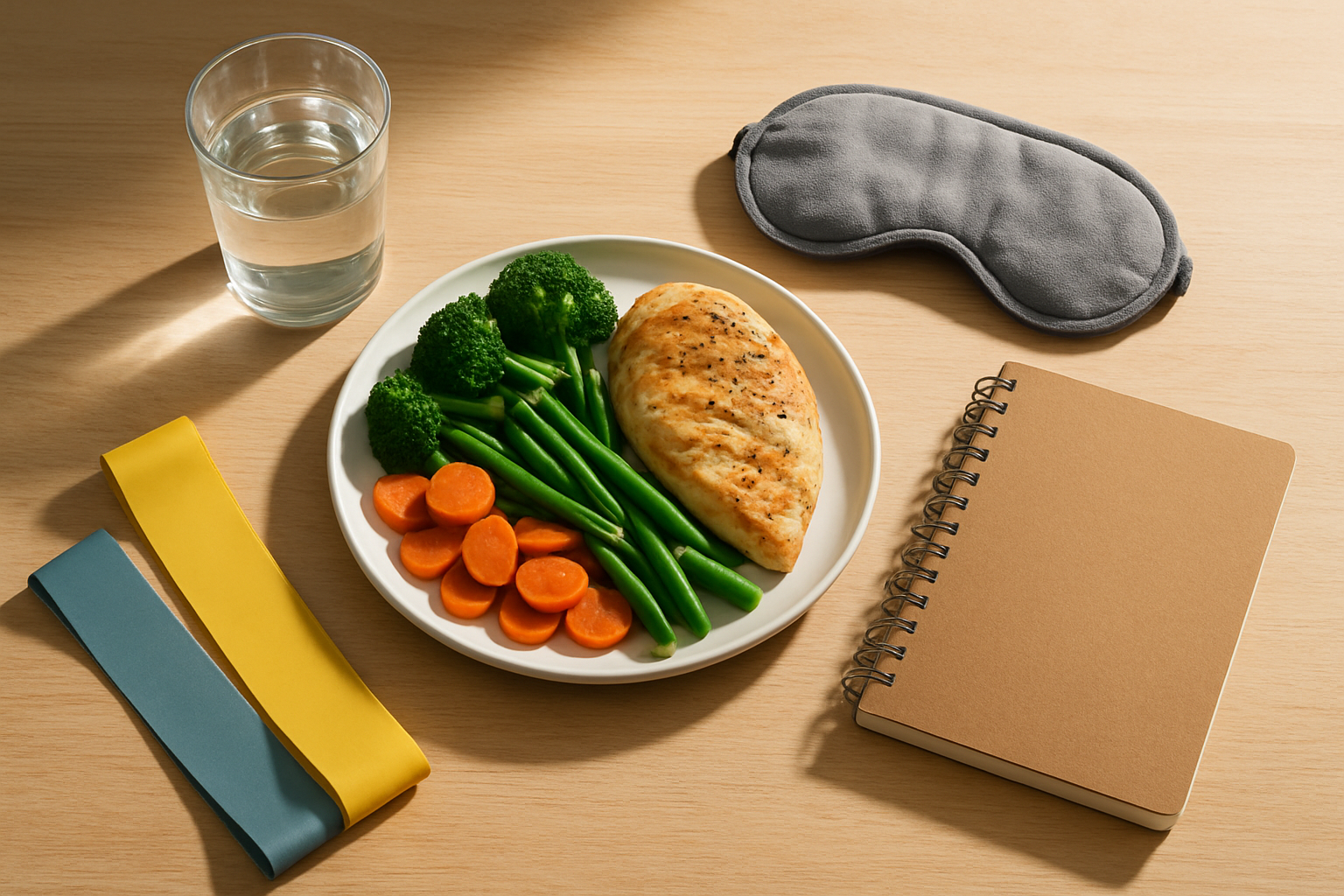
Most people obsess over their workouts and their protein shakes, but completely overlook the thing that’s actually doing the heavy lifting when it comes to muscle growth — sleep. Here’s what’s really happening: your muscles don’t grow during your workout. They grow while you’re sleeping.
During deep sleep, your body releases human growth hormone (HGH), which is the primary driver of muscle repair and growth. After 60, HGH levels are already lower than they were in your younger years, which means protecting every drop of it matters more than ever. Cutting your sleep short is essentially cutting your gains short.
What Happens When You Skimp on Sleep
- Muscle protein synthesis drops — your body can’t repair muscle tissue efficiently without adequate rest
- Cortisol spikes — poor sleep raises stress hormones that actively break down muscle tissue
- Testosterone declines further — already reduced in older adults, sleep deprivation makes it worse
- Recovery slows down — you’ll feel beat up longer between sessions, forcing longer gaps between workouts
- Motivation crashes — making it harder to stay consistent with your training
How to Get Better Sleep After 60
Sleep quality often gets harder to maintain as you age. You may wake up more frequently, have trouble falling asleep, or feel like you’re not getting deep, restful sleep even after eight hours in bed. The good news is that a few deliberate habits make a real difference.
- Keep a consistent sleep schedule — go to bed and wake up at the same time every day, even on weekends. Your body’s internal clock responds well to routine.
- Cool your bedroom down — a room temperature between 65–68°F (18–20°C) supports deeper sleep stages
- Limit alcohol in the evening — many people believe alcohol helps them sleep, but it actually disrupts REM and deep sleep stages
- Get morning sunlight — just 10–15 minutes of natural light exposure early in the day helps regulate melatonin production at night
- Wind down intentionally — dim the lights an hour before bed, avoid screens, and do something calming like stretching or reading
Aim for 7–9 hours of actual sleep per night. If you’re regularly waking up exhausted, it’s worth speaking to a doctor to rule out sleep apnea, which is surprisingly common in older adults and can dramatically undermine your muscle-building efforts.
How Stress Reduction Directly Impacts Your Gains
Chronic stress is one of the biggest hidden enemies of muscle building after 60. When you’re stressed — whether from work, relationships, finances, health worries, or just the general noise of life — your body pumps out cortisol. And cortisol is essentially the opposite of everything you’re trying to accomplish in the gym.
Here’s the simple version: cortisol breaks down muscle tissue for energy. It’s your body’s emergency fuel system. Short bursts of cortisol are fine and even healthy. But when it stays elevated day after day, it chips away at the muscle you’re working so hard to build.
The Cortisol-Muscle Connection
| Cortisol Level | Effect on Muscle Building |
|---|---|
| Short-term (acute stress) | Minimal impact, normal response |
| Chronically elevated | Breaks down muscle protein, reduces testosterone |
| Combined with poor sleep | Dramatically impairs recovery and growth |
| Managed through lifestyle habits | Supports anabolic (muscle-building) hormonal environment |
High cortisol also suppresses testosterone and IGF-1 — two hormones that play a direct role in muscle growth. Older adults already have lower baseline levels of both. Letting chronic stress run unchecked essentially accelerates the very hormonal decline you’re trying to work against.
Practical Ways to Lower Stress and Protect Your Gains
- Mindfulness and meditation — even 10 minutes a day of quiet, focused breathing has been shown to reduce cortisol levels over time. Apps like Calm or Headspace make it easy to start.
- Time in nature — walking in a park, gardening, or simply sitting outside lowers cortisol more effectively than most people expect
- Social connection — loneliness is a significant stressor. Staying connected with friends, family, or a training group has real physiological benefits
- Laughter and enjoyment — this sounds almost too simple, but doing things you genuinely enjoy reduces the hormonal burden of stress
- Avoid overtraining — excessive exercise without recovery is itself a source of physiological stress. More is not always better, especially in building muscle in your 60s.
One thing that often surprises older adults is how much their stress around aging itself contributes to the problem. Worrying constantly about physical decline, health issues, or getting older creates a feedback loop that physically accelerates the very things they fear. Accepting that building muscle after 60 is a slower, steadier process — and focusing on progress rather than perfection — is genuinely good medicine.
The Value of Staying Active Beyond Your Workout Sessions
Your two or three weekly strength training sessions are the foundation of building muscle in your 60s, but what you do during the rest of your waking hours matters a lot more than most people realize.
There’s a concept called NEAT — Non-Exercise Activity Thermogenesis — which refers to all the calories and physical effort you put out through everyday movement that isn’t formal exercise. This includes walking, housework, gardening, playing with grandkids, cooking, climbing stairs, and just generally not sitting still. For older adults specifically, NEAT has a powerful impact on metabolic health, circulation, and the overall environment your muscles need to grow and recover.
Why Sitting Too Much Undermines Your Training
Research consistently shows that prolonged sitting counteracts the benefits of exercise — even in people who work out regularly. When you sit for hours at a stretch:
- Blood flow to your muscles decreases, slowing nutrient delivery
- Insulin sensitivity drops, reducing your muscles’ ability to absorb amino acids and glucose
- Muscle activation shuts down almost completely, particularly in your glutes, core, and lower back
- Inflammation increases, which interferes with muscle repair
This is sometimes called the “active couch potato” paradox — you can hit the gym three days a week and still see diminished results if you spend the other 20+ waking hours barely moving.
Simple Ways to Stay Moving Throughout the Day
You don’t need to run marathons between workouts. Small, consistent movement throughout the day adds up fast.
- Take a 10-minute walk after meals — this is one of the single best habits for blood sugar management and muscle recovery
- Stand up every 30–45 minutes if you have a sedentary job or hobby — set a timer if you need to
- Do light mobility work in the morning — 5–10 minutes of gentle stretching or range-of-motion movements helps keep joints loose and muscles engaged
- Take the stairs whenever it’s a reasonable option
- Garden, do yard work, or take on light DIY projects — these activities keep you moving in varied, functional ways that complement your strength training
- Walk and talk — if you’re making a phone call, walk while you do it
How Daily Movement Supports Muscle Growth
Staying consistently active between sessions does several things that directly support your muscle-building goals:
- Improves circulation — delivering oxygen and nutrients to recovering muscles more efficiently
- Reduces soreness — light movement after a hard session speeds up the clearance of metabolic waste from muscle tissue
- Maintains insulin sensitivity — helping your muscles better absorb the protein and carbohydrates you’re eating to fuel growth
- Keeps your nervous system engaged — regular low-level physical activity maintains neuromuscular coordination, which is particularly important for strength training for seniors
- Supports cardiovascular health — a stronger heart and healthier blood vessels mean better performance and endurance during your actual workouts
Resistance training for aging adults works best as part of a broader active lifestyle, not as an isolated event surrounded by hours of inactivity. Think of your gym sessions as the signal that tells your muscles to grow, and your daily activity as the environment that lets that signal actually work.

Building muscle after 60 is absolutely possible, and the path to getting there is clearer than most people think. It comes down to training smart with proven strength methods, eating enough protein to fuel your gains, and building daily habits that support your progress. Protecting your joints, setting goals that actually motivate you, and understanding how your body has changed all play a big role in making this work long-term.
The best time to start is right now. Pick up some weights, clean up your plate, and give your body the sleep and recovery it needs to respond. You don’t need to train like a 25-year-old to see real, meaningful results. You just need to stay consistent, be patient with the process, and trust that your body is still very much capable of getting stronger at any age.