



How to Eat Healthy After 50: 5 Simple Rules That Stick
If you’re over 50 and feel like the eating habits that worked in your 30s just don’t cut it anymore, you’re not imagining things. Your body genuinely changes — metabolism slows down, muscle mass starts to drop, and digestion shifts. Healthy eating after 50 isn’t about going on a strict diet or cutting out everything you love. It’s about making a few smart swaps that actually fit into real life.
This guide is for adults over 50 who want to feel stronger, sharper, and more energized without overcomplicating their meals. You’ll learn why protein is a non-negotiable as you age, how fiber-rich foods can do more than just keep you regular, and why cutting back on sugar doesn’t have to mean feeling deprived. You’ll also get practical tips on meal planning and staying hydrated — two things that make a bigger difference than most people expect.
No complicated rules. No rabbit food. Just five straightforward changes that are easy to stick with.
Table of Contents
Why Eating Habits Must Change After 50

How Metabolism Slows Down and What It Means for Your Diet
Somewhere around your late 40s and into your 50s, your body starts playing by a different set of rules. The metabolism that once burned through calories without much effort begins to slow down — and this isn’t just a myth. Research shows that metabolic rate can decline by about 1–2% per decade starting in your 30s, and the effects become much more noticeable after 50.
Here’s what’s actually happening beneath the surface:
- Muscle mass decreases. The process called sarcopenia — the natural loss of muscle tissue with age — accelerates after 50. Since muscle burns more calories than fat even at rest, less muscle means a slower overall calorie burn.
- Hormonal shifts change how fat is stored. For women, the drop in estrogen during and after menopause makes it easier to gain weight around the belly. For men, declining testosterone has a similar effect on body composition.
- Insulin sensitivity drops. Your cells become less efficient at processing blood sugar, which makes you more vulnerable to energy crashes, cravings, and over time, type 2 diabetes.
What does this mean for how you eat? Eating the exact same way you did at 35 will almost certainly lead to gradual weight gain, low energy, and nutritional gaps. Healthy eating after 50 requires a real shift — not a crash diet, but a smarter approach to what you eat, how much, and when.
You don’t need to eat less and suffer through it. You need to eat better — more strategically — so your body gets what it genuinely needs.
Key Nutrients That Become More Critical With Age
Aging changes what your body needs from food. Some nutrients that your body used to absorb easily become harder to get enough of, and others become more important for protecting long-term health. Knowing what to focus on is half the battle.
| Nutrient | Why It Matters After 50 | Where to Get It |
|---|---|---|
| Protein | Slows muscle loss, supports metabolism and immunity | Chicken, fish, eggs, Greek yogurt, legumes |
| Calcium | Protects bone density, which drops sharply after 50 | Dairy, fortified plant milks, leafy greens, sardines |
| Vitamin D | Helps absorb calcium, supports mood and immune function | Fatty fish, fortified foods, sunlight, supplements |
| Vitamin B12 | Stomach acid production drops with age, making B12 harder to absorb | Meat, eggs, dairy, fortified cereals or supplements |
| Magnesium | Supports heart health, muscle function, and sleep quality | Nuts, seeds, whole grains, dark leafy greens |
| Omega-3 Fatty Acids | Reduces inflammation, supports brain and heart health | Salmon, mackerel, walnuts, flaxseed, chia seeds |
| Fiber | Supports gut health, lowers cholesterol, stabilizes blood sugar | Vegetables, fruits, legumes, whole grains |
| Potassium | Helps manage blood pressure, which tends to rise with age | Bananas, sweet potatoes, beans, avocados |
A Note on Absorption Issues
After 50, your digestive system produces less stomach acid. That might not sound like a big deal, but lower stomach acid makes it harder to absorb key nutrients — especially vitamin B12, calcium, iron, and magnesium. This is one big reason why some people over 50 eat fairly well but still feel run down or get frequent muscle cramps. Eating a diet rich in whole, minimally processed foods and talking to your doctor about targeted supplementation can make a meaningful difference here.
Vitamin D deficiency is especially common in adults over 50, partly because aging skin is less efficient at converting sunlight into the vitamin. If you haven’t had your vitamin D levels checked recently, it’s a smart move — deficiency is linked to fatigue, bone loss, low mood, and weakened immune response.
Common Mistakes People Over 50 Make With Food
Even well-intentioned eaters fall into patterns that quietly undermine their health as they get older. Recognizing these traps makes it much easier to steer around them.
Eating Too Little Protein
This is probably the most widespread mistake. Many people over 50 stick with the protein habits they had in their 30s — a little chicken here, some cheese there — without realizing their needs have actually gone up. The recommended daily allowance for protein is often set too low for older adults trying to preserve muscle. Most nutrition experts who specialize in aging recommend anywhere from 1.2 to 1.6 grams of protein per kilogram of body weight per day for adults over 50. A high-protein diet for seniors isn’t about bulking up — it’s about not losing what you already have.
Relying on “Low Fat” or “Diet” Packaged Foods
This was a major trend for decades, and a lot of people over 50 still carry those habits. The problem is that “low fat” products are almost always loaded with sugar and artificial ingredients to make up for lost flavor. These products spike blood sugar, feed cravings, and offer very little real nutrition. Real, whole foods with naturally occurring fats — like nuts, avocados, olive oil, and fatty fish — are far better choices for adults over 50.
Skipping Meals to Cut Calories
Skipping breakfast or lunch might seem like an easy way to manage weight, but it usually backfires. When you go too long without eating, blood sugar drops, energy tanks, and you end up overeating later in the day — often reaching for whatever is fast and easy, which rarely means something nutritious. Consistent, balanced meals spaced throughout the day support stable energy, better metabolism, and smarter food choices.
Not Drinking Enough Water
The thirst mechanism weakens with age, meaning older adults often don’t feel thirsty even when their bodies are already mildly dehydrated. Staying hydrated over 50 is genuinely important for brain function, joint health, digestion, and energy levels — yet it’s one of the most overlooked diet tips for people over 50. Many people confuse dehydration with hunger or fatigue and reach for food or caffeine when a glass of water is what they actually need.
Ignoring Portion Creep
Portion sizes have inflated dramatically over the past few decades, and many people have lost touch with what a reasonable serving actually looks like. After 50, when calorie needs are somewhat lower but nutrient needs are higher, the quality of every bite matters more. Eating mindfully — paying attention, slowing down, and not eating in front of screens — helps naturally regulate portions without the misery of strict calorie counting.
Cutting Out Entire Food Groups Without Good Reason
Carbs, dairy, and fat have all had their time in the nutritional doghouse. The truth is that most healthy adults over 50 don’t need to eliminate any entire food group unless there’s a specific medical reason to do so. Sweeping restrictions often lead to nutrient gaps, social stress around eating, and a sense of deprivation that makes long-term healthy eating feel impossible. A balanced, flexible approach to food almost always wins in the long run.
Rule 1: Prioritize Protein to Protect Muscle Mass
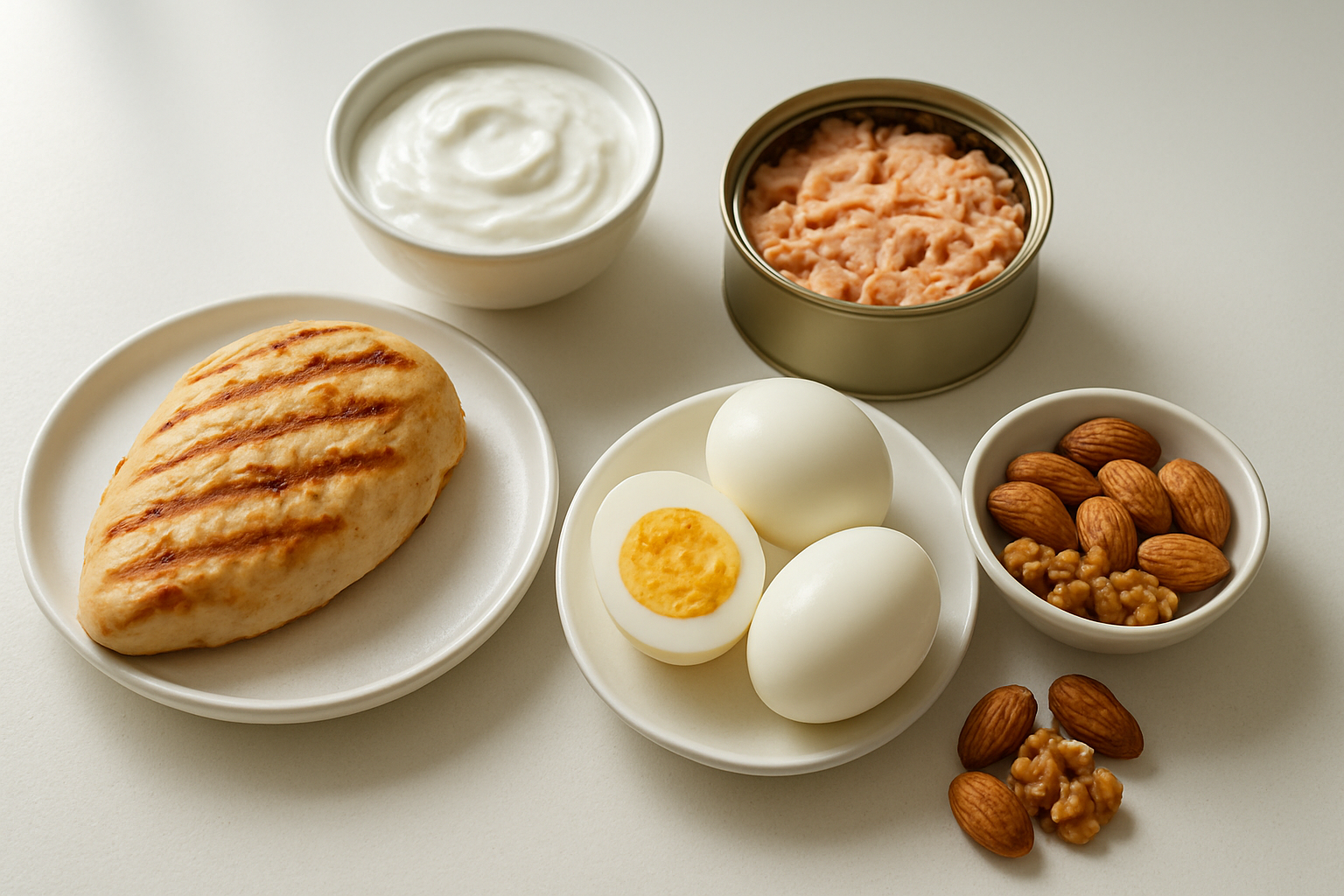
How Much Protein You Actually Need After 50
Here’s something most people don’t realize until it’s too late: after 50, your body becomes less efficient at using the protein you eat. That means you need more of it, not the same amount you got away with in your 30s.
The standard recommendation used to be 0.8 grams of protein per kilogram of body weight. But research now shows that adults over 50 do better with somewhere between 1.0 and 1.2 grams per kilogram — and if you’re active, that number can push even higher toward 1.5 grams.
To put that in real numbers:
| Body Weight | Minimum Daily Protein | Active Daily Protein |
|---|---|---|
| 130 lbs (59 kg) | ~59–71g | ~88g |
| 150 lbs (68 kg) | ~68–82g | ~102g |
| 175 lbs (79 kg) | ~79–95g | ~119g |
| 200 lbs (91 kg) | ~91–109g | ~136g |
Why does this matter so much? Because after 50, you start losing muscle mass at a rate of roughly 1–2% per year — a process called sarcopenia. Low muscle mass isn’t just about how you look. It affects your balance, your metabolism, your energy levels, and your ability to stay independent as you age. Getting enough protein every day is one of the most powerful things you can do to slow that process down.
Spreading your protein across three meals also matters more than you might think. Your muscles can only absorb and use so much protein at one sitting — roughly 25–40 grams per meal. So instead of loading up at dinner and skimping at breakfast, aim for a fairly even spread throughout the day.
Best High-Protein Foods That Are Easy to Digest
A high-protein diet for seniors doesn’t have to mean choking down dry chicken breasts or blending protein powder into everything. There are plenty of delicious, easy-to-digest options that fit naturally into everyday meals.
Animal-Based Protein Sources
These are considered complete proteins, meaning they contain all nine essential amino acids your body can’t make on its own:
- Eggs — one of the most digestible protein sources available, with about 6g per egg
- Greek yogurt — roughly 15–20g per cup, plus gut-friendly probiotics
- Cottage cheese — mild, soft, and packs about 25g per cup
- Canned salmon or tuna — affordable, easy to keep on hand, and loaded with omega-3s
- Skinless chicken thighs — juicier and more forgiving to cook than breasts
- Turkey — lean, versatile, and easy to work into soups, wraps, and salads
- Lean beef — a good source of protein plus zinc and B12, both important after 50
Plant-Based Protein Sources
If you’re moving toward a more plant-forward diet or simply want more variety, these are some of the best foods for adults over 50:
- Lentils — about 18g of protein per cooked cup, plus a solid fiber punch
- Chickpeas — great roasted, in salads, or blended into hummus
- Edamame — one of the few plant foods that’s a complete protein
- Tofu and tempeh — both pack around 15–20g per serving, and tempeh is especially easy to digest
- Black beans and kidney beans — budget-friendly and great in dozens of dishes
- Quinoa — a grain that doubles as a complete protein at about 8g per cup cooked
A Quick Comparison
| Food | Serving Size | Protein |
|---|---|---|
| Greek yogurt | 1 cup | 17–20g |
| Cottage cheese | 1 cup | 25g |
| Canned tuna | 3 oz | 20–22g |
| Lentils (cooked) | 1 cup | 18g |
| Chicken thigh | 3 oz | 21g |
| Tofu (firm) | 3 oz | 9–12g |
| Eggs | 2 large | 12g |
| Edamame | 1 cup | 17g |
One thing worth keeping in mind as you age: digestive efficiency often decreases, so choosing foods that are naturally softer or easier to break down — like eggs, fish, yogurt, and well-cooked legumes — can help your body absorb more of what you’re eating.
Simple Ways to Add More Protein to Every Meal
Hitting your daily protein target doesn’t require a dramatic diet overhaul. Small, consistent swaps and additions are what actually work long-term when it comes to healthy eating after 50.
At Breakfast
- Swap regular yogurt for Greek yogurt and top it with a handful of nuts
- Make a two-egg scramble instead of toast alone
- Stir a spoonful of nut butter into oatmeal — it adds protein and keeps you full longer
- Try cottage cheese with berries — it sounds basic but it genuinely tastes good
- Add a scoop of unflavored protein powder to a smoothie (you won’t even notice it’s there)
At Lunch
- Build your salad around a protein base — grilled chicken, hard-boiled eggs, tuna, or chickpeas
- Use lentil soup as a go-to option — it’s filling, warming, and protein-packed
- Try a turkey or tuna wrap instead of a carb-heavy sandwich with minimal filling
- Add edamame to grain bowls or salads for a quick protein boost
At Dinner
- Start with a palm-sized portion of protein and build the rest of the plate around it
- Batch cook chicken thighs or ground turkey at the beginning of the week
- Swap white rice for quinoa to pick up a few extra grams of protein without much effort
- Toss white beans or lentils into pasta sauces, soups, and stews — they blend right in
Easy Protein-Rich Snack Ideas
Sometimes the gap between meals is where protein intake falls apart. These snacks make it easy to stay on track:
- Hard-boiled eggs (prep a batch on Sunday)
- String cheese or sliced cheese with apple slices
- Hummus with raw veggies
- A small handful of almonds or mixed nuts
- Roasted chickpeas — crunchy, satisfying, and easy to take anywhere
- Jerky (look for low-sodium options)
The key with healthy eating over 50 is making protein the anchor of every meal rather than an afterthought. When protein is front and center, you naturally eat fewer empty calories, feel fuller longer, and give your muscles exactly what they need to stay strong.
Rule 2: Fill Half Your Plate With Fiber-Rich Foods
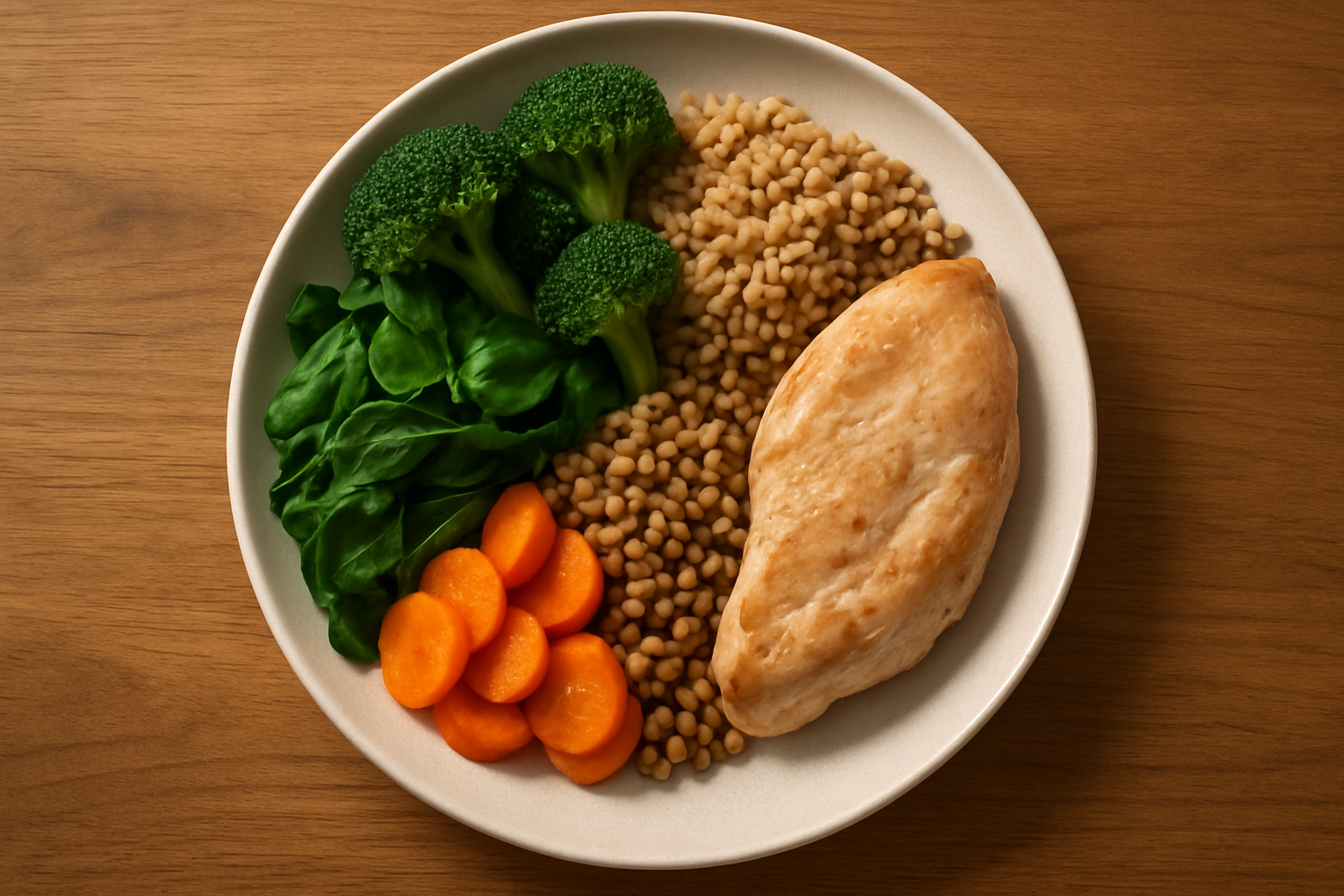
Why Fiber Becomes Your Best Friend After 50
Once you hit 50, your digestive system starts to slow down — and that’s not just an uncomfortable truth, it’s biology. Your gut motility decreases, meaning food moves through your system more slowly. Your risk for constipation, diverticulitis, high cholesterol, blood sugar spikes, and even colon cancer climbs steadily with age. Fiber is one of the most powerful tools you have to push back against all of that.
But fiber does far more than keep things moving. Here’s what it quietly does for you every single day:
- Feeds your gut microbiome. The trillions of bacteria living in your gut thrive on fiber. A healthy microbiome is linked to better immunity, improved mood, sharper cognitive function, and less chronic inflammation — all things that matter more as you age.
- Steadies your blood sugar. Soluble fiber slows down the absorption of glucose, which helps prevent the energy crashes and insulin spikes that become more problematic after 50.
- Supports heart health. Soluble fiber, especially the kind found in oats and legumes, actively helps lower LDL (bad) cholesterol levels.
- Keeps you fuller, longer. Fiber slows digestion, which means you naturally eat less without feeling like you’re on a restrictive diet. For anyone managing weight after 50, this is a game changer.
- Reduces inflammation. Chronic low-grade inflammation is one of the biggest drivers of age-related disease. A high-fiber diet consistently shows anti-inflammatory effects in research studies.
The current recommendation for adults over 50 is 21 grams per day for women and 30 grams per day for men — yet most Americans eat fewer than 15 grams daily. Closing that gap doesn’t require a complete diet overhaul. It just takes smarter, more intentional choices at every meal.
Top Fruits, Vegetables, and Grains Worth Adding Today
The good news? Fiber-rich foods are some of the most delicious, satisfying, and accessible options out there. No chalky supplements required. Here are the best picks for aging adults who want real, lasting results from their diet.
High-Fiber Foods to Build Your Plate Around
| Food | Fiber Per Serving | Bonus Benefit for Adults Over 50 |
|---|---|---|
| Lentils (½ cup cooked) | 8g | High in iron and plant-based protein |
| Black beans (½ cup cooked) | 7.5g | Supports blood sugar control |
| Avocado (½ medium) | 5g | Rich in heart-healthy monounsaturated fats |
| Raspberries (1 cup) | 8g | Packed with antioxidants for brain health |
| Chia seeds (2 tbsp) | 10g | Omega-3s support joint and cognitive health |
| Broccoli (1 cup cooked) | 5g | Contains sulforaphane, a powerful anti-cancer compound |
| Oats (1 cup cooked) | 4g | Beta-glucan fiber actively lowers cholesterol |
| Pears (1 medium) | 5.5g | Gentle on digestion, high water content |
| Quinoa (1 cup cooked) | 5g | Complete protein plus fiber — rare combo |
| Sweet potato (1 medium) | 4g | High in potassium and vitamin A |
| Edamame (½ cup) | 4g | High in plant protein, calcium, and fiber |
| Flaxseeds (2 tbsp ground) | 4g | Supports hormone balance and gut health |
The Smartest Ways to Get More Fiber Into Your Day
You don’t have to obsess over grams and tracking apps. These simple swaps make a big difference without turning every meal into a math problem:
- Swap white rice for quinoa or farro. You get two to three times more fiber and a boost of protein at the same time.
- Toss a handful of berries into your morning yogurt or oatmeal. Raspberries and blackberries are fiber powerhouses hiding in plain sight.
- Add beans or lentils to soups, salads, and stews. They blend in easily, stretch your meals further, and deliver serious fiber without changing the flavor you love.
- Snack on whole fruit instead of juice. Juicing strips out the fiber entirely. A whole orange gives you about 3 grams of fiber; orange juice gives you almost none.
- Choose whole grain breads and pastas with at least 3 grams of fiber per serving. Check the label — the word “whole” should be first in the ingredient list.
- Layer vegetables into everything. Stir spinach into scrambled eggs, add shredded zucchini to pasta sauce, or pile roasted vegetables onto your sandwich instead of chips.
A Note on Increasing Fiber Gradually
If your current diet is low in fiber, don’t rush the transition. Adding too much too fast can cause bloating, gas, and discomfort. Aim to increase your intake by about 5 grams per week while drinking more water alongside it — fiber needs water to do its job properly. Within a few weeks, your gut adapts, digestion improves, and you’ll wonder why you didn’t make the switch sooner.
Eating healthy over 50 doesn’t mean eating boring food. Fiber-rich foods for aging adults are colorful, satisfying, and genuinely good — and when half your plate is filled with them, your body notices the difference quickly.
Rule 3: Cut Back on Sugar and Processed Foods Without Feeling Deprived
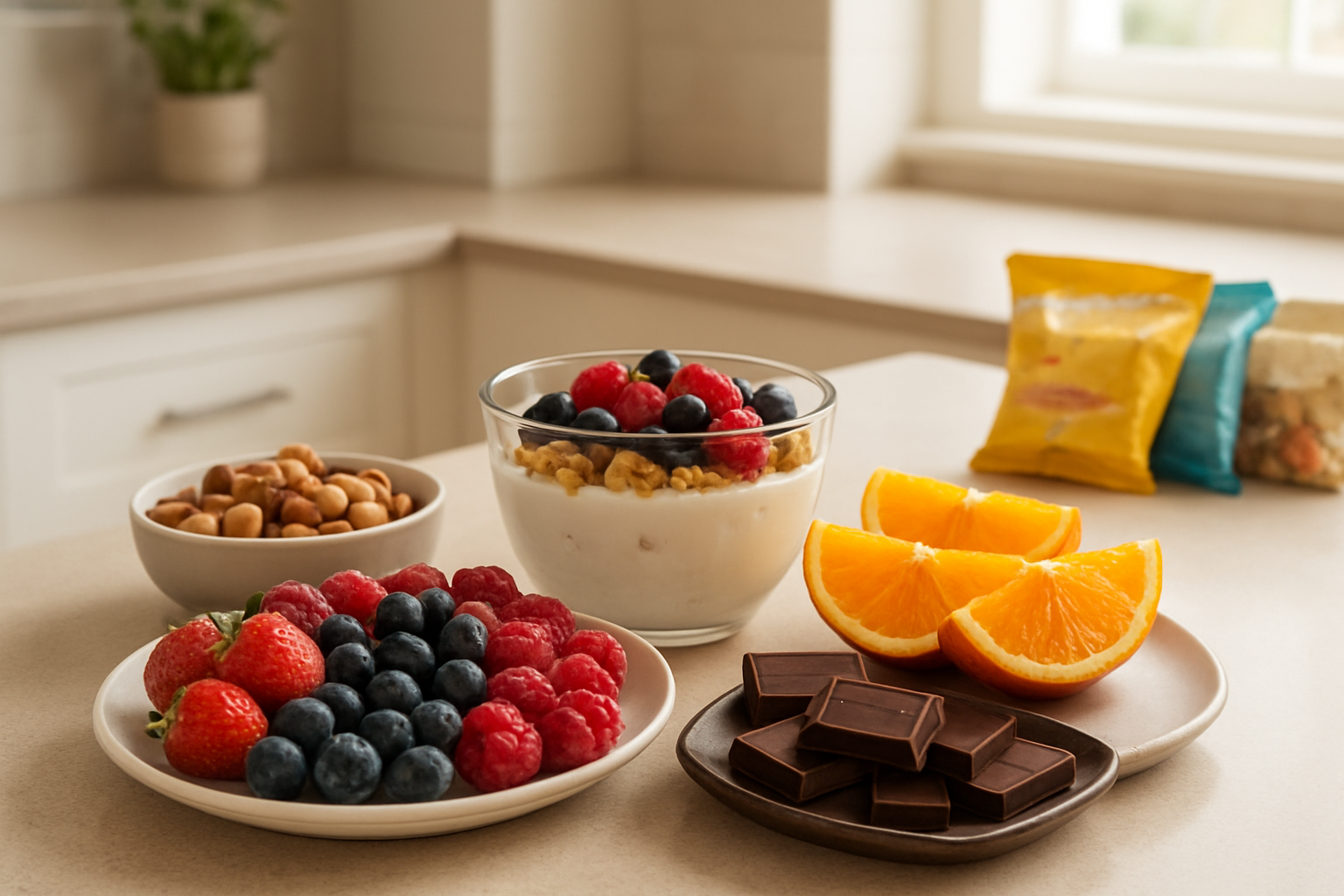
How Excess Sugar Accelerates Aging and Weight Gain
After 50, your body handles sugar very differently than it did in your 30s. Insulin sensitivity naturally declines with age, which means your cells don’t respond to insulin as efficiently. The result? Blood sugar spikes more easily, fat storage increases — especially around the belly — and energy crashes hit harder throughout the day.
But the effects go deeper than the scale. Excess sugar triggers a process called glycation, where sugar molecules attach to proteins in your body, including collagen. This breaks down the structural proteins that keep your skin firm and your joints flexible. In plain terms, too much sugar speeds up the visible signs of aging from the inside out.
There’s also the inflammation factor. Processed foods and high-sugar diets are strongly linked to chronic low-grade inflammation, which is connected to a whole range of age-related conditions — joint pain, cognitive decline, heart disease, and even certain cancers. When you’re working on healthy eating after 50, reducing sugar isn’t just about losing weight. It’s about protecting your long-term health at a cellular level.
Here’s what excess sugar does to the body over time:
- Raises triglycerides and increases cardiovascular risk
- Disrupts sleep quality by destabilizing blood sugar overnight
- Feeds harmful gut bacteria, throwing off your microbiome
- Contributes to non-alcoholic fatty liver disease
- Amplifies mood swings, anxiety, and brain fog
- Accelerates muscle loss by promoting inflammatory pathways
The average American consumes around 17 teaspoons of added sugar per day — nearly triple the amount the American Heart Association recommends for women over 50 (6 teaspoons) and well above the 9 teaspoons recommended for men. That gap is where a lot of the damage happens.
Easy Swaps That Satisfy Cravings the Healthy Way
Cutting sugar doesn’t mean white-knuckling it through every afternoon craving. The secret is replacing, not just removing. When you swap smartly, you keep the satisfaction without the blood sugar crash.
The biggest trap people fall into is going cold turkey and feeling miserable. Your taste buds genuinely adapt over time — usually within two to four weeks — but the transition is much smoother when you have satisfying alternatives ready.
Smart Sugar Swaps to Try Right Now
| Instead of This | Try This | Why It Works |
|---|---|---|
| Sweetened yogurt | Plain Greek yogurt + fresh berries | High protein, natural sweetness, no added sugar |
| Soda or juice | Sparkling water with citrus slices | Hydration with zero sugar spike |
| Candy or chocolate bar | Dark chocolate (70%+) + a handful of nuts | Antioxidants, healthy fat, satisfying crunch |
| Store-bought granola bars | Apple slices with almond butter | Fiber + protein curbs hunger longer |
| White bread with jam | Whole grain toast with avocado or nut butter | Slow-digesting carbs, no blood sugar spike |
| Ice cream | Frozen banana blended with cocoa powder | Creamy texture, natural sugars, real nutrients |
| Flavored coffee drinks | Black coffee with a dash of cinnamon or oat milk | Reduces sugar load dramatically |
| Store-bought salad dressing | Olive oil + lemon + Dijon mustard | No hidden sugars, anti-inflammatory fats |
The key is front-loading satisfaction. If a swap leaves you hungry or unsatisfied, you’ll go back to the original. Pair natural sweetness with protein or fiber every time you reach for something sweet — that combination slows down sugar absorption and keeps cravings quieter for longer.
Craving something sweet after dinner? This is one of the most common challenges for adults over 50. Try:
- A small bowl of mixed berries with a dollop of plain Greek yogurt
- Chamomile or licorice root tea, which naturally tastes slightly sweet
- A square or two of 85% dark chocolate, which also contains magnesium — a mineral many people over 50 are deficient in
- Frozen grapes, which take longer to eat and trigger that same cold, sweet satisfaction as ice cream
How to Read Labels and Spot Hidden Sugars
This is where a lot of people get blindsided. You can cut out candy and soda and still be consuming massive amounts of sugar without realizing it, because sugar is hidden in foods that seem healthy or savory — things like pasta sauce, salad dressing, bread, flavored oatmeal, protein bars, and even deli meat.
Food manufacturers use over 60 different names for sugar on ingredient labels. Knowing the most common ones makes a real difference.
Common Hidden Sugar Names to Watch For
Obvious ones:
- Cane sugar, brown sugar, raw sugar, coconut sugar
- High fructose corn syrup, corn syrup solids
- Honey, maple syrup, agave nectar
Sneaky ones:
- Maltodextrin
- Dextrose, fructose, galactose, sucrose, lactose
- Barley malt, rice syrup, oat syrup
- Fruit juice concentrate
- Evaporated cane juice
- Molasses
- Treacle
How to check a label quickly:
- Look at “Total Sugars” vs. “Added Sugars” — The Nutrition Facts panel now separates these. You want “Added Sugars” as close to zero as possible. Natural sugars from whole fruit or dairy are much less concerning than added ones.
- Check where sugar falls in the ingredient list — Ingredients are listed by weight, from highest to lowest. If any form of sugar appears in the first three ingredients, that’s a red flag.
- Watch the serving size trap — A product might show 4g of sugar per serving, but if the serving is only 2 tablespoons and you use half a cup, you’re getting four times that amount.
- Be suspicious of “low fat” labels — When manufacturers remove fat, they almost always add sugar to compensate for lost flavor. Low-fat flavored yogurt, reduced-fat peanut butter, and fat-free salad dressings are classic examples.
- Aim for 5g or less of added sugar per serving — This is a practical benchmark for most packaged foods if you’re working on reducing sugar as part of a healthier diet over 50.
High-Sugar Foods That Often Surprise People
| Food | Typical Added Sugar Per Serving |
|---|---|
| Flavored oatmeal packet | 12–16g |
| Bottled pasta sauce (½ cup) | 8–12g |
| Low-fat fruit yogurt (6 oz) | 15–20g |
| Protein bar | 12–25g |
| Store-bought smoothie (16 oz) | 40–60g |
| Bottled iced tea (16 oz) | 32–40g |
| Granola (½ cup) | 12–18g |
| Ketchup (2 tbsp) | 8g |
Building New Habits That Replace Old Comfort Foods
Here’s the reality: telling yourself to “stop eating” something rarely works long-term. Your brain has formed strong associations between certain foods and emotions — stress, celebration, boredom, nostalgia. Those don’t disappear just because you decide to eat healthier after 50.
What does work is replacement, not restriction. You keep the ritual but change the food.
The Habit Loop and How to Rewire It
Every food habit follows a loop: Cue → Routine → Reward. The goal is to keep the cue and reward the same but change the routine.
For example:
- Cue: Stress at the end of the workday
- Old routine: Bag of chips or cookies
- Reward: Relaxation, a sense of release
You can’t eliminate the stress or the desire for relief. But you can slot in a new routine that delivers the same reward — something crunchy and satisfying, like roasted chickpeas, air-popped popcorn with nutritional yeast, or even a small handful of mixed nuts.
Practical strategies for building new comfort food habits:
- Pre-portion and make it visible. Keep a bowl of fresh fruit on the counter and healthy snacks at eye level in the fridge. You eat what you see first, especially in moments of low willpower.
- Create a “good enough” rule. You don’t need the perfect healthy alternative — you need one that’s satisfying enough that you won’t immediately go hunting for the original. Progress over perfection.
- Attach new habits to existing ones. If you always have something sweet with your afternoon coffee, keep that routine — just change what the sweet thing is. A date stuffed with almond butter, a piece of dark chocolate, or a homemade energy ball made from oats and honey gives you the same ritual with far better nutrition.
- Don’t buy what you’re trying to avoid. Willpower is a limited resource. You’ll almost always lose a battle against a pantry stocked with your trigger foods at 9pm. Not having them in the house removes the decision entirely.
- Give it three weeks. Research on habit formation consistently shows that taste preferences and cravings shift meaningfully after about 21 days of consistent change. The first week is the hardest. By week three, the new options start to feel normal.
Healthy Comfort Food Replacements by Craving Type
| Craving | Healthier Replacement |
|---|---|
| Something crunchy | Roasted chickpeas, rice cakes with avocado, raw veggies with hummus |
| Something sweet | Fresh fruit, medjool dates, frozen banana “nice cream” |
| Something creamy | Greek yogurt parfait, avocado toast, nut butter on whole grain |
| Something salty | Lightly salted edamame, olives, a small handful of mixed nuts |
| Something warm and comforting | Homemade soup, oatmeal with cinnamon and banana, herbal tea with honey |
| Late-night snack | Cottage cheese with berries, a boiled egg, chamomile tea |
The goal isn’t to become someone who never enjoys food. Healthy eating over 50 is about making choices that feel good in the moment and even better an hour later — no energy crash, no guilt, no regret. When the replacements start tasting as good as the originals, the habit has truly shifted.
Rule 4: Stay Hydrated to Boost Energy and Brain Function
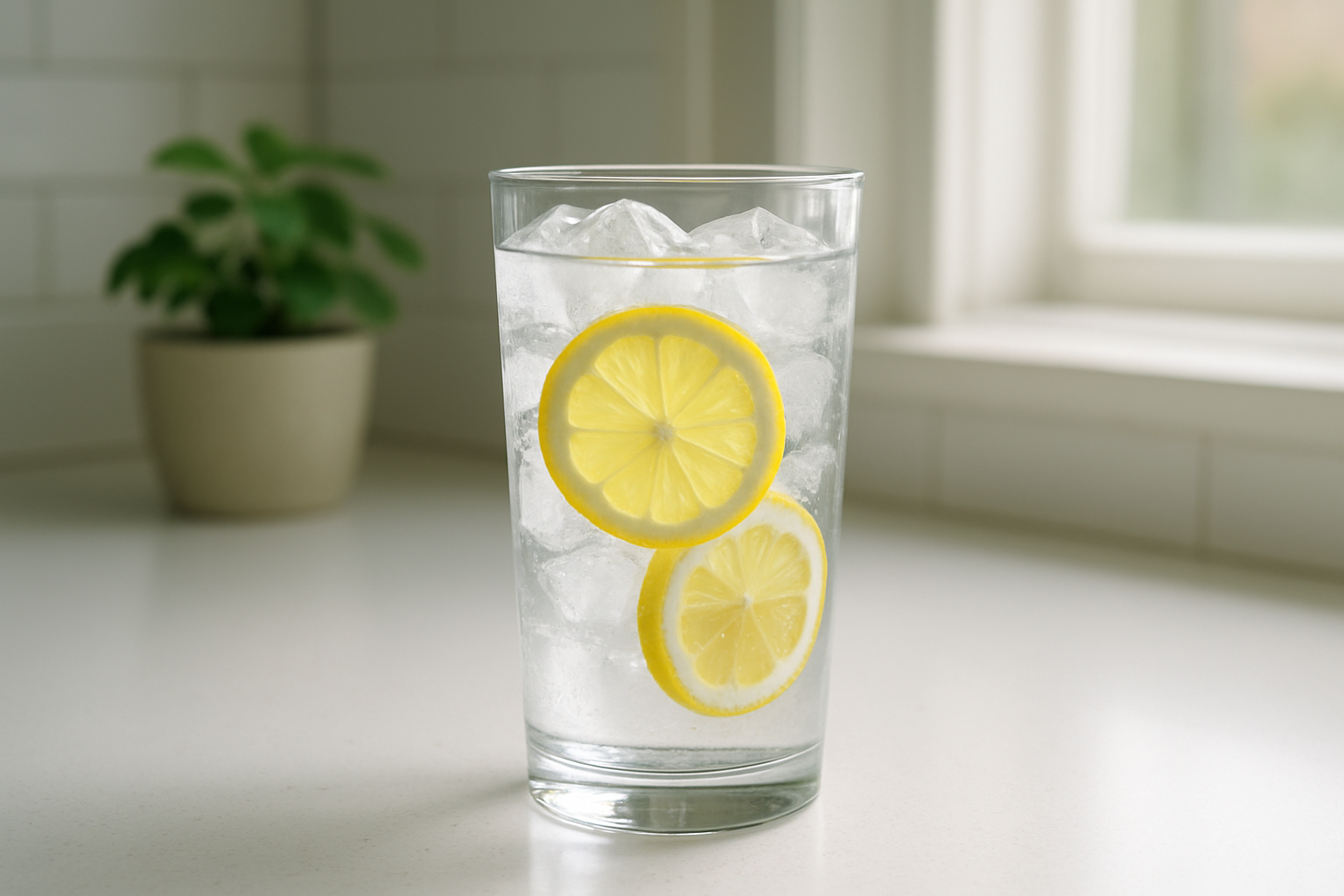
Why Thirst Signals Weaken as You Age
Here’s something most people don’t realize until it catches them off guard — after 50, your body quietly loses its ability to tell you when it needs water. The thirst mechanism that worked reliably for decades starts to fade. Your kidneys become less efficient at conserving water, your body composition shifts (less muscle means less water stored in tissue), and certain medications common in midlife — like diuretics or antihistamines — pull even more fluid out of your system.
The result? You can be significantly dehydrated and not feel thirsty at all. That’s not just uncomfortable. It has real consequences for people over 50:
- Brain fog and poor concentration — even mild dehydration can make thinking feel slow and fuzzy
- Low energy and fatigue — often mistaken for aging itself, but frequently just a water problem
- Constipation — especially when you’re eating more fiber (which you should be at this age)
- Dizziness and falls — dehydration drops blood pressure and throws off balance
- Kidney stress — your kidneys are already working harder after 50, and dehydration makes it worse
Staying hydrated over 50 isn’t just about quenching thirst. It’s about proactively protecting your energy, your brain, and your physical safety — even when your body isn’t sending the usual warning signals.
Practical Tips to Drink More Water Throughout the Day
Since you can’t rely on thirst to remind you, the trick is building hydration into your routine so it happens automatically, without needing willpower or constant reminders.
Set Up Water Anchors
Tie your water intake to things you already do every day. These become automatic triggers that keep you consistently hydrated:
- Morning: Drink a full glass of water before your coffee or tea — before anything else
- Before meals: Have a glass 15–20 minutes before eating (this also helps with portion control)
- Mid-morning and mid-afternoon: Keep a filled water bottle on your desk, counter, or wherever you spend the most time
- Before bed: A small glass before you sleep helps your body through the overnight fast
Use a Measured Bottle
Buy a 32 oz water bottle and make it your goal to finish two of them by the end of the day. Seeing the physical marker of how much you’ve drunk — rather than trying to count glasses — removes guesswork entirely.
Make Water More Enjoyable
Plain water isn’t exciting, and that’s a legitimate reason people avoid it. Try:
- Adding sliced cucumber, lemon, lime, or fresh mint
- Making a light herbal iced tea with no added sugar
- Sparkling water if you like the texture — it counts
- A small splash of 100% juice for flavor without a sugar bomb
Watch for Dehydration Warning Signs
Instead of waiting to feel thirsty, pay attention to these signals your body sends out long before thirst kicks in:
| Warning Sign | What It Might Mean |
|---|---|
| Dark yellow urine | You need more water, aim for pale straw color |
| Afternoon headaches | Often a dehydration signal, not stress |
| Midday energy crash | Low hydration drops circulation and focus |
| Dry mouth or lips | Your body is already playing catch-up |
| Muscle cramps | Dehydration depletes electrolytes that muscles need |
A good daily target for most adults over 50 is around 6 to 8 cups (48–64 oz) of fluid per day, though this shifts depending on your activity level, climate, and health conditions. Talk to your doctor if you have kidney disease or heart conditions that affect fluid intake.
Best Hydrating Foods to Include in Your Diet
Drinking water is only part of the picture. Roughly 20% of your daily fluid intake can come from food — and the best options also pack in nutrients that are especially valuable for healthy eating after 50.
Top Hydrating Foods for Adults Over 50
| Food | Water Content | Bonus Nutritional Benefit |
|---|---|---|
| Cucumber | 96% | Low calorie, easy to snack on |
| Celery | 95% | High fiber, supports digestion |
| Watermelon | 92% | Contains lycopene for heart health |
| Strawberries | 91% | Antioxidants, vitamin C |
| Cantaloupe | 90% | Beta-carotene, potassium |
| Zucchini | 94% | Versatile, easy to cook with |
| Tomatoes | 94% | Lycopene, vitamin K |
| Spinach | 91% | Iron, magnesium, folate |
| Oranges | 88% | Vitamin C, fiber |
| Plain Greek yogurt | 85% | Protein and probiotics too |
| Broth-based soups | 85–92% | Electrolytes and warmth |
Why These Foods Work Especially Well After 50
Many of these hydrating foods do double duty. Watermelon and tomatoes deliver lycopene, which supports heart health — a growing priority after 50. Spinach and cucumber are rich in potassium and magnesium, minerals that tend to get depleted, especially if you’re taking certain blood pressure medications. Greek yogurt gives you hydration alongside protein, which you’re working hard to get enough of at this stage of life.
Broth-based soups are particularly worth adding in cooler months. They’re hydrating, warming, easy to digest, and you can load them with vegetables and lean protein in a single bowl.
A Simple Daily Hydration Plate Strategy
Instead of tracking every ounce, think about this: if half your plate is filled with vegetables and fruits (which aligns perfectly with a fiber-rich eating approach), a meaningful portion of your hydration will take care of itself through the water content in those foods. The two goals — eating more plants and staying hydrated — naturally support each other.
The key is making hydration a background habit that doesn’t require constant attention. Build the anchors, keep the visual cues around you, and eat the foods that pull double duty. Your energy levels and mental sharpness will reflect the difference.
Rule 5: Plan Meals Ahead to Stay Consistent and Avoid Poor Choices
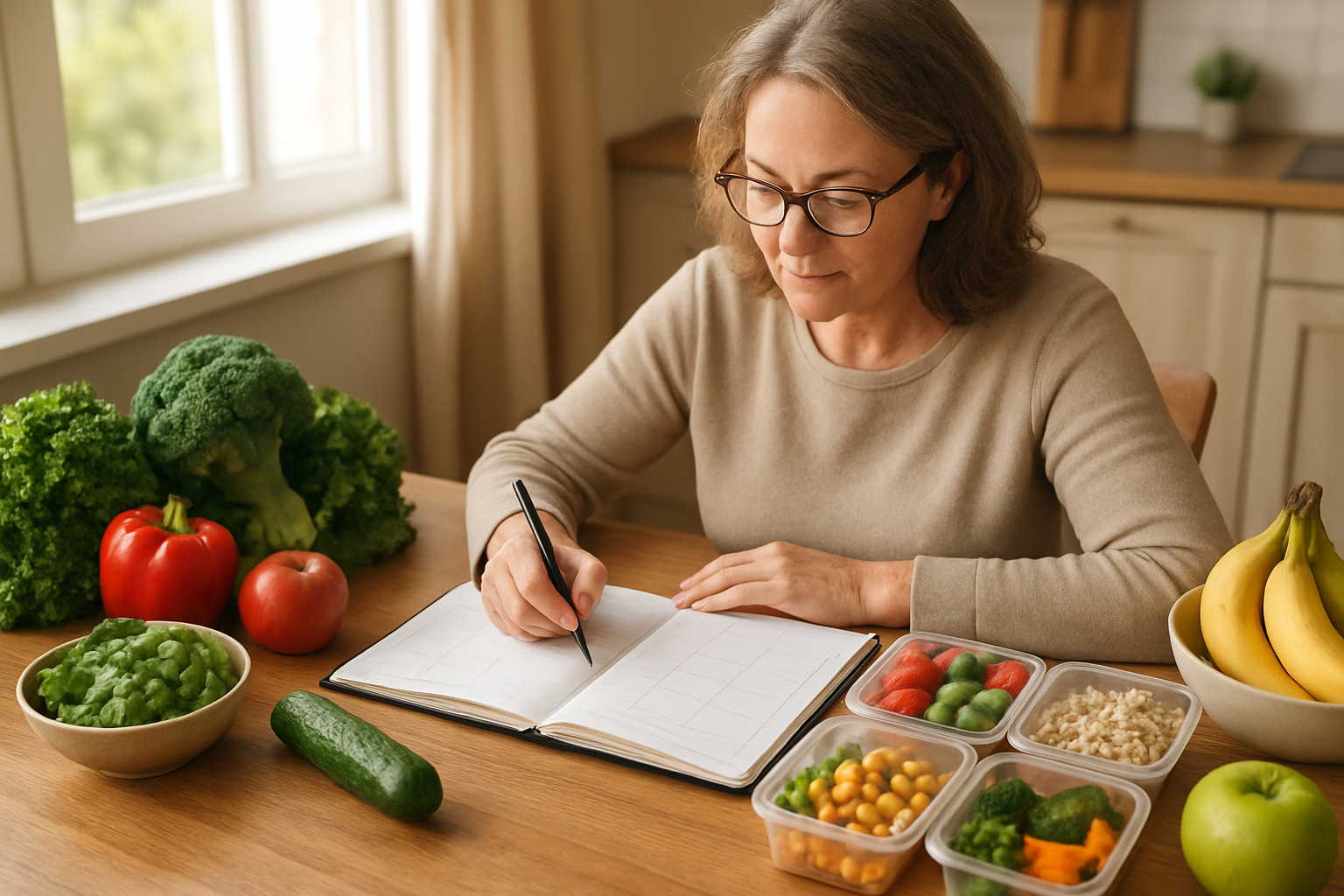
How Simple Meal Planning Removes Daily Decision Fatigue
Every day, the average person makes hundreds of tiny decisions — and food choices are among the most draining. By the time dinner rolls around, your brain is tired, and that’s exactly when the drive-through starts looking appealing or you end up eating crackers over the sink because “it’s just easier.”
This is what researchers call decision fatigue, and it hits harder as we get older — not because we’re less capable, but because our days tend to be fuller and our energy more precious. Meal planning sidesteps this problem entirely. When you already know what’s for dinner on Tuesday, you don’t have to think about it Tuesday afternoon. The decision is already made.
Here’s why this matters specifically for healthy eating after 50: your nutritional needs are more specific than they used to be. You need more protein, more fiber, and less sodium and sugar. When you’re winging it every night, it’s incredibly hard to hit those targets consistently. But when meals are planned in advance, you can build those nutritional priorities right into your week without any extra mental effort on the day itself.
Think of meal planning less like a rigid diet schedule and more like a gift you give your future self. Monday-night-you will be very grateful that Sunday-you figured this all out.
Easy Meal Prep Strategies That Fit a Busy Lifestyle
You don’t need to spend six hours on a Sunday turning your kitchen into a restaurant production line. Effective meal prep for adults over 50 is really about a few smart habits layered together, not a massive overhaul of your weekend.
Start With the “Big Three” Prep Tasks
Each week, focus on just three things that give you the most flexibility:
- A batch of protein — roast a tray of chicken thighs, hard-boil a dozen eggs, or cook a big pot of lentils. This covers lunches and dinners without any daily effort.
- Pre-cut vegetables — wash and chop a variety of vegetables so they’re ready to toss into stir-fries, soups, or simply onto a sheet pan.
- A whole grain base — cook a large pot of brown rice, quinoa, or farro. It keeps in the fridge for up to five days and pairs with almost anything.
With just these three components ready to go, you can throw together a balanced, nutrient-dense meal in under 15 minutes on any night of the week.
Use a “Template Meal” Approach
Instead of planning specific recipes every single day, try planning by meal template. This approach is especially practical for meal planning for seniors because it keeps variety without adding complexity.
| Day | Template | Example |
|---|---|---|
| Monday | Protein + Roasted Veggies | Chicken thighs + roasted broccoli |
| Tuesday | Grain Bowl | Quinoa + chickpeas + leafy greens |
| Wednesday | Soup or Stew | Lentil and vegetable soup |
| Thursday | Stir-Fry | Brown rice + eggs + mixed vegetables |
| Friday | Flexible / Leftovers | Whatever needs using up |
| Saturday | New Recipe Day | Try something seasonal or different |
| Sunday | Simple & Light | Salad + protein + whole grain bread |
Templates remove the pressure of finding a new recipe every night while still keeping meals interesting and nutritionally varied.
Batch Cooking vs. Partial Prep — Know the Difference
- Batch cooking means making complete meals in large quantities and storing them for the week. Works great for soups, stews, and casseroles.
- Partial prep means preparing ingredients rather than full meals — chopping onions, washing greens, marinating proteins. This works better for people who enjoy cooking but just want to cut down the daily time.
Neither approach is better than the other. Most people find a combination of both works best. The key is choosing a system that you’ll actually stick to, not the most impressive one you find online.
Smart Shortcuts Worth Using
There’s no prize for doing everything from scratch. These shortcuts can save significant time without sacrificing nutritional quality:
- Rotisserie chicken — high-protein, ready immediately, versatile in salads, soups, and wraps
- Frozen vegetables — nutritionally equivalent to fresh, no chopping required
- Canned beans and lentils — rinse and use instantly, excellent fiber and protein sources
- Pre-washed bagged greens — zero prep, ready to eat
- Pre-cooked grain pouches — heat in 90 seconds, solid base for any meal
These aren’t cheating. They’re practical tools that support a healthy lifestyle after 50 by making good food faster and easier than poor food.
How to Build a Weekly Routine That Keeps You on Track
Consistency is the real secret to healthy eating over 50 — not perfection. A good weekly routine doesn’t mean eating the same things forever; it means creating a reliable structure that makes healthy choices the path of least resistance.
Pick One Planning Day and One Prep Day
These don’t have to be the same day. Many people find it works well to:
- Plan on Friday — look at the upcoming week, check what’s already in the pantry, and write a simple shopping list
- Shop on Saturday — get everything you need in one trip
- Prep on Sunday — spend 45–60 minutes doing the Big Three prep tasks
This three-day rhythm means you head into every new week already set up for success.
Keep a Running Pantry List
One of the biggest obstacles to consistent meal planning is running out of the staples that make quick, healthy meals possible. Keep a short list on your fridge — or in a notes app on your phone — of the core items you always want on hand:
Pantry staples to always keep stocked:
- Canned beans (chickpeas, black beans, lentils)
- Brown rice or quinoa
- Olive oil
- Canned tomatoes
- Whole grain pasta or bread
- Nuts and seeds
- Low-sodium broth or stock
Fridge staples:
- Eggs
- Plain Greek yogurt
- A variety of fresh vegetables
- Leafy greens
- Cheese or hummus for quick snacks
Freezer staples:
- Frozen vegetables (peas, edamame, spinach, corn)
- Frozen fish fillets
- Chicken breasts or thighs
- Frozen fruit for smoothies
When these are always on hand, you can build a solid meal even on the nights when your plan goes sideways.
Build in Flexibility Without Abandoning the Plan
Life over 50 is full — grandkids, appointments, spontaneous dinners out. Your meal plan doesn’t need to be rigid to be effective. A few practical ways to stay flexible:
- Always plan one “fridge clean-out” night using leftovers or whatever needs eating
- Keep two or three ultra-simple backup meals in mind (eggs on toast, a grain bowl, a quick bean soup) for nights when the plan doesn’t happen
- If you skip a planned meal, don’t try to “make it up.” Just pick up where you left off the next day
The goal of meal planning for seniors and adults over 50 isn’t to create a perfect eating record — it’s to make healthy eating so easy and automatic that it becomes the default, not the exception. Small, consistent habits compound over time. A week of planned, nutritious meals repeated fifty times a year is what actually moves the needle on your health, energy, and long-term wellbeing.

Eating healthy after 50 doesn’t have to feel like a punishment or a complete overhaul of everything you enjoy. It really comes down to a few smart habits — getting enough protein to keep your muscles strong, loading up on fiber-rich foods, dialing back the sugar and processed stuff, drinking enough water, and taking a few minutes to plan your meals ahead of time. Small, steady changes like these add up fast and make a bigger difference than any crash diet ever could.
So pick one rule to start with this week. Just one. Get comfortable with it, make it part of your routine, and then layer in the next one. Before you know it, eating well will feel less like a chore and more like something you actually do — because you feel better, have more energy, and want to keep it that way.