



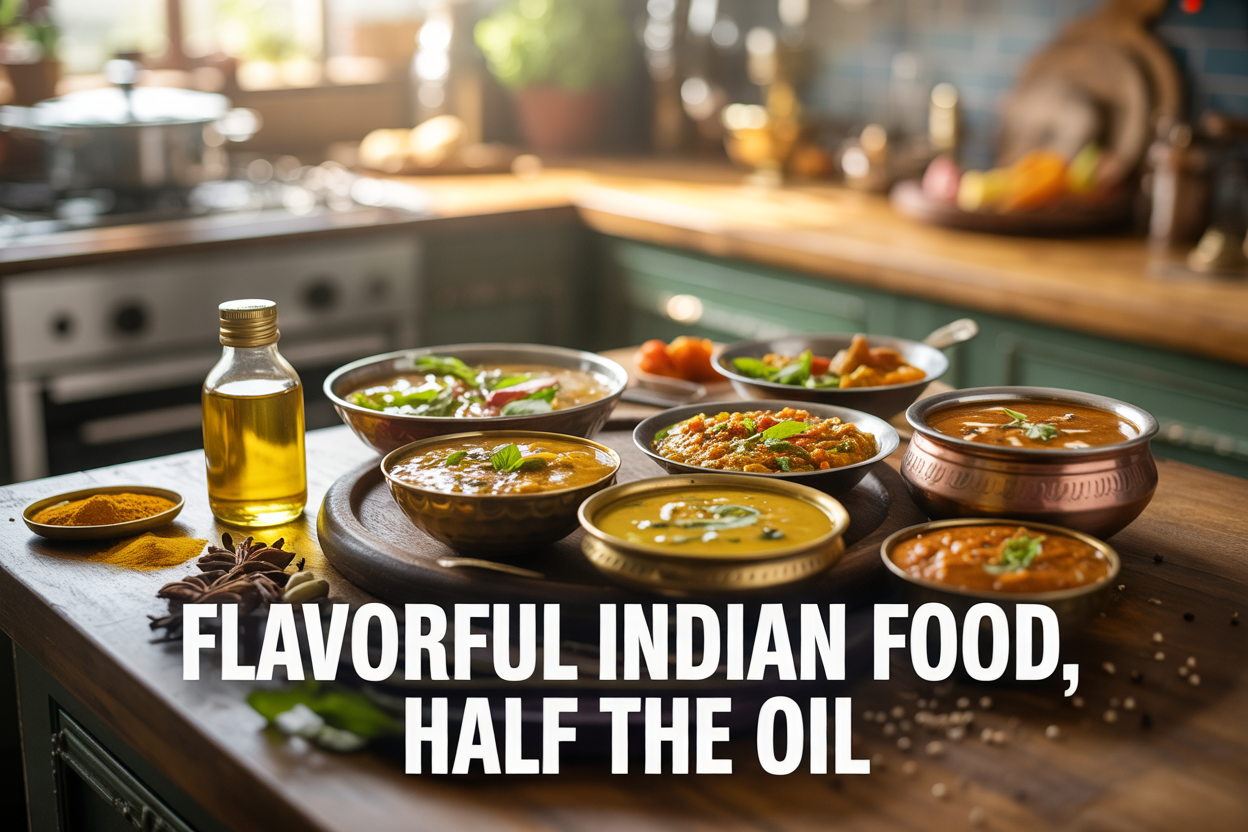
How to Cook Flavorful Indian Vegetarian Food With Half the Oil
If you love Indian food but feel like every recipe drowns in oil, you’re not alone. Most of us grew up watching family members pour generously from the bottle without a second thought — and the food tasted incredible. So the idea of cutting oil in Indian cooking feels risky, almost like you’re signing up for bland, sad meals.
But here’s the thing: the flavor in Indian food doesn’t actually come from the oil. It comes from the spices, and knowing how to handle them changes everything.
This guide is for home cooks who want to make healthy Indian vegetarian cooking a real part of their daily routine — not a punishment. You don’t need fancy equipment or a complete kitchen overhaul.
Here’s what you’ll walk away with:
- Why Indian recipes traditionally use so much oil — and what that means for your cooking today
- How blooming spices techniques work with less oil so you keep every bit of that deep, layered flavor
- Simple swaps and cooking methods that help you reduce oil in Indian cooking without your dal or sabzi tasting like it’s missing something
Cutting oil doesn’t mean cutting corners. It just means cooking a little smarter.
Table of Contents
Understand Why Traditional Indian Cooking Uses So Much Oil
The Role of Oil in Building Deep Flavors and Texture
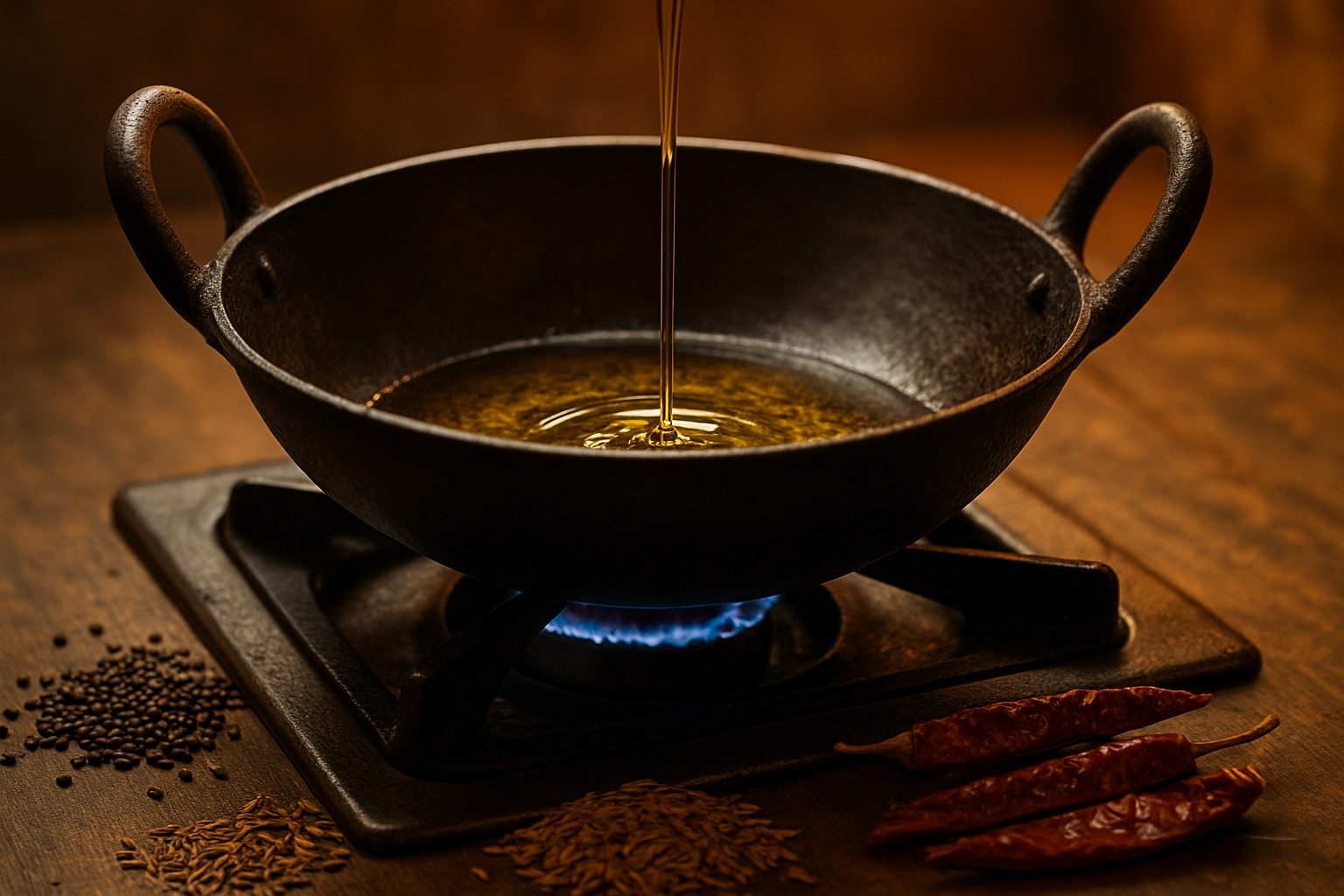
Oil isn’t just a cooking medium in Indian cuisine — it’s a flavor carrier. Fat-soluble compounds in spices like turmeric, cumin, and mustard seeds only release their full aroma and color when heated in oil. Oil also creates the rich, glossy coating you see in restaurant-style curries and helps onions caramelize properly, building that sweet, deep base most Indian dishes depend on.
Common Cooking Methods That Rely Heavily on Oil
Several traditional techniques push oil usage higher than necessary:
- Tadka (tempering): Often uses generous amounts of oil to bloom whole spices
- Bhuno (sautéing): Requires constant stirring with oil to prevent sticking
- Deep-frying: Used for snacks like samosas and pakoras
- Rich gravy bases: Onion-tomato masalas cooked low and slow in plenty of oil
Health Concerns Linked to Excess Oil in Indian Cooking
Excess oil in daily Indian cooking quietly adds up. A single home-cooked meal can contain 4–6 teaspoons of oil per serving. Over time, this raises risks of:
- Heart disease and high cholesterol
- Weight gain
- Inflammation
Reducing oil in Indian cooking doesn’t mean sacrificing taste — it means cooking smarter.
Master the Art of Blooming Spices With Less Oil
Use a Small Amount of Oil to Release Maximum Aroma From Spices
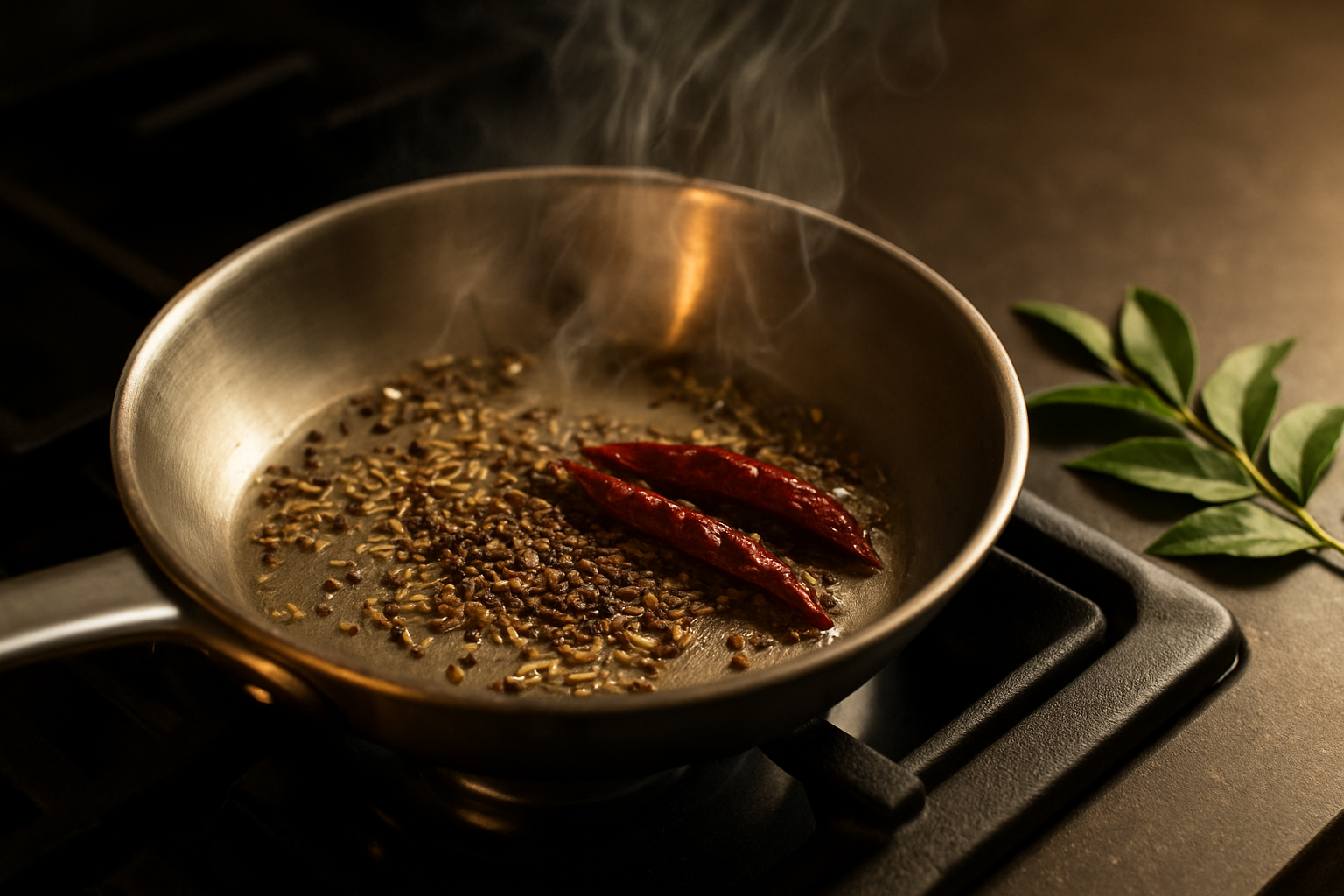
You don’t need a pool of oil to wake up your spices. Just one teaspoon of oil in a hot pan is enough to coax out the essential oils from cumin seeds, mustard seeds, or dried chilies. Heat the oil until it shimmers, add your whole spices, and watch them sizzle and pop — that’s flavor happening right in front of you.
Toast Dry Spices Before Adding Oil to Boost Flavor
Dry-toast ground spices like coriander, cumin, and garam masala in a dry pan for 30–60 seconds before any oil touches the pan. This deepens their flavor dramatically, so you need less oil overall to carry that taste through the dish.
Swap Excess Oil With Vegetable Broth for a Lighter Tadka
Replace 50–70% of your tadka oil with warm vegetable broth. The broth keeps spices moving in the pan without burning while adding a subtle savory depth — a simple low oil Indian recipe trick that works beautifully.
Build Layered Spice Profiles Without Compromising Taste
Add spices in stages:
- Whole spices first in minimal oil
- Ground spices mid-cook
- Fresh herbs at the end
This approach builds complexity without extra oil.
Choose the Right Cooking Techniques to Cut Oil Without Losing Flavor
Steam and Pressure Cook Vegetables to Retain Natural Taste
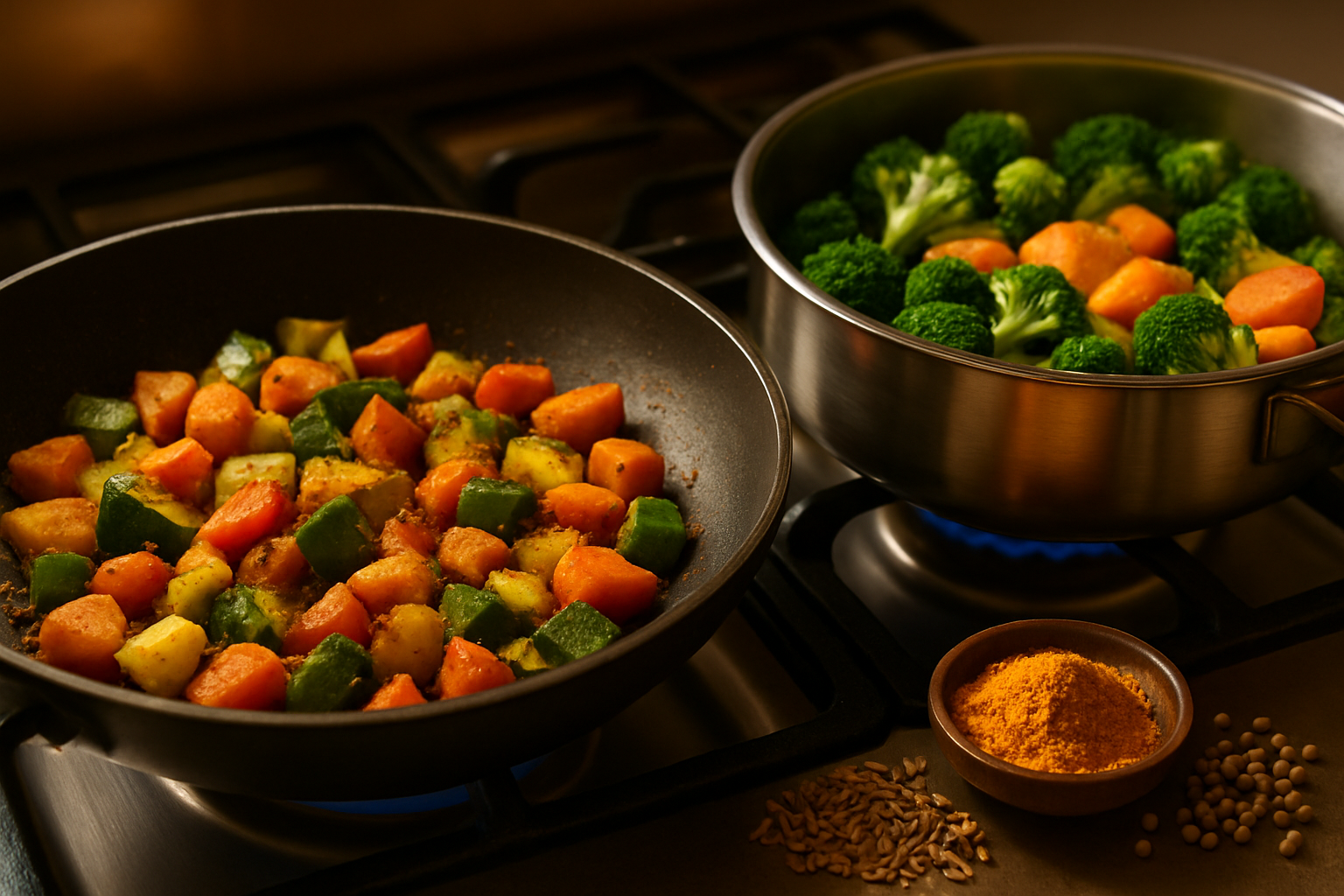
Steaming and pressure cooking are your best friends for low oil Indian recipes. These methods lock in the vegetable’s natural sweetness and nutrients without needing fat to carry flavor. Pressure-cooked lentils and chickpeas develop a creamy texture that absorbs spices beautifully — no extra oil needed.
- Steam cauliflower or potatoes before adding to a curry base
- Use pressure cooking for dal, rajma, and chana to reduce cook time and oil dependency
- Add spiced water while steaming to infuse flavor from the start
Use Non-Stick and Cast Iron Cookware to Reduce Sticking
The right pan genuinely changes everything. Non-stick surfaces let you cook a full tadka with just a teaspoon of oil. Cast iron, once well-seasoned, creates a naturally non-stick surface while adding subtle depth to healthy Indian vegetarian cooking.
| Cookware | Best For | Oil Needed |
|---|---|---|
| Non-stick | Everyday sabzi, tadka | Very little |
| Cast iron | Rotis, dry curries | Minimal |
Roast and Grill Vegetables for a Smoky Depth of Flavor
Roasting tomatoes, onions, and peppers directly on a flame or in a dry oven creates char and smokiness — flavor that oil alone can never replicate. This technique is a game-changer for Indian cooking with less oil.
Swap Ingredients Smartly to Maintain Richness
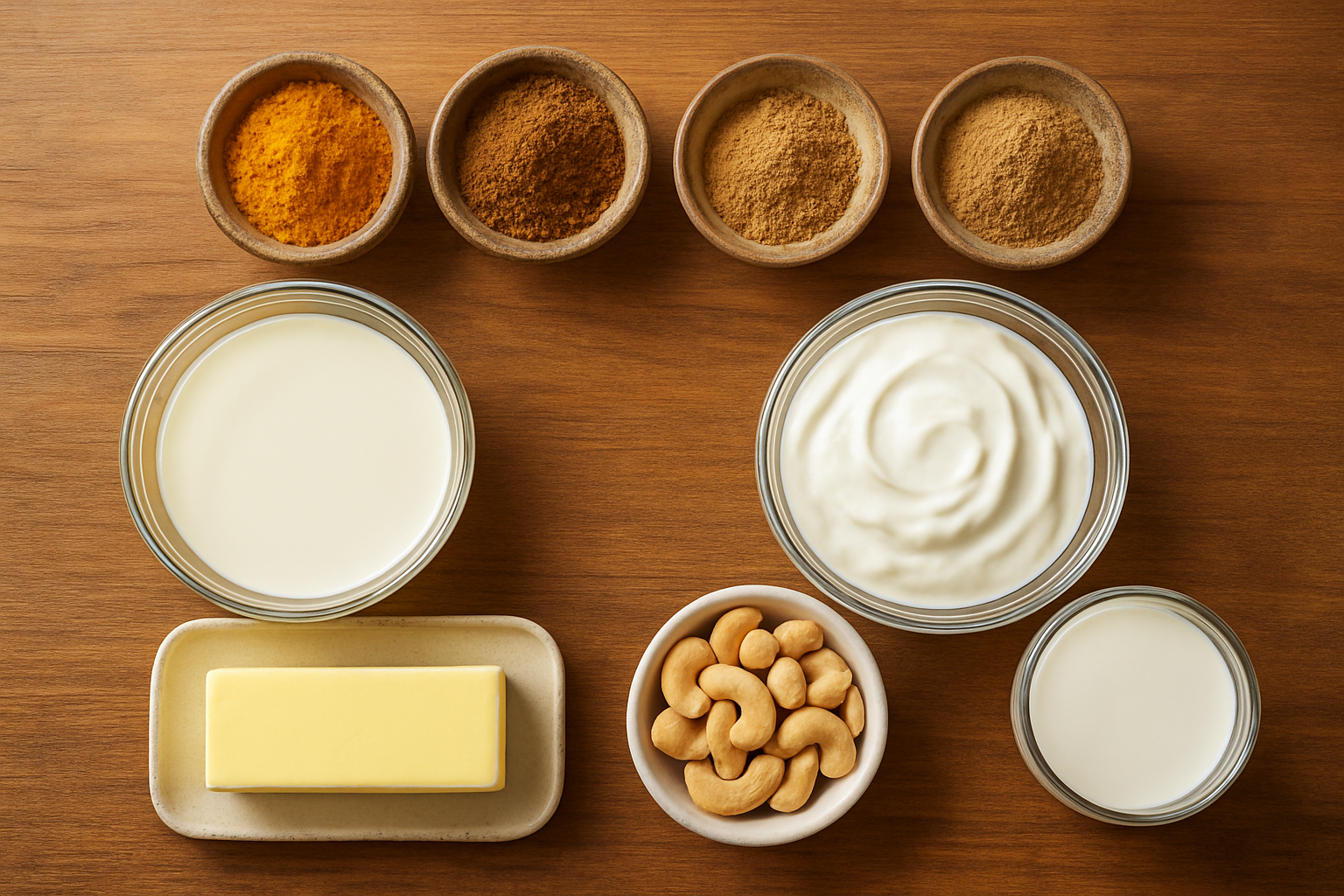
Replace Excess Oil With Yogurt or Coconut Milk for Creaminess
Whisked plain yogurt stirred in at the end of cooking adds that silky, rich texture you’d normally get from extra oil. For curries, lite coconut milk works beautifully — giving body and a subtle sweetness without loading up on fat.
Use Pureed Onions and Tomatoes as a Natural Flavor Base
Raw onion-tomato puree cooked down slowly creates a thick, deeply flavored masala base that carries spices just as well as oil-heavy versions. This is the backbone of low oil Indian recipes that still taste complex and satisfying.
Add Cashew or Almond Paste for Body Without Extra Oil
A small amount of soaked cashew or almond paste blended smooth adds creaminess to gravies without pouring in extra oil. Even two tablespoons can transform a thin curry into something restaurant-worthy.
Incorporate Lentils and Legumes to Create Satisfying, Hearty Dishes
| Ingredient | Benefit |
|---|---|
| Red lentils | Thicken curries naturally |
| Chickpeas | Add protein and texture |
| Black beans | Create hearty, filling bases |
Blending a portion of cooked lentils directly into your dish gives gravies a naturally creamy consistency — no extra oil needed.
Adapt Popular Indian Vegetarian Recipes to Use Half the Oil
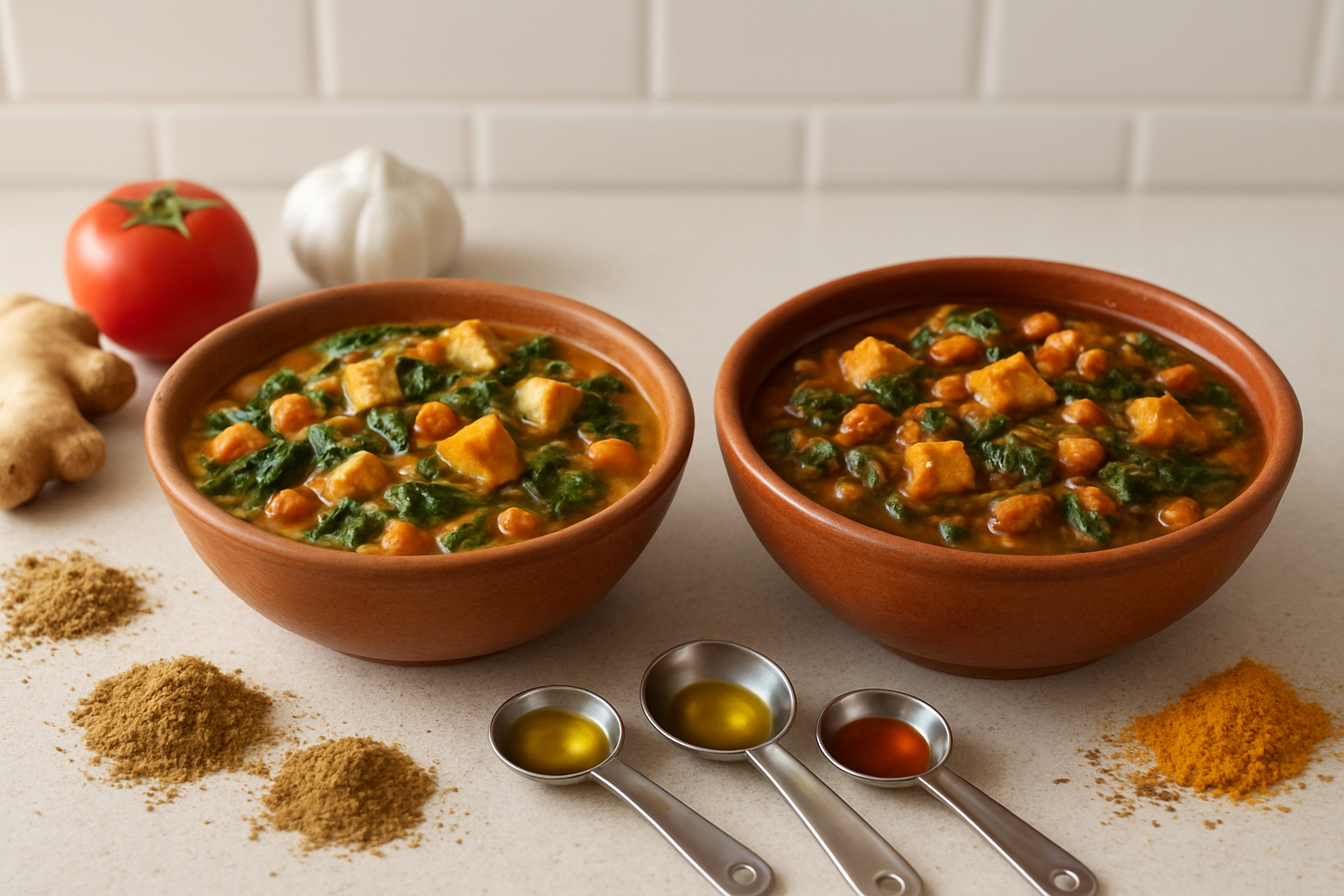
Make a Lighter Version of Dal Tadka With Minimal Oil Tempering
Skip deep-frying the tadka in a ladle full of ghee. Instead, heat just half a teaspoon of oil in a small pan, add mustard seeds, cumin, dried chilies, and garlic, and let them bloom quickly. Pour this directly over your cooked dal. The flavor punch stays strong — you’re just using a fraction of the fat.
Cook Paneer Dishes Using Dry Roasting Instead of Frying
Cube your paneer and toss it in a hot non-stick or cast iron pan with zero oil. It browns beautifully, develops a slight crust, and holds its shape in curries without soaking up oil. Your palak paneer or kadai paneer gets all the texture with none of the grease.
Prepare Vegetable Curries With Water-Sautéed Aromatics
Sauté onions, ginger, and garlic in two to three tablespoons of water instead of oil. Stir frequently, add small splashes as needed, and they’ll still caramelize and soften. Your base for any low oil Indian recipe turns out rich without the extra calories.
Create Low-Oil Versions of Classic Stuffed Breads and Snacks
- Brush parathas lightly with oil using a pastry brush instead of spooning it on
- Air-fry or bake samosas instead of deep-frying
- Use a non-stick tawa for rotis — no oil needed at all
Build Consistent Healthy Cooking Habits in Your Kitchen
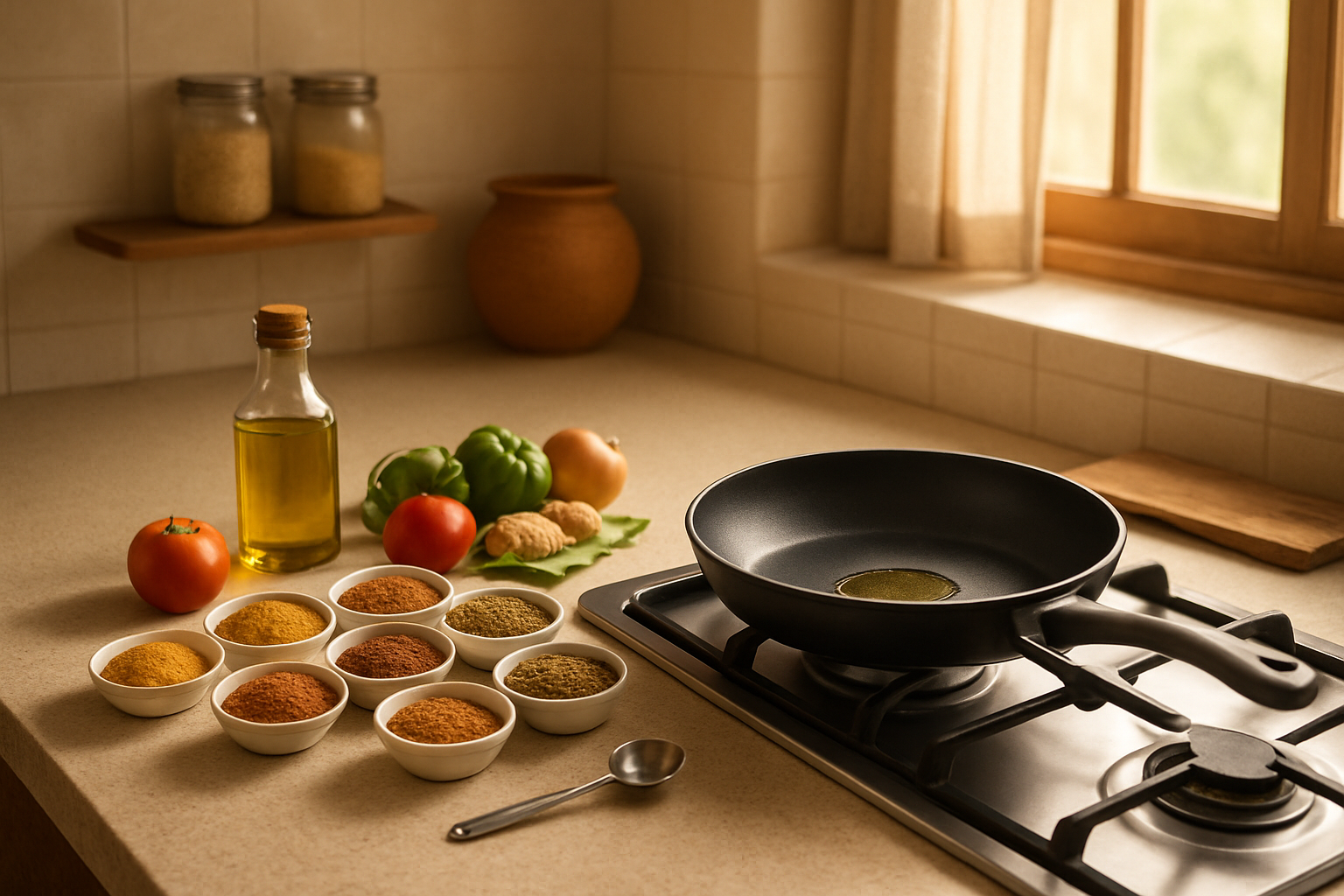
Measure Oil Before Adding It to Avoid Accidental Excess
Eyeballing oil is where most people quietly go overboard. Keep a tablespoon measure right next to your stove and use it every single time. It takes two seconds and makes a real difference. Aim for 1–2 teaspoons per serving for most Indian vegetarian dishes — that’s plenty when your spices are doing the heavy lifting.
Plan Meals Around Naturally Low-Fat Indian Cooking Styles
Some regional Indian cuisines are already built around healthy Indian vegetarian cooking with minimal oil:
- South Indian rasam and sambar — broth-based and deeply spiced
- Bengali steamed dishes (bhapa) — use mustard paste and minimal fat
- Rajasthani dal baati — bake instead of fry
- Gujarati dhokla — steamed, light, and packed with flavor
Rotate these styles through your weekly meals and you naturally reduce oil without trying.
Stock Your Pantry With Flavor-Boosting Low-Oil Essentials
The right pantry makes low oil Indian recipes feel effortless. Keep these on hand:
| Ingredient | Why It Works |
|---|---|
| Tamarind paste | Adds tang and depth |
| Dried kokum | Natural souring agent |
| Kashmiri chili powder | Rich color, mild heat |
| Asafoetida (hing) | Big savory punch, tiny amount needed |
| Fresh curry leaves | Aromatic, oil-free flavor boost |
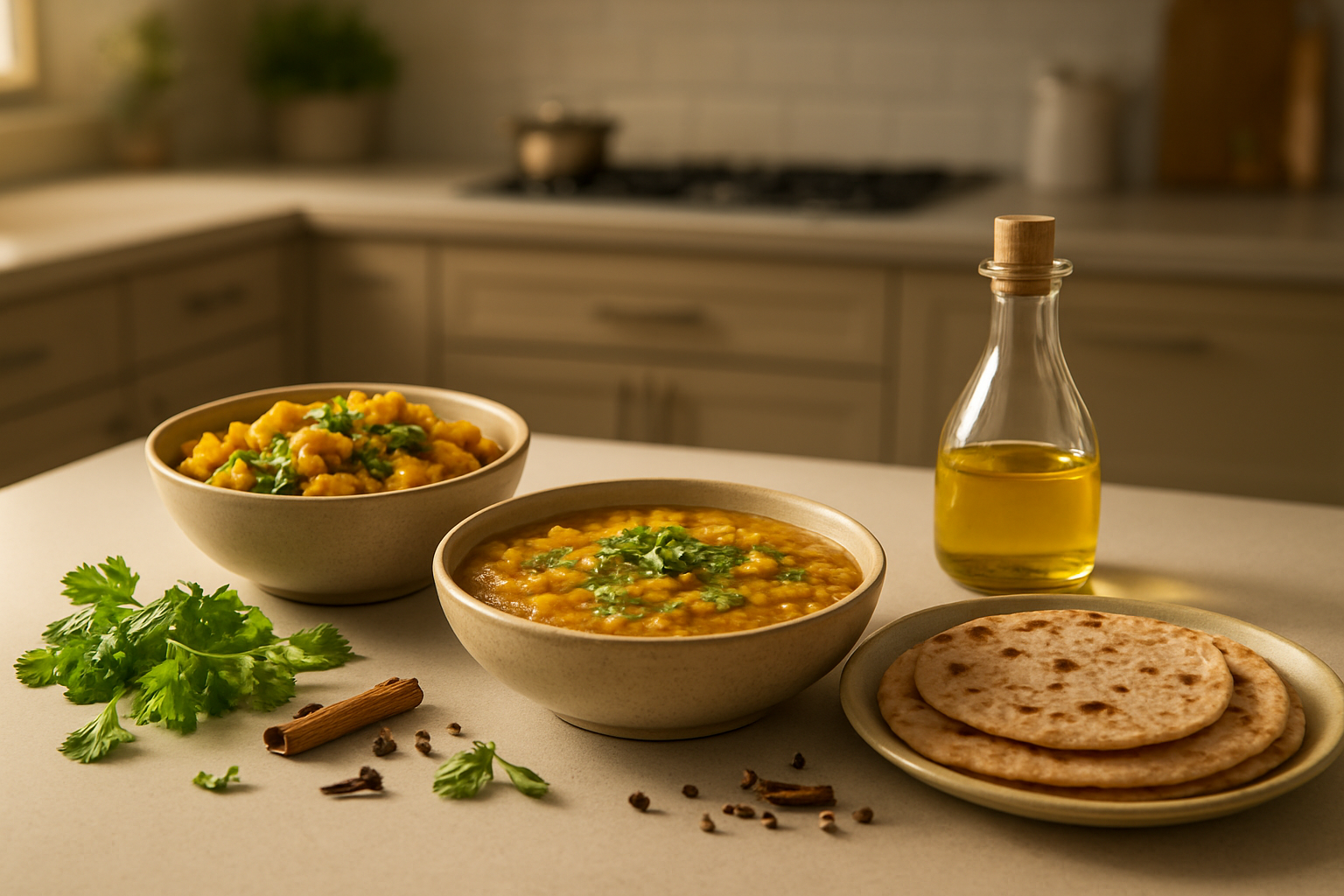
Cooking flavorful Indian vegetarian food with less oil is absolutely doable once you understand the “why” behind traditional recipes and start making small, smart swaps. From blooming your spices in just a teaspoon of oil to leaning on techniques like dry roasting, steaming, and non-stick cookware, you have plenty of ways to keep all that bold, rich flavor without the extra grease. Choosing the right ingredients — like cashew cream, yogurt, or blended onion-tomato bases — also goes a long way in keeping your curries and dals tasting indulgent and satisfying.
The real magic happens when these changes stop feeling like “healthy compromises” and start becoming your natural way of cooking. Start with one recipe, try cutting the oil in half, and see how it turns out. Chances are, you won’t even miss it. Over time, these small shifts add up to a kitchen routine that’s better for your health and just as delicious as anything you grew up eating.