




Table of Contents
Hotel-Style Vegetable Kurma: The Secret Finally Revealed
You’ve tasted that rich, creamy vegetable kurma at a restaurant and wondered why yours at home never quite hits the same way. You’re not alone — and the good news is, the gap between home cooking and restaurant quality is smaller than you think.
This guide is for home cooks who are tired of bland, watery kurma and ready to nail the real thing. No culinary degree needed, no fancy equipment — just the right knowledge.
Here’s what we’re breaking down together:
- The actual ingredients that give hotel-style vegetable kurma its signature flavor and color (hint: it’s not just coconut)
- The cooking techniques that most recipes skip over — the ones that make the biggest difference
- Serving ideas that make your homemade kurma look and taste just like restaurant plating
By the end, you’ll have a go-to authentic vegetable kurma recipe that delivers restaurant-quality results every single time — straight from your own kitchen.
What Makes Hotel-Style Vegetable Kurma Unique
The Rich and Creamy Texture That Sets It Apart
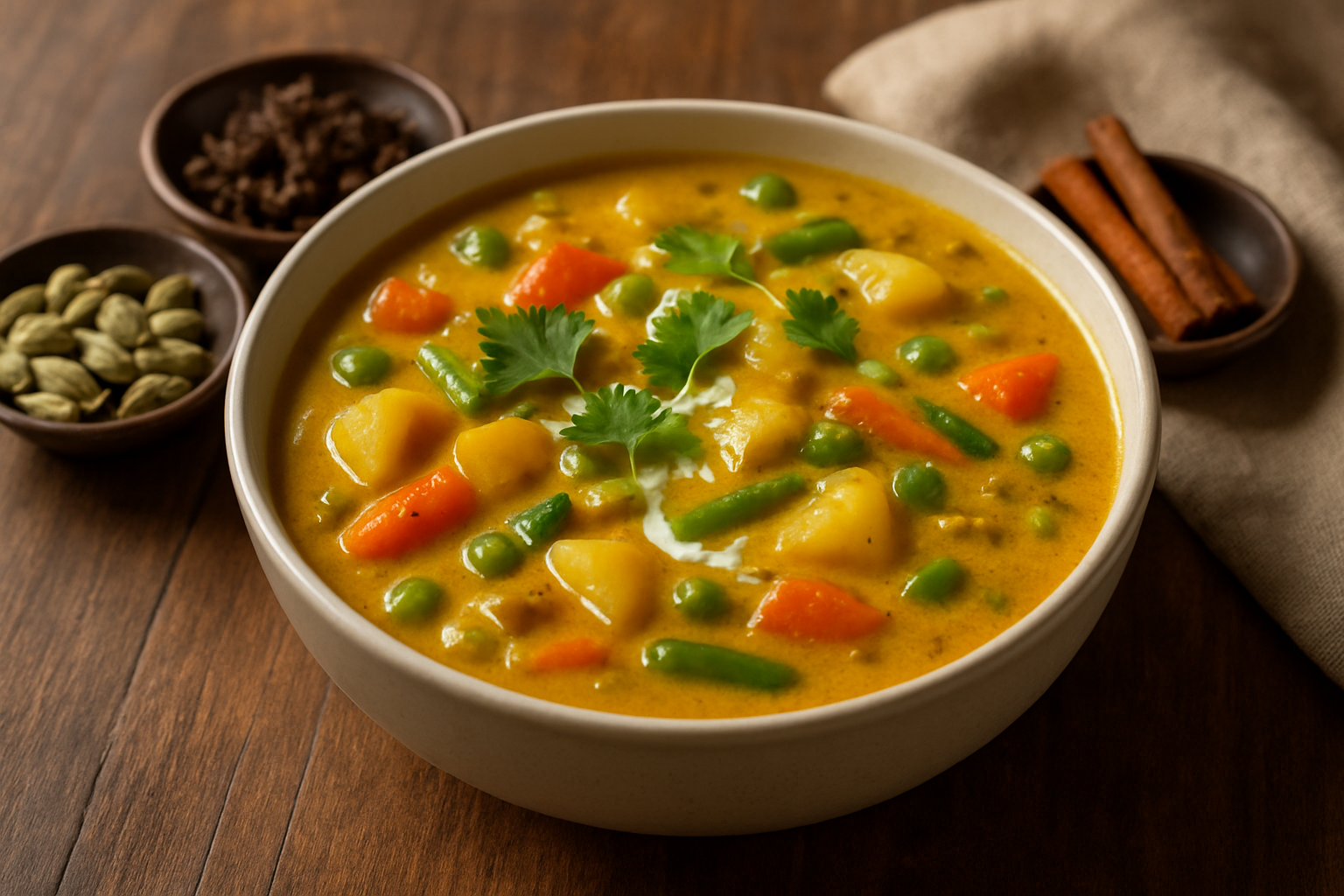
Hotel-style vegetable kurma has that signature velvety, thick gravy that coats every vegetable perfectly. This comes from a carefully balanced paste of cashews, fresh coconut, and poppy seeds — a combination that creates unmatched richness without feeling heavy.
How Restaurant Kurma Differs From Home Cooking
| Factor | Home Cooking | Restaurant Style |
|---|---|---|
| Base paste | Often skipped or simplified | Cashew-coconut paste always included |
| Cooking fat | Regular oil | Ghee + oil combination |
| Spice layering | Added together | Added in stages |
| Gravy depth | Thin, watery | Thick, deeply flavored |
The vegetable kurma restaurant style achieves its depth through cooking in stages — building flavors layer by layer rather than throwing everything in at once. Restaurants also use a higher fat ratio, which carries the spice flavors beautifully throughout the dish.
The Role of Freshly Ground Spices in Authentic Flavor
Pre-packaged spice powders simply cannot replicate what freshly ground whole spices deliver. For an authentic vegetable kurma recipe, these freshly ground components make the biggest difference:
- Whole coriander seeds — brighter, citrusy note
- Green cardamom pods — floral sweetness
- Fennel seeds — subtle anise warmth
- Fresh ginger-garlic paste — made daily in hotels, never stored long
Grinding spices fresh releases volatile oils that dried powders have already lost.
Essential Ingredients You Must Have
The Perfect Vegetables to Use for Best Results
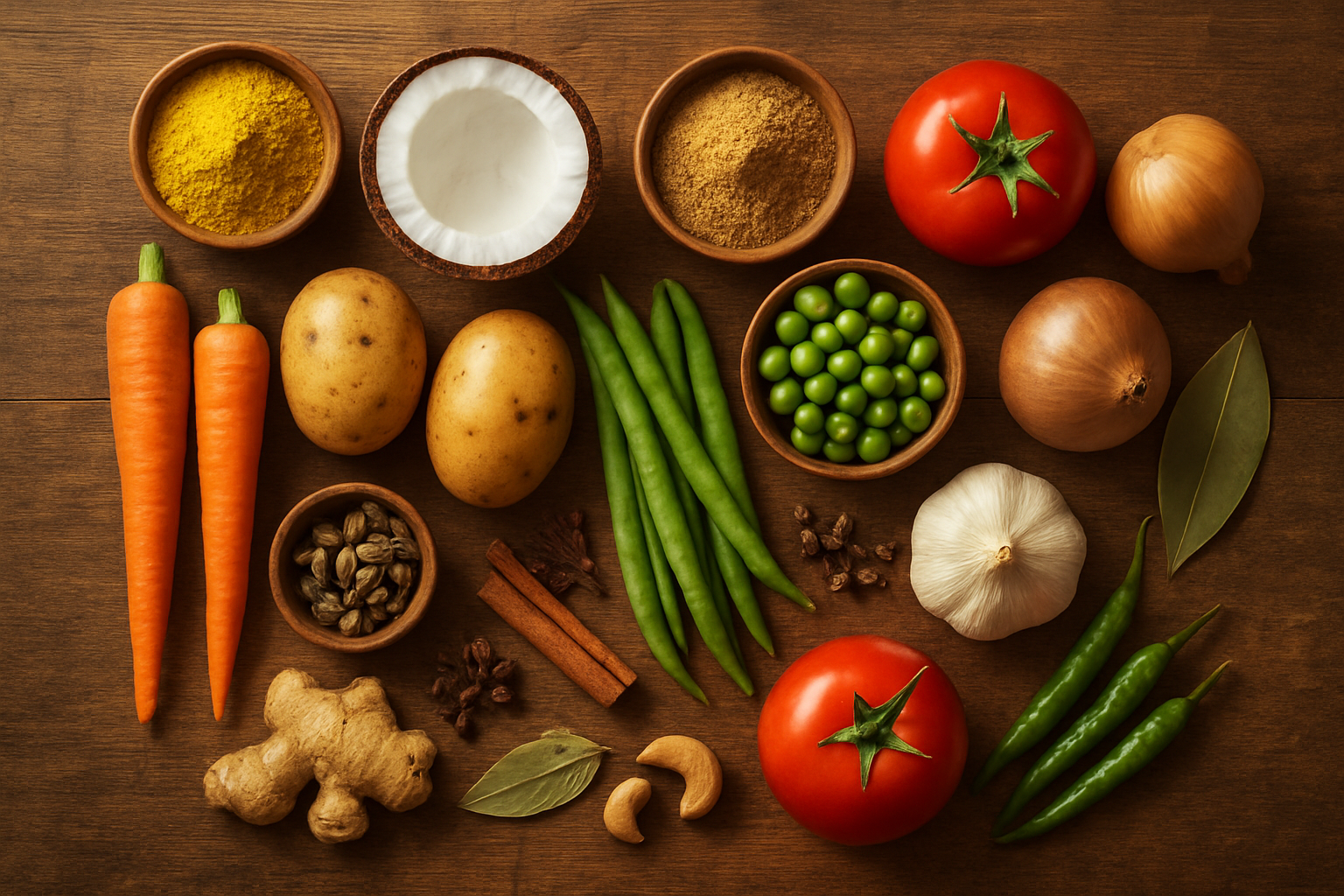
The best hotel style vegetable kurma recipe relies on a specific mix of vegetables that hold their shape and absorb flavors well.
- Carrots, beans, and peas – the classic trio
- Potatoes – add body and natural thickness
- Cauliflower – soaks up the gravy beautifully
- Bell peppers – optional but add color and mild sweetness
Always par-cook dense vegetables separately before adding them to the gravy.
Key Spices and Aromatics That Build Deep Flavor
| Spice/Aromatic | Purpose |
|---|---|
| Whole spices (bay leaf, cardamom, cloves) | Fragrant base layer |
| Fennel seeds | Distinctly hotel-style sweetness |
| Fresh ginger-garlic paste | Sharp, punchy backbone |
| Green chilies | Bright heat without bitterness |
The Secret Base Ingredients Hotels Never Skip
Hotels always build their kurma on a slow-cooked onion-tomato base — not rushed, never watery. Fried onions blended smooth create that signature silky body. A small spoon of curd/yogurt stirred in off the heat adds subtle tang and richness.
Choosing the Right Coconut and Nut Paste
Fresh coconut or desiccated coconut blended with cashews and poppy seeds creates the creamy, restaurant-quality texture that makes this an authentic vegetable kurma recipe. Always soak cashews for 20 minutes before blending for a perfectly smooth paste.
Mastering the Hotel-Style Cooking Techniques
How to Build the Perfect Flavor Base
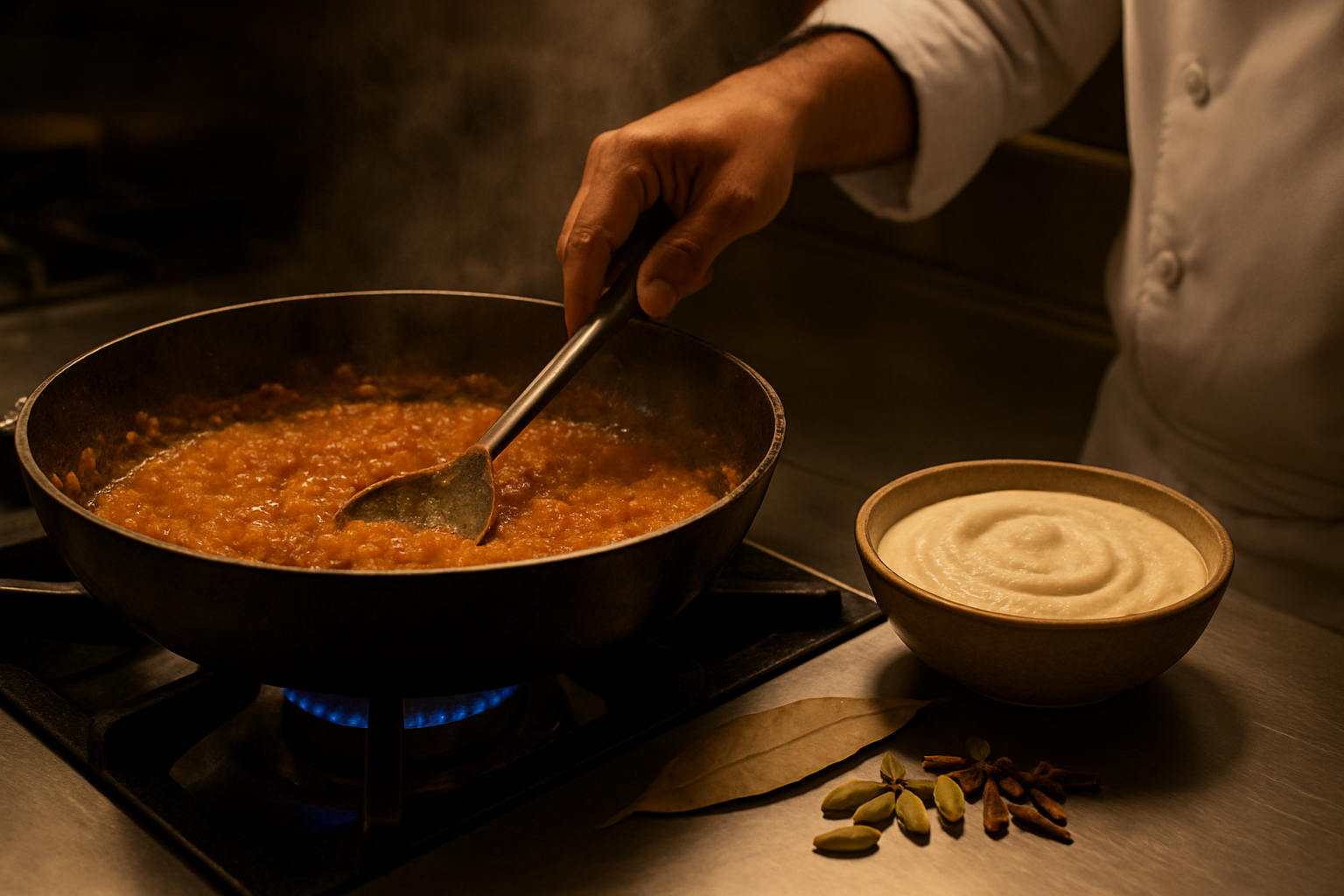
The secret to restaurant-quality vegetable kurma starts with slow-cooking your onions until they turn deep golden. Rushing this step ruins everything. Add your ginger-garlic paste only after the onions are properly caramelized — raw paste bitterness never recovers.
The Right Way to Cook Vegetables Without Losing Texture
- Blanch hard vegetables (carrots, beans) separately before adding to the gravy
- Add softer vegetables (peas, cauliflower) in the final 5 minutes
- Never boil everything together — it turns your kurma mushy
Achieving the Ideal Gravy Consistency Every Time
The base paste matters most here. Blend cashews, fresh coconut, and poppy seeds into a completely smooth paste. Add it after your tomatoes cook down fully. Simmer on low heat — high heat breaks the gravy and makes it grainy.
Balancing Spices for a Perfectly Rounded Taste
| Spice Layer | When to Add |
|---|---|
| Whole spices | First, in hot oil |
| Ground spices | After onion-tomato base |
| Garam masala | Final 2 minutes only |
Finishing Touches That Elevate the Dish
A tiny dollop of fresh cream and a handful of chopped coriander right before serving completely transform the dish — this is exactly what hotels do every single time.
Step-by-Step Recipe for Perfect Vegetable Kurma
Preparing Your Ingredients Before You Start
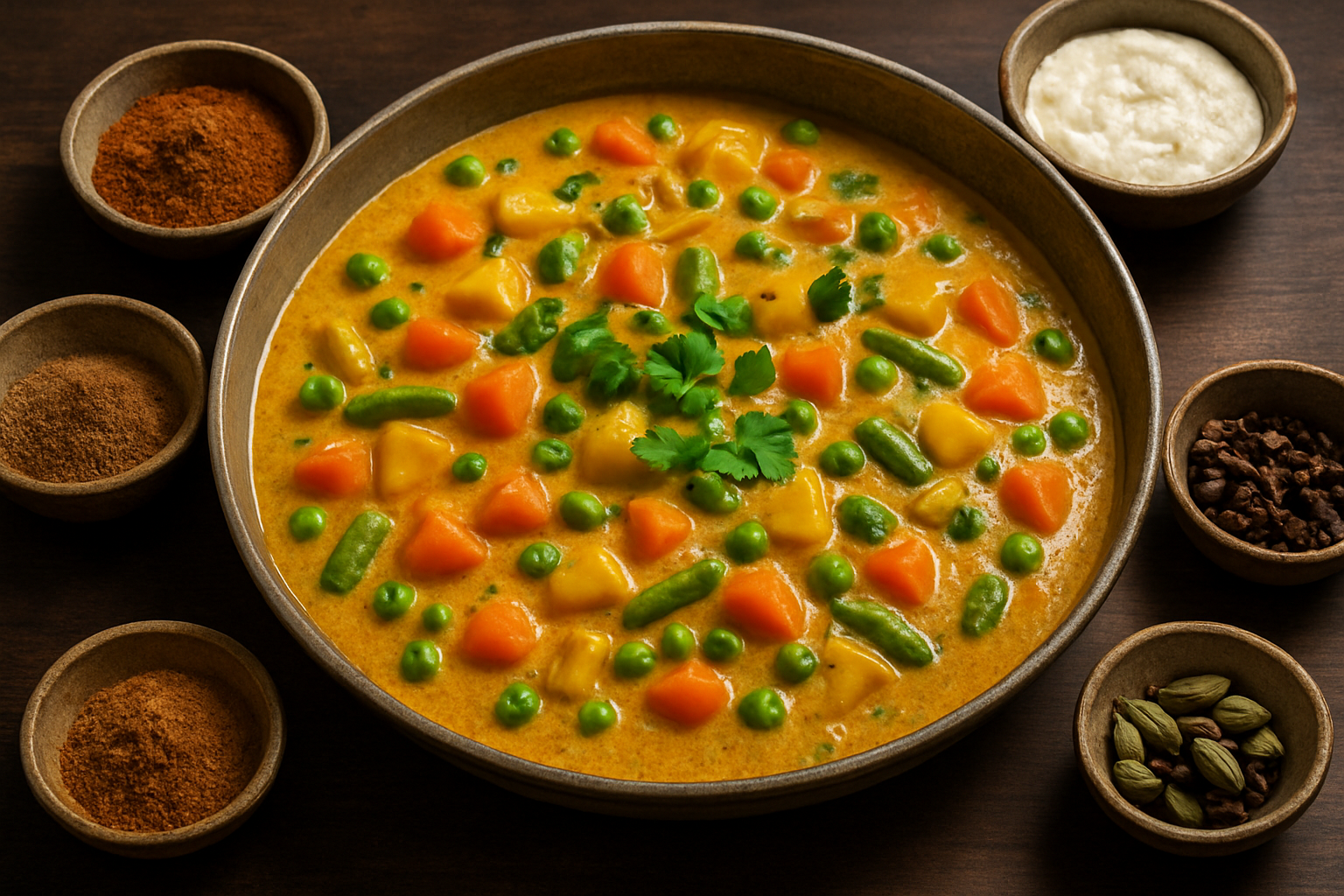
Chop these vegetables into medium chunks:
- Carrots, potatoes, beans – parboil for 5 minutes
- Cauliflower florets, green peas, bell peppers – keep raw
Also prep: 1 large onion (thinly sliced), 2 tomatoes (chopped), fresh coriander for garnish.
Making the Aromatic Spice and Coconut Paste
This paste is your vegetable kurma secret recipe — don’t skip it.
Blend together until silky smooth:
- ½ cup fresh coconut (or desiccated)
- 10 cashews (soaked 15 minutes)
- 2 green chilies
- 1 tsp fennel seeds
- 4 cloves garlic + 1-inch ginger
- 2 tbsp roasted puffed chana (pottu kadalai)
- ¼ cup water
A thick, creamy paste = rich, restaurant-quality kurma.
Cooking the Kurma to Hotel-Level Perfection
- Heat oil + ghee in a heavy pan. Add whole spices — bay leaf, cardamom, cloves, cinnamon.
- Sauté onions until golden brown — this builds the base flavor.
- Add tomatoes, cook until mushy.
- Pour in the coconut paste, stir on low heat for 3–4 minutes.
- Add parboiled vegetables + ½ cup water. Simmer 8 minutes.
- Finish with a splash of warm milk for that authentic hotel style vegetable kurma creaminess.
Pro Tips to Get Restaurant Quality Results at Home
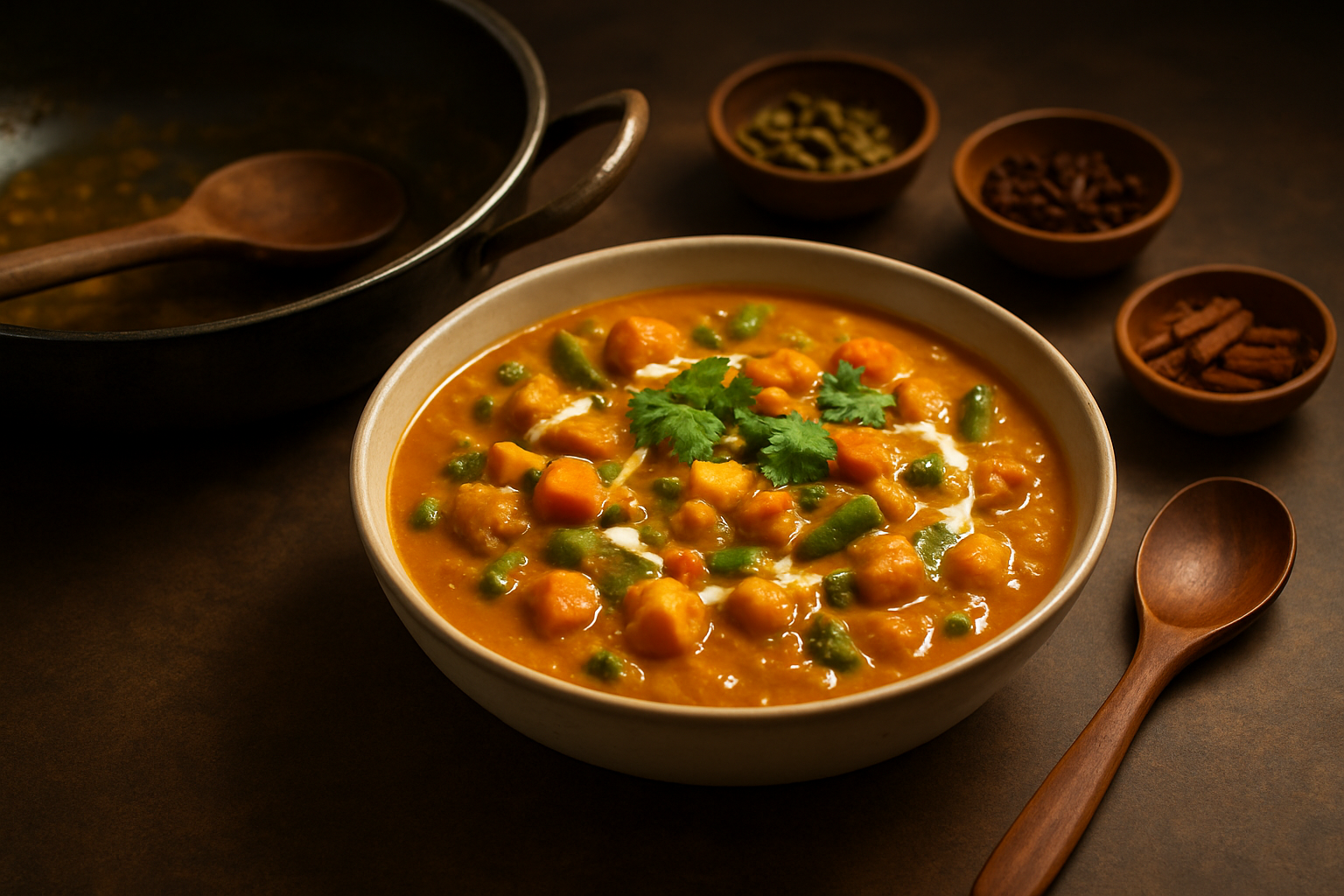
Common Mistakes That Ruin the Flavor
- Skipping the whole spices — Rushing past the tempering step kills the base flavor entirely.
- Using store-bought coconut milk straight — Always dilute thick coconut milk; undiluted coconut milk makes the kurma heavy and overpowering.
- Overcooking vegetables — Restaurant-style vegetable kurma keeps veggies slightly firm. Mushy vegetables signal home-style, not hotel-style.
- Adding cashew paste too late — Stir it in early enough to cook out the raw taste.
- High heat throughout — Simmer low and slow after adding the gravy base; this is the real vegetable kurma secret recipe.
How to Adjust Spice Levels for Different Preferences
| Preference | Adjustment |
|---|---|
| Mild | Reduce green chilies, skip black pepper |
| Medium | Follow recipe as-is |
| Spicy | Add extra green chilies + a pinch of chili powder |
| Kid-friendly | Use only 1 green chili, increase coconut milk |
Always taste before serving — spice balance makes or breaks restaurant quality vegetable kurma.
Make-Ahead and Storage Tips for Convenience
- Refrigerate: Stays fresh up to 3 days in an airtight container.
- Freeze: Freeze the gravy base separately for up to 1 month.
- Reheat: Always reheat on low flame with a splash of water to restore consistency.
- Prep your coconut-cashew paste ahead and refrigerate for up to 2 days — this cuts cooking time significantly.
Best Ways to Serve and Pair Vegetable Kurma
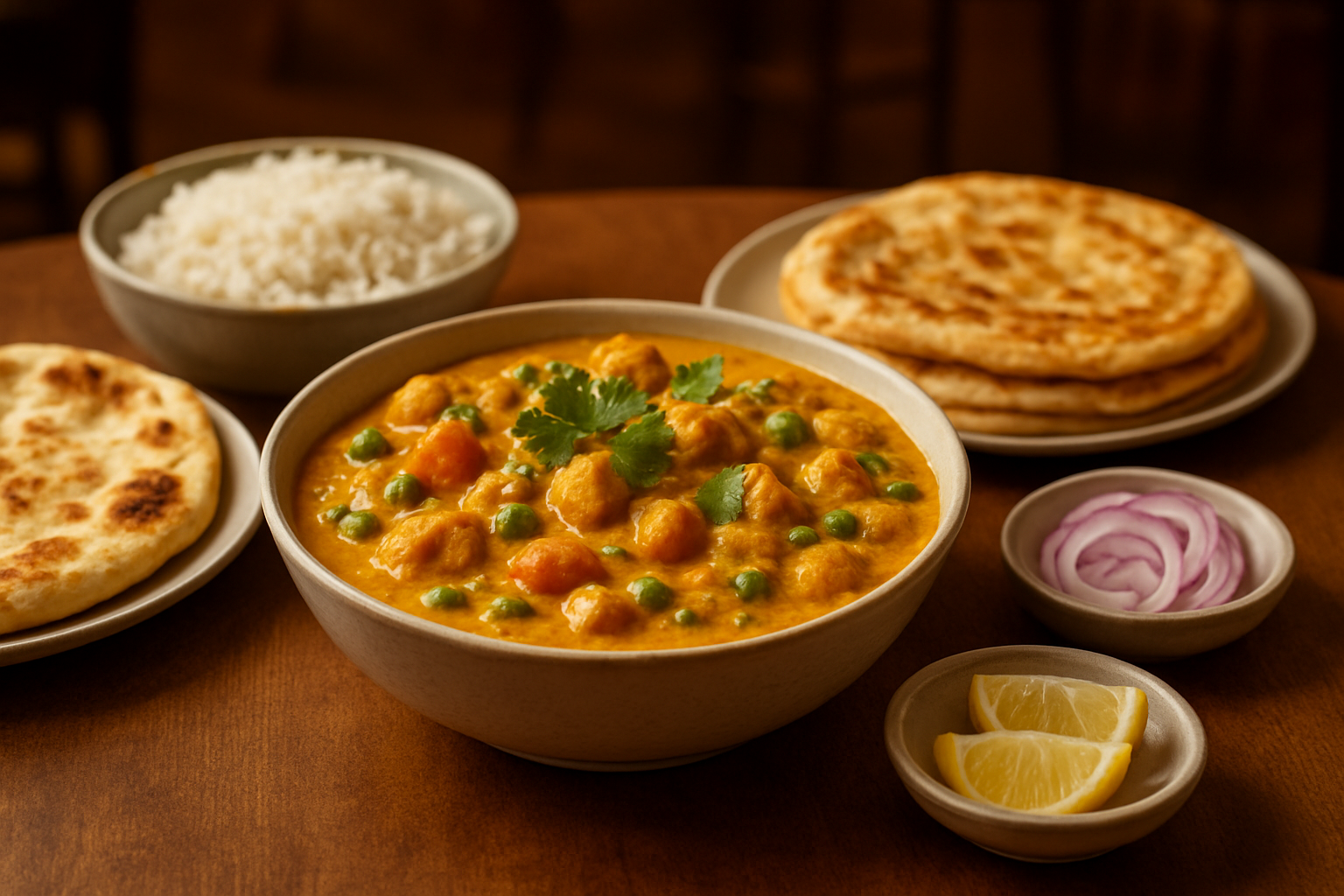
Traditional Pairings That Complement the Dish
Hotel-style vegetable kurma tastes best when paired with the right accompaniments. Here are the classic combinations that never fail:
| Pairing | Why It Works |
|---|---|
| Parotta / Layered Flatbread | The flaky layers soak up the creamy gravy perfectly |
| Chapati / Roti | Light and healthy, balances the rich coconut base |
| Idiyappam (String Hoppers) | A South Indian favorite that absorbs every drop |
| Ghee Rice | Mildly flavored rice lets the kurma shine |
| Plain Dosa | Crispy texture contrasts beautifully with the soft gravy |
These vegetable kurma serving suggestions are rooted in how restaurants actually plate the dish — generous, hearty, and deeply satisfying.
Creative Serving Ideas to Impress Your Guests
Want to go beyond the usual? Try these crowd-pleasers:
- Mini bread bowls — hollow out dinner rolls and ladle hot kurma inside for a stunning presentation
- Kurma Wraps — spread onto a roti with sliced onions and a squeeze of lemon for a quick handheld meal
- Topped over pav — street-style plating that guests always love
- Served in clay pots — keeps it warm longer and adds a rustic, restaurant-quality vegetable kurma vibe to your table
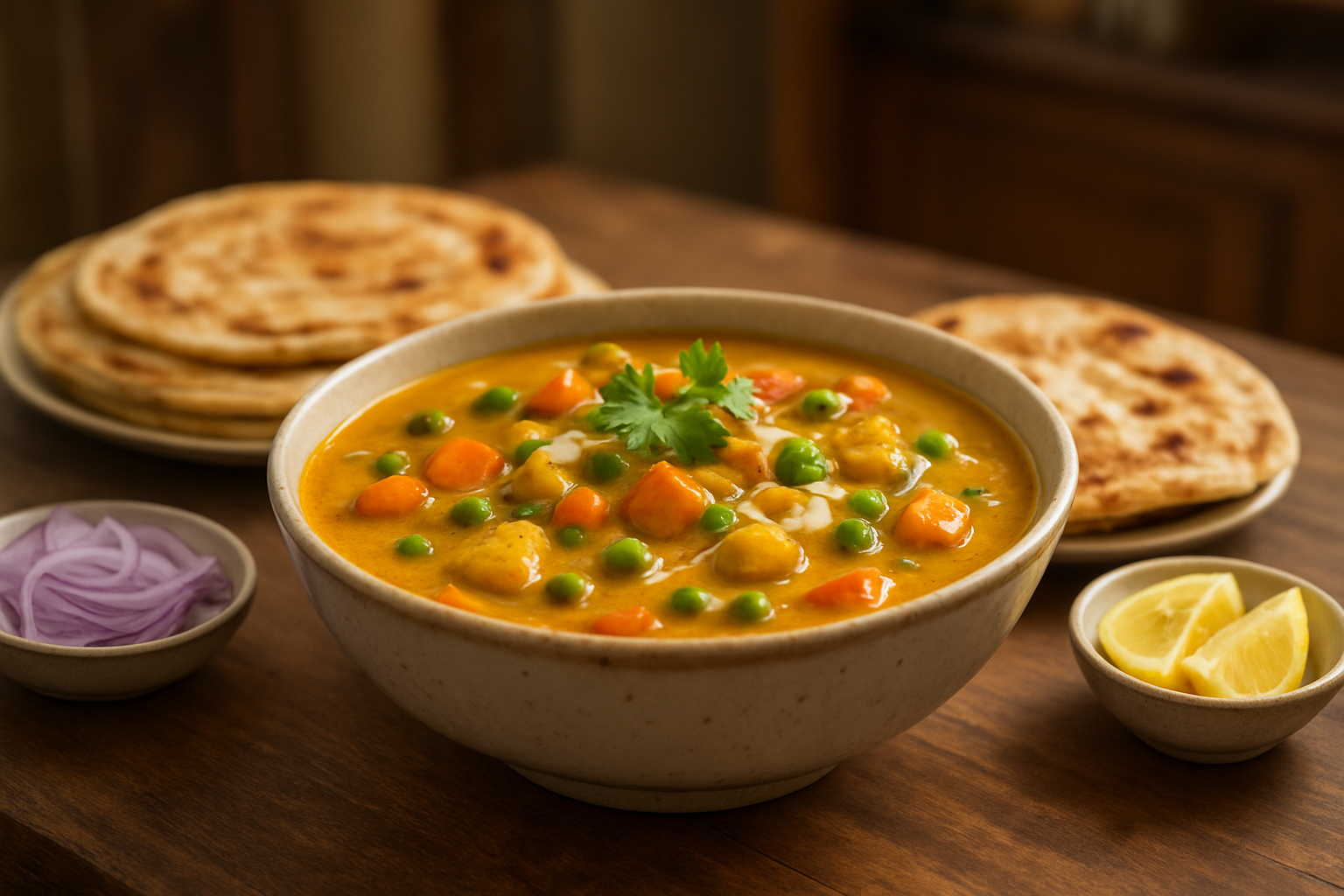
Getting that rich, creamy, restaurant-style Vegetable Kurma at home is no longer a mystery. From building the perfect spice base to nailing that smooth coconut-cashew gravy, you now have everything you need — the right ingredients, the techniques the hotels actually use, and the little tricks that make all the difference.
Now it’s time to get into the kitchen and make it happen! Pair it with some soft parottas, fluffy appam, or fragrant biryani rice, and watch your family ask for seconds. Give this recipe a shot this weekend and don’t be surprised when everyone thinks you ordered it from a restaurant.