



Table of Contents
Walking vs. Running After 50: Which One Actually Burns More Fat?
If you’re over 50 and trying to figure out whether you should lace up for a brisk walk or push yourself into a run, you’re not alone. This question comes up constantly — and the answer isn’t as simple as “run harder, burn more.”
This guide is for anyone over 50 who wants to lose weight, shrink belly fat, and find a sustainable exercise routine that actually works with their body, not against it.
Here’s what we’ll cover:
- How your metabolism and fat-burning ability shift after 50 — and why the rules you followed in your 30s don’t always apply anymore
- What the science actually says about walking vs. running for fat loss — including which one your joints, hormones, and energy levels might handle better
- Practical ways to get the most out of whichever exercise you choose — so you stop spinning your wheels and start seeing real results
No fluff, no one-size-fits-all advice. Just a straight look at what works for fat loss after 50, backed by research and built around real life.
How Age 50+ Changes Your Body’s Fat-Burning Ability
Why Metabolism Slows Down After 50
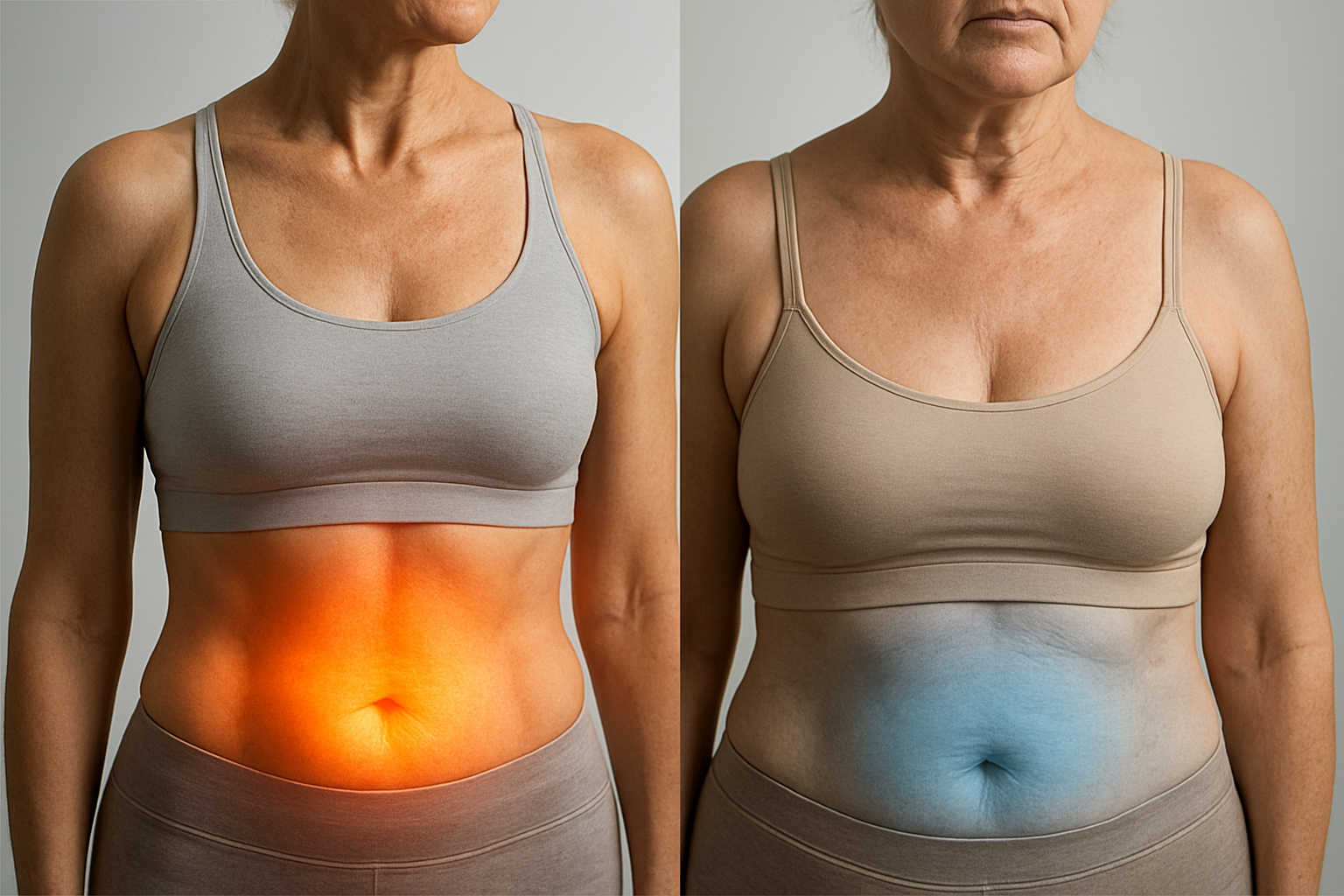
If you’ve noticed that the same eating habits and exercise routine that kept you lean in your 30s no longer seem to work, you’re not imagining things. Your metabolism genuinely shifts after 50, and understanding why can help you stop blaming yourself and start making smarter adjustments.
Metabolism is essentially the total amount of energy your body burns in a day — from keeping your heart beating and lungs breathing, to digesting food and moving around. The biggest chunk of that energy use, roughly 60–70%, comes from your basal metabolic rate (BMR) — what your body burns just to stay alive at rest.
Here’s where things get tricky after 50:
- Mitochondrial efficiency declines. Your cells’ energy-producing powerhouses become fewer in number and less efficient, meaning your body produces less energy from the same amount of fuel.
- Cellular repair slows down. The body spends less energy on rapid cell turnover, which was a bigger metabolic cost when you were younger.
- Daily movement naturally decreases. Most people become less fidgety and spontaneously active as they age — what researchers call NEAT (Non-Exercise Activity Thermogenesis) — and this quiet reduction in background movement adds up to hundreds of calories per week.
- Digestive efficiency changes. Food processing becomes slightly less energetically demanding, trimming a few more calories from your daily burn.
The result? Your total daily calorie burn can drop by 100–200 calories per day compared to what it was in your 30s, even if your lifestyle looks identical on the surface. Over months and years, that gap quietly adds up to real weight gain — especially around the belly.
How Muscle Loss Affects Calorie Burning
Muscle is metabolically expensive tissue. Every pound of lean muscle on your body burns roughly 6–10 calories per day at rest, compared to fat tissue, which burns closer to 2–3 calories per day. That gap might sound small, but when you consider that muscle mass shifts significantly after 50, the downstream effect on metabolism and weight is substantial.
Starting around your mid-30s, the body begins losing muscle mass at a rate of about 3–8% per decade. After 60, that rate can accelerate. This process — called sarcopenia — is one of the biggest reasons metabolism and weight loss after 50 becomes a different challenge entirely.
What Muscle Loss Actually Does to Your Body
| Factor | Impact of Muscle Loss After 50 |
|---|---|
| Resting calorie burn | Drops significantly as lean tissue decreases |
| Blood sugar regulation | Worsens, making fat storage easier |
| Exercise performance | Reduced power output during both walking and running |
| Fat-to-muscle ratio | Shifts toward more fat even at the same body weight |
| Recovery speed | Slows, making consistent exercise harder |
Here’s something that catches many people off guard: you can weigh exactly the same as you did at 40, but have a significantly higher body fat percentage simply because muscle has been quietly replaced by fat. The scale doesn’t catch this shift — but your waistline and energy levels certainly do.
The practical takeaway here is that preserving or rebuilding muscle becomes just as important as the cardio you choose — whether that’s walking or running. A body with more lean muscle burns more calories around the clock, makes fat-burning exercise more effective, and handles both activities with greater ease and safety.
The Role of Hormones in Fat Storage After Midlife
Hormones are essentially your body’s messaging system, and after 50, several key messengers start sending very different signals — ones that heavily favor fat storage, particularly around the midsection. This is one of the most frustrating aspects of trying to lose belly fat after 50, because no amount of discipline can fully override hormonal biology. But knowing what’s happening gives you a real advantage.
The Key Hormonal Shifts to Know
Estrogen (in women)
During perimenopause and menopause, estrogen levels drop significantly. Estrogen plays a protective role in where the body stores fat — when levels are higher, fat tends to distribute around the hips and thighs. As estrogen declines, fat storage shifts toward the abdomen and visceral fat (the dangerous fat that wraps around your organs). Visceral fat is metabolically active in a harmful way — it pumps out inflammatory chemicals that make further fat loss harder.
Testosterone (in men)
Men experience a gradual decline in testosterone after 30, with a more noticeable drop after 50. Lower testosterone accelerates muscle loss, reduces motivation for physical activity, lowers resting metabolic rate, and directly promotes fat accumulation — particularly belly fat. This is sometimes called andropause, and its effects on body composition are very real, even if less talked about than menopause.
Cortisol
Stress hormone levels tend to be chronically elevated in midlife, driven by work pressure, poor sleep, family responsibilities, and even the physical stress of intense exercise. High cortisol signals the body to:
- Hold onto fat, especially visceral fat
- Break down muscle tissue for energy
- Increase appetite and cravings for high-calorie foods
- Disrupt sleep, which then makes everything worse
Insulin
Insulin sensitivity often decreases after 50, meaning your body needs to produce more insulin to manage the same amount of blood sugar. Higher circulating insulin is one of the most powerful fat-storage signals in the body. It essentially locks fat inside fat cells and makes it harder for your body to access stored fat as fuel during exercise — including during both walking and running.
Leptin and Ghrelin
These two hormones regulate hunger and satiety. After 50, the brain can become less responsive to leptin (the “I’m full” hormone), while ghrelin (the “I’m hungry” hormone) becomes more assertive. The combination means you may feel hungrier more often and feel satisfied less reliably — a difficult combination when you’re trying to manage calorie intake for fat loss.
What This Means Practically
- Belly fat after 50 isn’t just about eating too much or moving too little — hormonal changes create a genuine biological headwind.
- Sleep quality becomes a critical fat-loss tool because poor sleep directly spikes cortisol and ghrelin.
- Stress management isn’t a luxury — it’s a legitimate fat-burning strategy for people over 50.
- Low-impact, consistent exercise — like regular walking — can help regulate cortisol better than aggressive high-intensity training, which can spike stress hormones further in people whose bodies are already under hormonal strain.
- Strength training alongside cardio helps counter both sarcopenia and the insulin sensitivity decline that comes with age.
Understanding these hormonal realities doesn’t mean giving up — it means you can stop fighting your body blindly and start working with a clearer picture of what’s actually going on under the surface.
The Science Behind Walking for Fat Loss After 50

Why Low-Intensity Exercise Targets Fat Stores Effectively
Here’s something that surprises a lot of people: walking may actually be better at tapping into fat as a fuel source than running, at least in terms of the percentage of calories burned from fat.
When you walk, your body operates at roughly 50–65% of your maximum heart rate. At this intensity, your aerobic energy system takes the lead, and fat becomes the preferred fuel. Compare that to running, where you’re working harder and your body increasingly relies on carbohydrates (glycogen) for quick energy. The chart below breaks this down:
| Exercise Intensity | Primary Fuel Source | % Calories from Fat |
|---|---|---|
| Low (Walking) | Fat | ~60–70% |
| Moderate (Jogging) | Fat + Carbs | ~40–50% |
| High (Running) | Carbohydrates | ~20–30% |
For people over 50, this distinction matters more than ever. Declining estrogen and testosterone levels, slower metabolic rates, and increased insulin resistance all make it harder for the body to manage blood sugar efficiently. Walking keeps your blood glucose stable during exercise, which means your body doesn’t spike cortisol levels the way intense exercise sometimes does. High cortisol — especially chronically elevated cortisol — is directly linked to stubborn belly fat in older adults.
So when you’re walking at a comfortable pace, you’re not just burning fat during the walk itself. You’re also keeping your hormonal environment in a fat-burning-friendly state.
How Walking Protects Aging Joints While Burning Calories
After 50, joint health becomes a real consideration, not just a background worry. Cartilage thins with age. Bone density decreases, particularly in women after menopause. Tendons and ligaments become less elastic and take longer to recover from impact stress.
Running generates ground reaction forces of roughly 2.5 to 3 times your body weight with each stride. For a 170-pound person, that’s 425–510 pounds of force hitting the knees, hips, and ankles with every single step. Over a 30-minute run, that force accumulates thousands of times.
Walking, on the other hand, produces ground reaction forces closer to 1.2 to 1.5 times your body weight. That’s a dramatically lower load on vulnerable structures, and it means you can:
- Exercise more frequently without needing extended recovery days
- Stay consistent week after week without accumulating joint wear
- Avoid the pattern of injury → rest → deconditioning that derails so many over-50 fitness efforts
- Build a habit that compounds over months and years rather than cycles through flare-ups
This protective quality is actually a fat-loss advantage, not just a health perk. The single biggest predictor of long-term fat loss is consistency. Injuries break consistency. Walking lets you stay in the game.
For those already dealing with knee osteoarthritis, hip issues, or lower back problems, walking is often recommended by orthopedic specialists as one of the safest forms of cardio available. The gentle repetitive motion even helps lubricate the joints by stimulating synovial fluid production — meaning the movement itself keeps your joints healthier over time.
The Fat-Burning Benefits of Longer, Steady-Paced Walks
When it comes to walking for weight loss over 50, duration is your most powerful variable. Here’s why: the longer you walk at a steady, comfortable pace, the deeper your body digs into its fat reserves.
In the first 10–20 minutes of a walk, your body burns a mix of readily available energy — some glycogen, some fat. But as you move past the 20–30 minute mark, glycogen stores begin to deplete and your body shifts even more heavily toward fat oxidation. This is sometimes called the “fat-burning window,” and it’s a real physiological shift, not fitness industry mythology.
A few key points about longer walks:
- A 45–60 minute walk burns significantly more total fat than a 20-minute walk, even at the same pace, because you’re spending more time in that fat-oxidation-dominant zone
- Fasted morning walks (before breakfast) can push fat burning even higher by starting the walk with already-depleted overnight glycogen stores
- Steady pacing matters — keeping your heart rate in the 50–65% max range throughout the walk sustains the aerobic fat-burning system rather than triggering an anaerobic shift
For reference, here’s a rough estimate of calories burned during walking at different durations (based on a 160-pound person walking at 3.5 mph):
| Walk Duration | Estimated Calories Burned | Approximate Fat Calories |
|---|---|---|
| 20 minutes | ~95 calories | ~60 calories |
| 30 minutes | ~145 calories | ~90 calories |
| 45 minutes | ~215 calories | ~135 calories |
| 60 minutes | ~285 calories | ~180 calories |
Over a week of daily 60-minute walks, that’s close to 2,000 calories burned — with the majority coming from fat. Add that up over a month, and you’re looking at meaningful, measurable fat loss without grinding your body into the pavement.
Adding gentle inclines — whether on a treadmill or hilly outdoor routes — bumps calorie burn by 25–40% without significantly increasing joint stress, making it one of the smartest ways to intensify a walking routine after 50.
Why Walking Is Sustainable for Long-Term Weight Management
Sustainability is the unsexy truth that actually determines fat loss success. You can run a calorie deficit for two weeks through brutal high-intensity workouts, but if your knees give out, your motivation crashes, or the routine becomes something you dread, the whole thing falls apart.
Walking wins the sustainability game for several important reasons:
1. It fits into real life easily
Walking doesn’t require a gym, special equipment, a changing room, or a post-workout shower (in most cases). You can walk on a lunch break, walk to the grocery store, walk the dog, or walk with a friend. When exercise blends into your day naturally, you do it more often and for longer.
2. It doesn’t require recovery days
Unlike running, which most trainers recommend limiting to 3–4 days per week for beginners over 50 due to recovery demands, walking can be done every single day. Daily calorie burn from daily walking adds up faster than you’d expect.
3. It doesn’t spike hunger the way intense exercise does
High-intensity exercise triggers hunger hormones like ghrelin more aggressively than low-intensity exercise. Many runners over 50 find themselves eating back most of the calories they burned — or more. Walkers tend to experience more modest post-exercise appetite, which makes maintaining a calorie deficit much easier.
4. It’s genuinely enjoyable for most people
When you enjoy something, you do it consistently. Consistency is everything in a long-term fat loss strategy. Walking at a pace where you can hold a conversation, listen to a podcast, or simply clear your head tends to produce positive associations with exercise — making it something you look forward to rather than something you endure.
5. It builds a foundation that lasts decades
Many older adults who take up running eventually transition back to walking as their primary exercise due to the physical demands of the sport. People who walk regularly often maintain that habit well into their 70s and 80s. For long-term weight management after 50, a habit you’ll keep for 30 more years beats an intense routine you’ll abandon in six months every single time.
The Science Behind Running for Fat Loss After 50

How Running Burns More Calories Per Minute Than Walking
Running is simply a more demanding activity than walking — your body has to work harder, and that means it burns through more fuel in a shorter amount of time. On average, a 155-pound person burns roughly 298 calories during a 30-minute jog at a moderate pace, compared to about 167 calories walking briskly for the same duration. That’s nearly double the calorie burn in the same time window.
The reason comes down to intensity. When you run, you’re repeatedly launching yourself off the ground with both feet leaving the surface simultaneously. That requires significant muscular effort, cardiovascular output, and oxygen consumption — all of which translate directly into calories burned.
Here’s a quick comparison to put the numbers in perspective:
| Activity | Duration | Approx. Calories Burned (155 lbs) |
|---|---|---|
| Brisk Walking (3.5 mph) | 30 min | ~149–167 calories |
| Light Jogging (5 mph) | 30 min | ~298 calories |
| Running (6 mph) | 30 min | ~372 calories |
| Running (7.5 mph) | 30 min | ~465 calories |
For people over 50 focused on running for fat loss after 50, this calorie-burning efficiency is a genuine advantage — especially when time is limited. You can achieve a meaningful fat-burning workout in 20–25 minutes of running that might take 45–50 minutes to replicate through walking alone.
That said, it’s not just about raw calories during the workout. The bigger picture involves what happens to your body in the hours after you finish.
The Afterburn Effect and How It Boosts Metabolism
One of running’s most underappreciated benefits — particularly relevant when you’re thinking about metabolism and weight loss after 50 — is what exercise scientists call Excess Post-Exercise Oxygen Consumption, or EPOC. Most people just call it the afterburn effect.
Here’s how it works: when you run at a moderate to high intensity, your body gets pushed into an oxygen deficit. Your muscles, cardiovascular system, and hormonal processes get significantly disrupted from their resting state. After you stop running, your body spends the next several hours working to restore everything back to normal — replenishing oxygen stores, clearing metabolic byproducts like lactic acid, repairing micro-tears in muscle tissue, and restoring core temperature. All of this recovery work requires energy, which means your body keeps burning calories even while you’re sitting on the couch afterward.
Studies have shown that EPOC can elevate your metabolic rate for anywhere from 15 minutes to 48 hours post-exercise, depending on how hard you pushed yourself. Higher-intensity runs — think tempo runs or interval training — produce a more significant and longer-lasting afterburn response than easy jogs.
This matters especially after 50 because metabolism and weight loss after 50 become increasingly challenging as resting metabolic rate naturally declines with age. Running’s afterburn effect acts as a metabolic boost that helps counteract some of that slowdown. Even a 30-minute run at a challenging pace can result in an additional 6–15% increase in calorie burn over the following hours.
Key points about the afterburn effect for runners over 50:
- Higher intensity = greater EPOC. Interval runs and tempo workouts create a bigger afterburn than steady-state jogging.
- Longer runs extend the effect. Running for 45–60 minutes tends to produce more significant post-exercise calorie burn than a short 15-minute jog.
- The afterburn effect stacks with regular training. The more consistently you run, the more your resting metabolism adapts upward over time.
- Walking produces minimal EPOC by comparison, particularly at a leisurely pace — which gives running a meaningful edge for those focused on accelerating fat loss.
Why Running Builds Muscle to Accelerate Fat Loss
Running isn’t just a cardio activity — it’s also a significant muscle-building stimulus, particularly for the lower body and core. Every stride you take engages your glutes, hamstrings, quadriceps, calves, hip flexors, and abdominal muscles under load. Over time, consistent running develops and maintains lean muscle mass in all of these areas.
Why does that matter for fat loss? Because muscle tissue is metabolically active. Pound for pound, muscle burns more calories at rest than fat does. The more lean muscle mass you carry, the higher your resting metabolic rate — meaning you burn more calories around the clock, not just during exercise. This is a critical factor for how to lose belly fat after 50, since visceral fat accumulation is closely linked to the muscle loss (sarcopenia) that naturally accelerates after 50.
Running specifically builds muscle in a few important ways:
- Eccentric loading: When your foot strikes the ground, your muscles — especially the quadriceps — absorb the impact through eccentric contractions. This type of loading is a strong stimulus for muscle fiber development and strength adaptation.
- Hill running: Running uphill significantly increases the demand placed on the glutes and hamstrings, building posterior chain strength and muscle in ways that flat walking rarely achieves.
- Speed work: Sprint intervals and faster-paced running recruit fast-twitch muscle fibers, which have the greatest potential for growth and power development.
Running also helps preserve the muscle mass you already have, which becomes increasingly important as the natural hormonal shifts of aging — declining testosterone and growth hormone in both men and women — begin to accelerate muscle breakdown. Resistance to muscle loss is one of running’s often-overlooked benefits as a fat burning exercise after 50.
Here’s a summary of running’s muscle-building advantages over walking:
| Factor | Running | Walking |
|---|---|---|
| Muscle recruitment per stride | High (full posterior chain) | Moderate (lower intensity) |
| Fast-twitch fiber activation | Yes (especially at higher speeds) | Minimal |
| Eccentric loading stimulus | Significant | Low |
| Hill/incline training potential | High (steeper grades, sprint hills) | Moderate |
| Muscle preservation after 50 | Strong effect | Mild effect |
The bottom line on muscle and fat loss: when you run regularly, you’re simultaneously burning calories during the workout, generating an afterburn effect after the workout, and building or maintaining the lean muscle tissue that keeps your metabolism running efficiently all the time. That triple-layered fat loss effect is what makes running such a powerful tool for weight management after 50 — for those who can do it consistently and safely.
Key Factors That Determine Which Exercise Burns More Fat for You

How Your Current Fitness Level Shapes Your Best Choice
Where you’re starting from matters enormously when deciding between walking and running for fat loss after 50. Someone who hasn’t exercised regularly in years has a completely different set of needs than someone who has been active for decades.
If you’re returning to exercise after a long break:
- Walking is almost always the smarter starting point
- Your cardiovascular system, joints, and muscles need time to adapt before taking on high-impact activity
- Starting with brisk walking builds the aerobic base that makes running sustainable later on
- Jumping straight into running raises your injury risk significantly, which can sideline your fat-burning efforts for weeks or months
If you have a solid fitness foundation:
- Running may offer faster fat-burning results because your body can handle the higher intensity
- You can incorporate interval training (alternating between jogging and brisk walking) to push calorie burn even higher
- Your muscles and connective tissue are already conditioned to absorb the stress of running
Think of fitness level like a bank account. The more you’ve deposited over the years, the more you can withdraw safely. Trying to withdraw more than you have leads to injury — and injury is the biggest fat-loss killer there is.
Why Exercise Intensity Matters More Than Exercise Type
Here’s something most people miss in the walking vs. running debate: the type of exercise you do matters far less than how hard you push yourself during that exercise.
Your body burns fat based on how much energy it demands — and that energy demand is driven by intensity, not the specific activity. A casual stroll and a brisk, purposeful power walk are both technically “walking,” but they produce very different fat-burning results.
The key concept here is your heart rate zones:
| Heart Rate Zone | % of Max Heart Rate | What’s Happening |
|---|---|---|
| Light | 50–60% | Warm-up, very little fat burning |
| Fat-Burning Zone | 60–70% | Body primarily uses fat as fuel |
| Cardio Zone | 70–80% | Higher calorie burn, mix of fat and carbs |
| High Intensity | 80–90% | Mostly carbs burned, strong afterburn effect |
For fat loss after 50, the sweet spot is generally the fat-burning and cardio zones (60–80% of your max heart rate). Here’s the thing — a slow jog and a vigorous power walk can land you in almost the exact same heart rate zone, which means they can produce nearly identical fat-burning results.
A simple way to estimate your max heart rate: Subtract your age from 220. So for a 55-year-old, that’s roughly 165 beats per minute as the max.
The practical takeaway is this: stop worrying so much about whether you’re technically “walking” or “running,” and start paying attention to whether you’re working hard enough to push your heart rate into the right zone.
The Impact of Joint Health and Injury Risk on Your Routine
After 50, your joints become a major factor in this decision — and honestly, they deserve more attention than most fitness advice gives them.
Running generates a ground-reaction force of roughly 2.5 to 3 times your body weight with every stride. If you weigh 180 pounds, your knees and hips absorb up to 540 pounds of force with each step. Over a 30-minute run, that adds up to thousands of high-impact repetitions.
Walking, by comparison, generates a force of about 1.2 to 1.5 times your body weight — dramatically lower, which is why it’s called a low-impact fat-burning exercise.
Signs that walking might be the better fit for your joints:
- You have existing knee, hip, or ankle issues
- You’ve been diagnosed with osteoarthritis
- You feel joint pain or stiffness after running even short distances
- You’re carrying extra weight (every additional 10 pounds adds roughly 40 pounds of pressure to the knees when running)
Signs you may be able to handle running:
- Your joints feel healthy and pain-free
- You’ve maintained some level of physical activity consistently
- You’ve had a recent physical and gotten clearance from your doctor
Joint damage from pushing through pain isn’t just uncomfortable — it can force you into months of inactivity, which completely reverses your fat-loss progress and slows your already-changing metabolism after 50. No short-term calorie burn is worth that trade-off.
If you love the idea of running but have joint concerns, consider these lower-impact alternatives that can produce similar fat-burning results:
- Pool running (aqua jogging)
- Elliptical training
- Cycling
- Run-walk intervals on soft surfaces like grass or trails
How Recovery Time Affects Overall Fat-Burning Results
This is where the math of fat loss gets really interesting — and where a lot of people over 50 unknowingly sabotage their own progress.
After 50, recovery takes longer. Your body produces less growth hormone, your muscle repair processes slow down, and your nervous system takes more time to bounce back from intense effort. Running, because of its higher impact and intensity, demands significantly more recovery time than walking.
Here’s why this matters for fat loss:
If running leaves you so sore or fatigued that you can only exercise twice a week, but walking lets you move comfortably five or six days a week — walking will almost certainly produce better fat-burning results over time.
| Scenario | Exercise Type | Frequency | Weekly Calorie Burn (Estimate) |
|---|---|---|---|
| Option A | Running 30 min | 2x/week | ~600–700 calories |
| Option B | Brisk Walking 45 min | 5x/week | ~1,000–1,250 calories |
Option B wins — not because walking burns more per session, but because better recovery allows for more total volume.
Recovery tips that apply whether you walk or run after 50:
- Build in at least one full rest day between intense sessions
- Prioritize sleep (7–9 hours is when your body does most of its repair work)
- Stay hydrated and eat enough protein to support muscle maintenance
- Use active recovery days — gentle walks, stretching, or yoga — rather than complete inactivity
The bottom line: the best fat-burning exercise is one you can do consistently without constantly breaking down and needing to recover for days at a time.
Why Personal Consistency Outweighs Any Single Exercise Choice
Of all the factors on this list, this one carries the most weight. No exercise — no matter how perfectly optimized — burns fat if you don’t actually do it regularly.
The research on long-term weight management makes this crystal clear: adherence beats optimization every time. A person who walks faithfully five days a week for a year will burn far more total fat than someone who runs intensely for two weeks and then quits because it’s too hard, too painful, or too miserable.
Ask yourself these honest questions:
- Which do I actually enjoy more — or at least dislike less?
- Which one fits into my daily schedule without feeling like a massive disruption?
- Which one leaves me feeling good afterward rather than dreading the next session?
- Have I been able to stick with this type of exercise before?
Enjoyment and sustainability are the hidden engines of fat loss after 50. When an activity feels like a punishment, you’ll find endless reasons to skip it. When it feels manageable — even pleasant — you’ll keep showing up.
Some practical consistency strategies:
- Set a specific time each day for your walk or run rather than leaving it to chance
- Find a walking or running partner to add social accountability
- Track your sessions with a simple journal or fitness app to build momentum
- Mix up your routes and environments to keep things from getting stale
- Celebrate non-scale victories like improved energy, better sleep, and reduced stress
Whether you choose walking, running, or a combination of both, the exercise that burns the most fat for you is the one you’ll actually do — week after week, month after month, year after year. That consistency is what truly drives lasting fat loss and a healthier metabolism after 50.
Practical Ways to Maximize Fat Loss With Walking or Running

How to Use Interval Training to Boost Results From Either Exercise
Whether you’re walking or running, doing the same pace at the same intensity every single day is one of the quickest ways to hit a plateau. Your body is incredibly smart — it adapts fast, burns fewer calories for the same effort, and stops changing. That’s where interval training comes in, and it works beautifully for both exercises, especially for fat burning exercise after 50.
Interval Walking: Simple and Surprisingly Powerful
You don’t need to run to do intervals. Walking intervals are one of the most underrated fat loss tools for people over 50.
Here’s a basic structure to get started:
- Warm up at an easy, comfortable pace for 5 minutes
- Speed up to a brisk, slightly breathless pace for 1–2 minutes
- Recover at your normal easy pace for 2–3 minutes
- Repeat this cycle 4–6 times
- Cool down for 5 minutes at a slow, relaxed pace
That push-and-recover rhythm spikes your heart rate, challenges your metabolism, and keeps your body burning fat long after you’ve finished — a phenomenon known as excess post-exercise oxygen consumption (EPOC). In plain terms, your body keeps working even after you stop moving.
You can also add incline intervals if you’re on a treadmill or walking hilly terrain. A 5–8% incline during your “push” phases dramatically increases calorie burn without putting extra stress on your joints.
Run-Walk Intervals: The Sweet Spot for Over 50
If you’re running for fat loss after 50, pure high-intensity running every day can wear your joints down fast. A run-walk interval approach — sometimes called the Galloway Method — gives you the fat-burning benefits of running while dramatically lowering your injury risk.
A sample run-walk interval structure:
| Phase | Duration | Intensity |
|---|---|---|
| Warm-up walk | 5 minutes | Easy |
| Run | 1–2 minutes | Moderate-hard effort |
| Recovery walk | 1–2 minutes | Easy |
| Repeat cycles | 4–8 rounds | — |
| Cool-down walk | 5 minutes | Easy |
As your fitness improves, you can gradually extend the running phases and shorten the recovery walks. The key is progression — small, consistent steps forward without overdoing it.
High-Intensity Interval Training (HIIT) Walking
A powerful variation for people focused on how to lose belly fat after 50 is HIIT-style walking. This isn’t about running — it’s about pushing your walking intensity to its absolute ceiling during short bursts.
- Pump your arms aggressively
- Take quick, powerful steps
- Engage your core
- Walk as fast as you physically can for 30–60 seconds
These short, maximum-effort bursts followed by slower recovery periods have been shown to target visceral fat — the deep belly fat that tends to accumulate after 50 — more effectively than steady-state cardio alone.
The Best Times of Day to Walk or Run for Fat Burning
Timing isn’t everything, but it’s not nothing either. When you exercise can influence how your body responds, how you feel during the workout, and ultimately how consistent you stay — which is the real driver of fat loss over 50.
Morning Workouts: The Fasted State Advantage
Exercising first thing in the morning, before breakfast, means your glycogen (stored carbohydrate) levels are relatively low after an overnight fast. Your body may tap into fat stores a little more readily during this window.
Morning exercise also tends to:
- Set a positive, active tone for the rest of the day
- Reduce the chance that “life gets in the way” and you skip your workout
- Improve mood and mental clarity through the morning
That said, some people over 50 feel stiff and sluggish in the early morning, especially if arthritis or joint tightness is a factor. Pushing hard when your body isn’t warmed up properly raises your injury risk. If morning is your time, build in an extra-long warm-up — at least 8–10 minutes of easy movement before picking up the pace.
Afternoon and Evening: Performance Peaks
Research consistently shows that physical performance tends to peak in the late afternoon — typically between 3 PM and 6 PM. During this window:
- Body temperature is at its highest
- Muscle strength and reaction time are optimal
- Perceived effort feels lower, meaning a run or brisk walk feels easier
For people focused on low impact fat burning exercise or running for fat loss after 50, afternoon workouts can produce better quality sessions. You’ll likely move faster, feel stronger, and recover more quickly.
The main downside? Scheduling conflicts and decision fatigue. By late afternoon, work, family, and daily life can make it hard to stay consistent.
What Actually Matters Most: Consistency Over Timing
Here’s the honest truth — the best time to walk or run is the time you’ll actually do it, repeatedly, week after week. No perfect time slot beats showing up consistently at a slightly imperfect one.
| Time of Day | Pros | Cons |
|---|---|---|
| Morning (fasted) | May enhance fat oxidation, builds routine | Joints stiff, risk of injury without proper warm-up |
| Midday | Breaks up sedentary work hours, sunshine exposure | Time-constrained for many people |
| Afternoon (3–6 PM) | Peak physical performance, feels easier | Scheduling conflicts, social commitments |
| Evening | Stress relief, family schedule flexibility | May interfere with sleep for some |
Pick the window that fits your real life. Then protect it like an appointment.
How to Track Progress and Adjust Your Routine Over Time
One of the biggest mistakes people make with walking for weight loss over 50 or running programs is tracking the wrong things — or not tracking at all. The scale alone is a terrible progress marker, especially after 50 when hormonal changes affect water retention and muscle mass shifts constantly.
What to Actually Track
Build a simple weekly log that captures these key data points:
- Distance or steps: Aim to gradually increase your weekly total by 10% or less per week to avoid overtraining
- Duration: How long each session lasted
- Average heart rate: A fitness tracker or smartwatch makes this easy; your fat-burning zone generally sits at 60–70% of your maximum heart rate
- Perceived exertion: Rate how hard each session felt on a scale of 1–10
- Energy and recovery: Note how you felt the day after — this tells you a lot about whether your body is adapting or getting rundown
- Body measurements: Waist circumference, hip circumference, and how clothes fit are far more reliable markers of fat loss than scale weight
How to Adjust When Progress Stalls
Plateaus happen to everyone. When your fat loss stalls — and it will — here’s how to shake things up:
- Add 10 minutes to two of your weekly sessions before increasing intensity
- Introduce or extend interval phases — even adding one interval session per week to a steady-state routine can reignite progress
- Switch the terrain — moving from flat pavement to hills or trails dramatically increases calorie burn for the same time investment
- Increase weekly frequency — if you’re currently exercising 3 days a week, adding a fourth session often breaks a plateau without overloading your body
- Reassess nutrition — exercise alone rarely outpaces a diet that isn’t supporting fat loss; metabolism and weight loss after 50 are deeply tied to what’s happening at the dinner table too
The 6-Week Check-In Method
A practical rhythm that works well for people over 50:
- Commit to a specific routine for 6 weeks without major changes
- At the 6-week mark, review your log and honestly assess: Are you getting fitter? Are your measurements changing? Is your energy improving?
- If yes — keep going and add one small progression (more intervals, slightly longer sessions, or a new route with more elevation)
- If no — identify the weakest link: Is it consistency? Intensity? Sleep? Nutrition? Address that specific area rather than overhauling everything at once
This structured review approach keeps you moving forward intentionally rather than randomly changing things out of frustration.
Using Technology to Your Advantage
Modern tools make tracking far easier than carrying a notebook everywhere:
- Fitness trackers (Garmin, Fitbit, Apple Watch): Track steps, heart rate, distance, and calorie burn automatically
- Free apps (MapMyWalk, Strava, Nike Run Club): Log routes, track pace over time, and set weekly distance goals
- Heart rate zones: Many trackers display your heart rate zones in real time, making it easy to stay in the fat-burning zone during steady walks or push into higher zones during intervals
The data isn’t the goal — it’s just feedback. Use it to make smarter decisions about when to push harder and when to pull back. Consistent, intelligent effort over months is what produces lasting fat loss after 50, not any single perfect workout.
Smart Tips for Staying Safe and Injury-Free After 50
Why Warming Up and Cooling Down Become More Critical With Age
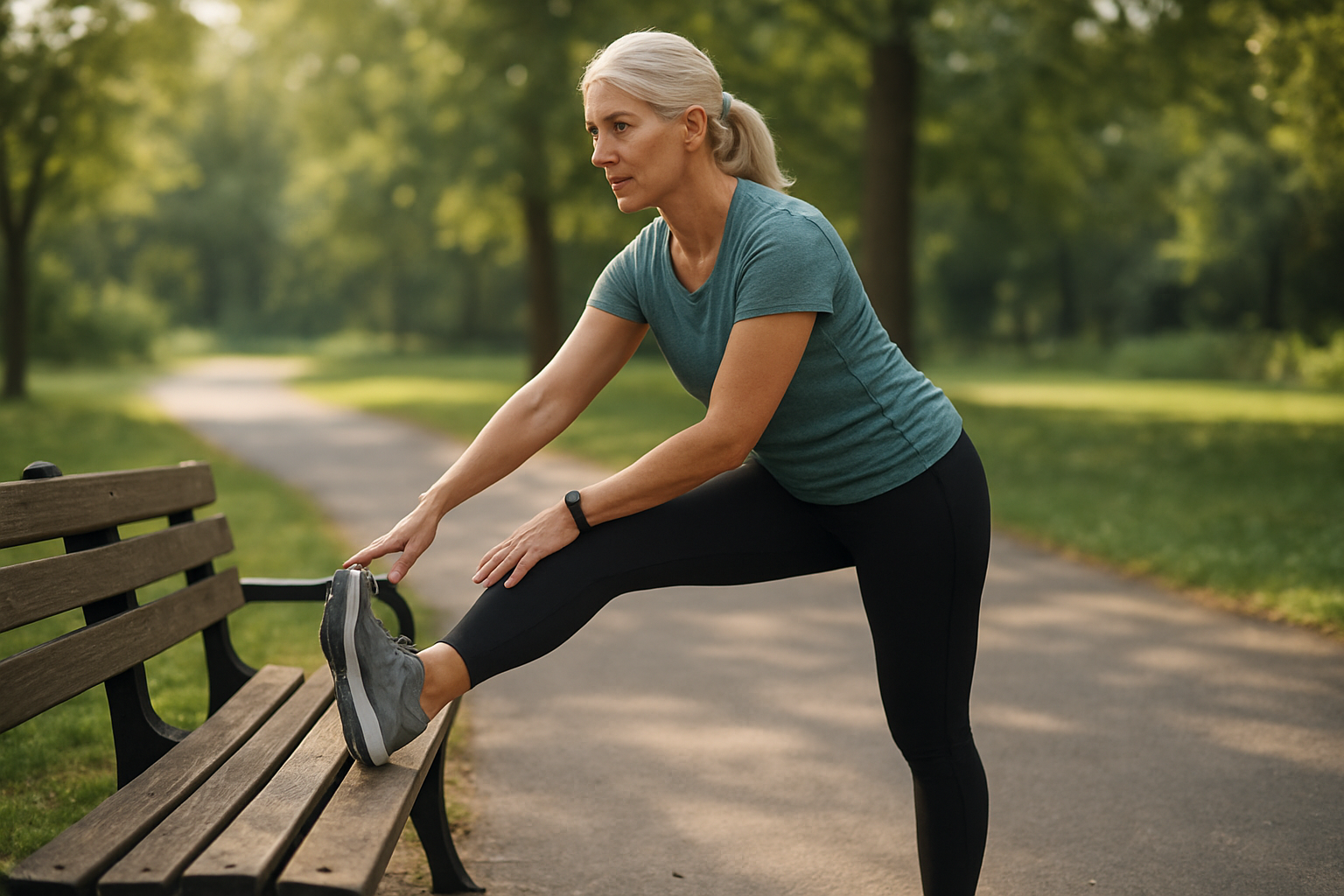
After 50, your muscles, tendons, and joints need more time to shift gears. Think of your body like a car engine on a cold morning — you wouldn’t just floor the gas and expect everything to run smoothly. Skipping a warm-up when you’re older dramatically increases your risk of muscle strains, joint pain, and even stress fractures.
What a good warm-up looks like:
- 5–10 minutes of slow walking before picking up the pace
- Gentle leg swings, hip circles, and ankle rotations
- Dynamic stretches like walking lunges or knee lifts (not static stretching — save that for after)
Cooling down matters just as much. When you stop suddenly after a brisk walk or run, blood can pool in your lower extremities, which may cause dizziness or lightheadedness — something that becomes more common as blood vessels lose some elasticity with age.
A proper cool-down should include:
- 5 minutes of easy walking to gradually lower your heart rate
- Static stretching for your calves, hamstrings, hip flexors, and quads — holding each stretch for 20–30 seconds
- Light foam rolling if you have access to one
Taking these extra 10–15 minutes seriously isn’t a sign of weakness. It’s what separates people who stay active at 60 and 70 from those who end up sidelined with preventable injuries.
How to Choose the Right Footwear to Protect Your Joints
Your feet hit the ground thousands of times during a walk or run, and after 50, the natural fat padding in your feet starts to thin out. Pair that with changes in arch structure and reduced ankle stability, and the wrong shoes can quickly turn a great workout habit into a knee, hip, or back problem.
Key things to look for in a shoe:
| Feature | Why It Matters After 50 |
|---|---|
| Cushioning | Absorbs impact to protect thinning foot pads and aging joints |
| Arch Support | Helps correct overpronation, which strains knees and hips |
| Wide Toe Box | Reduces pressure on bunions and prevents toe crowding |
| Heel Drop | A moderate heel drop (6–10mm) balances comfort and joint alignment |
| Non-slip Sole | Improves traction and reduces fall risk |
Tips for getting the right fit:
- Shop for shoes later in the day, when your feet are naturally a little larger from daily activity
- Get professionally fitted at a running specialty store — they can analyze your gait and recommend shoes based on how your foot actually moves
- Replace your walking or running shoes every 300–500 miles, even if they still look fine from the outside. The cushioning breaks down long before the upper does
- If you have flat feet, high arches, or a history of plantar fasciitis, consider custom orthotics in addition to a supportive shoe
Both walking and running for fat loss after 50 put repetitive stress on your body. The right footwear is one of the simplest and most effective tools you have to keep that stress from becoming damage.
The Importance of Rest Days for Fat Loss and Recovery
Here’s something that surprises a lot of people: rest days aren’t the enemy of fat loss — they’re actually part of the process. This is especially true when you’re over 50, because your body’s recovery systems slow down. Muscle repair takes longer, inflammation lingers a little more, and hormonal recovery after exercise isn’t as fast as it once was.
When you walk or run, you’re creating small amounts of muscle breakdown and metabolic stress. Fat loss and fitness improvements actually happen during the recovery period, not during the workout itself. Skipping rest means you’re continuously breaking down without giving your body the chance to rebuild stronger.
Signs you need a rest day (or more of them):
- Persistent muscle soreness lasting more than 48–72 hours
- Feeling unusually tired or sluggish even after a full night’s sleep
- Joints feeling achy or stiff more than usual
- Declining performance — your usual walk or run feeling harder than normal
- Mood changes, irritability, or low motivation
How to structure rest intelligently:
- Aim for at least 1–2 rest days per week, especially when starting a new routine
- “Active recovery” on rest days is fine — think gentle yoga, light stretching, or a casual stroll — not another hard workout
- Prioritize sleep. Growth hormone, which plays a key role in fat metabolism and muscle repair, is primarily released during deep sleep
One of the biggest mistakes people make when trying to lose belly fat after 50 is doing too much too soon. A sustainable schedule — say, 4–5 workout days per week with deliberate rest built in — will burn more fat over three months than an aggressive daily grind that leads to injury or burnout in three weeks.
When to Consult a Doctor Before Starting a New Exercise Routine
Starting a walking or running program for fat loss is one of the best decisions you can make for your health after 50 — but getting a quick medical check-in before you dive in is genuinely worth your time, not just a box to tick.
You should talk to your doctor before starting if you:
- Have been sedentary for a year or more
- Have a history of heart disease, high blood pressure, or irregular heartbeat
- Have type 1 or type 2 diabetes
- Have osteoporosis, arthritis, or a history of joint replacements
- Are currently taking medications that affect heart rate, blood pressure, or blood sugar (beta-blockers, diuretics, insulin, etc.)
- Have experienced chest pain, shortness of breath, or dizziness during physical activity
- Are recovering from any recent surgery or injury
What to ask your doctor:
- Is there a heart rate range I should stay within during exercise?
- Are there any exercises I should avoid given my current medications or conditions?
- Do I need a stress test before beginning a running program?
- Should I monitor my blood pressure or blood sugar before and after workouts?
Getting clearance isn’t about fear — it’s about getting personalized information that helps you exercise smarter. A doctor who knows your history can give you specific guardrails that make your fat loss efforts safer and more effective.
Even if you’re in great shape, a baseline check-up around 50 is a smart move. It gives you a clear picture of where you’re starting from, and it makes it much easier to measure your progress as walking or running transforms your health over time.

Both walking and running can be powerful tools for burning fat after 50 — the best one is simply the one that works for your body, your fitness level, and your lifestyle. Your metabolism may have shifted, your joints may need more TLC, and your recovery time might be longer than it used to be, but none of that means fat loss is out of reach. It just means you need to be a little smarter about how you move.
Start where you are, stay consistent, and don’t be afraid to mix things up. A brisk daily walk can be just as effective as a run when done right — and a slow, steady run beats sitting on the couch every time. Listen to your body, protect your joints, and keep showing up. That’s really the whole secret.