




How to Prepare for a Marathon: A Complete Beginner’s Training Guide
So you’ve decided to run a marathon. That’s 26.2 miles, and yes — it’s a big deal. But here’s the truth: thousands of everyday people with zero running background cross that finish line every year, and you can too.
This guide is for complete beginners who want a realistic, no-fluff roadmap to their first marathon. You don’t need to be fast. You don’t need a fancy fitness background. You just need a solid plan and the right information.
Here’s what we’ll walk through together:
- How to build your base fitness before jumping into a beginner marathon training plan
- What to eat and drink so your marathon nutrition and hydration strategy actually fuels your runs instead of wrecking them
- How to protect your body and mind, from running injury prevention basics to marathon mental preparation that keeps you going when things get hard
By the end, you’ll know exactly what marathon training for beginners looks like from day one all the way to race day. No guesswork, no overwhelm — just clear steps you can start following today.
Let’s get into it.
Table of Contents
Understand What Marathon Training Really Involves
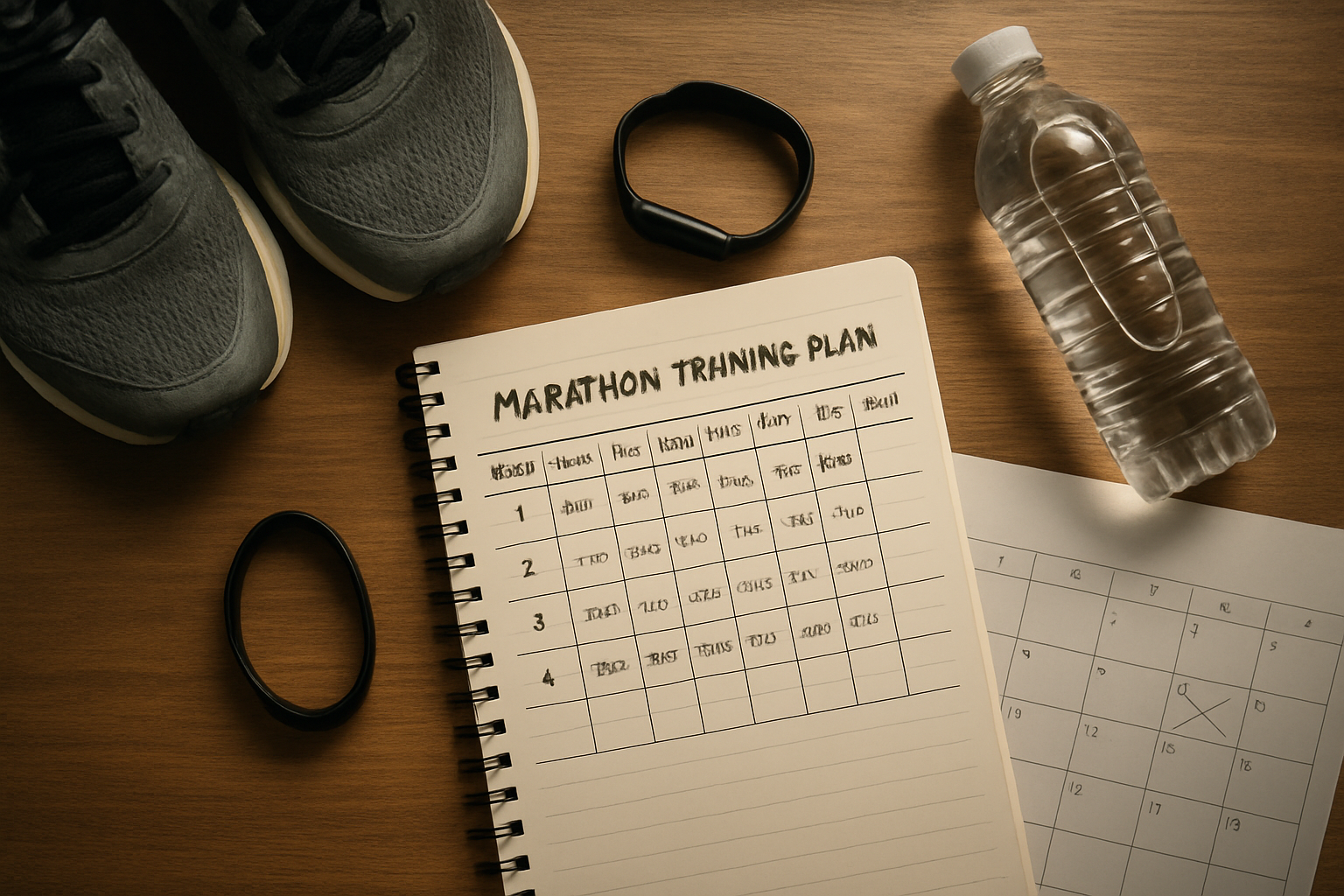
Know the Physical and Mental Demands of 26.2 Miles
Running a marathon is one of the most physically demanding things a human body can do. At 26.2 miles, you’re asking your muscles, joints, cardiovascular system, and even your digestive system to perform at a high level for anywhere between 4 and 7 hours — sometimes longer. That’s not a scare tactic. It’s just the reality you need to walk into with open eyes.
Here’s what your body actually goes through during a marathon:
- Muscle breakdown: Your legs, especially your quads, take a serious beating. The downhill sections of a race cause eccentric muscle contractions that leave most runners barely able to walk down stairs the next day.
- Glycogen depletion: Around miles 18–20, many runners hit what’s known as “the wall.” Your body runs low on stored carbohydrates, and suddenly every step feels like you’re running through wet cement.
- Joint stress: Your knees, hips, and ankles absorb the impact of thousands of footstrikes. Over a long run, small aches can turn into real problems if you’re not prepared.
- Sweat and sodium loss: You lose a significant amount of fluid and electrolytes, which can lead to cramping, dizziness, and in serious cases, hyponatremia (dangerously low sodium levels).
Beyond the physical, the mental challenge is just as real. There will be stretches — especially between miles 18 and 23 — where your brain will be loudly telling you to stop. You’ll question why you signed up. You might feel emotional, irritable, or completely blank. This is completely normal, and knowing it’s coming is half the battle.
Set Realistic Expectations as a First-Time Runner
One of the biggest mistakes first-time marathoners make is chasing a time goal they’re not ready for. Social media is full of inspirational finish-line photos, but what you don’t see is the months of disciplined training behind them.
For your first marathon, finishing is the goal. Full stop. Here’s a healthy way to frame your expectations:
Time Goals for Beginner Marathoners
| Runner Type | Expected Finish Time |
|---|---|
| Complete beginner (new to running) | 5:00 – 7:00+ hours |
| Casual runner (runs a few times a week) | 4:30 – 5:30 hours |
| Recreational runner (has done half marathons) | 4:00 – 5:00 hours |
These are rough benchmarks, not rigid rules. Your finish time will depend on your fitness base, how well you execute your training, the race course elevation, and conditions on race day.
A few things to honestly check in with yourself about before committing to a training cycle:
- Can you currently run 3–4 miles without stopping? If not, you may want to spend 6–8 weeks building a basic running base first.
- Do you have any existing injuries? Running through pain is a fast track to getting sidelined entirely.
- Are you ready to commit 4–5 days per week to training? Marathon training isn’t casual. It asks a lot of your time and energy.
Coming in with grounded expectations doesn’t mean you’re selling yourself short. It means you’re being smart — and smart runners are the ones who actually make it to the start line healthy.
Learn How Long a Typical Beginner Training Plan Takes
Most beginner marathon training plans run between 16 and 20 weeks, which is roughly 4 to 5 months. Some plans extend to 24 weeks if you’re starting from a very low fitness base. The extra time isn’t wasted — it’s actually a gift. More weeks means a more gradual mileage build, which dramatically reduces your injury risk.
Here’s a general breakdown of what a 18-week beginner training plan looks like in phases:
The 3 Key Phases of Marathon Training for Beginners
Phase 1 – Base Building (Weeks 1–6)
- Focus on building aerobic fitness and running consistency
- Weekly mileage typically starts around 15–20 miles
- Long runs start around 6–8 miles
- This is where your body adapts to the stress of running regularly
Phase 2 – Build Phase (Weeks 7–14)
- Mileage climbs steadily, adding roughly 10% per week
- Long runs build up to 18–20 miles
- You’ll start to feel like an actual runner during this phase
- Midweek runs get longer and more purposeful
Phase 3 – Taper (Weeks 15–18)
- Mileage drops significantly (by about 40–50%)
- Your body repairs and stores energy for race day
- Many beginners feel anxious or sluggish during taper — this is completely normal and called “taper madness”
A few important things to keep in mind when picking your plan length:
- Don’t compress your training. Jumping from couch to marathon in 12 weeks is a recipe for injury, burnout, or both.
- Build in flexibility. Life happens. A good training plan has enough breathing room that missing one or two runs doesn’t derail everything.
- Rest days are part of the plan. Recovery isn’t laziness — it’s when your body actually gets stronger.
If you’re brand new to long distance running for beginners, leaning toward a 20-week plan gives you the best shot at arriving at the start line healthy, confident, and ready to run.
Build a Strong Foundation Before You Start Training

Get a Medical Check-Up to Ensure You Are Race-Ready
Before you lace up your shoes and dive into marathon training for beginners, a visit to your doctor is one of the smartest moves you can make. This isn’t about being overly cautious — it’s about making sure your body is genuinely ready for the demands of long distance running.
A standard check-up should cover:
- Cardiovascular health — Your heart will be working hard during training, especially on long run days. An ECG or basic heart health screening can catch any hidden issues before they become serious problems on the road.
- Blood pressure and resting heart rate — These are key baseline numbers your doctor will want to review.
- Joint and musculoskeletal health — If you’ve had previous knee, hip, or ankle issues, let your doctor or a sports physio know. They can flag any vulnerabilities before training stress makes them worse.
- Blood work — Low iron or vitamin D levels are surprisingly common among new runners and can tank your energy before you even hit a long run. Getting your levels checked early gives you time to address any deficiencies.
If you’re over 40, haven’t exercised regularly in the past year, or have any existing health conditions like diabetes, asthma, or high blood pressure, this check-up moves from recommended to genuinely essential.
Think of it less as a barrier and more as a green light. Once you get the all-clear, you can train with confidence knowing your body is ready for the journey ahead.
Establish a Comfortable Running Base with Easy Weekly Mileage
One of the biggest mistakes beginners make is jumping straight into a structured marathon training plan without any running base to support it. Most beginner marathon training plans assume you can already run comfortably for 30 to 45 minutes without stopping before week one even begins.
What a “Running Base” Actually Means
A running base is simply a period of consistent, easy running that builds your aerobic fitness, strengthens your tendons and ligaments, and teaches your body how to handle regular mileage. Think of it as laying the groundwork before you start building the house.
If you’re brand new to running, aim to spend 8 to 12 weeks building your base before you start a formal marathon plan. Here’s a general framework to work toward:
| Week Range | Weekly Mileage Goal | Long Run Target |
|---|---|---|
| Weeks 1–3 | 10–15 km per week | 5–6 km |
| Weeks 4–6 | 15–20 km per week | 8–10 km |
| Weeks 7–9 | 20–25 km per week | 12–14 km |
| Weeks 10–12 | 25–30 km per week | 14–16 km |
Keep Your Easy Runs Actually Easy
This is where most new runners go wrong — they run too hard, too often. Easy runs should feel genuinely comfortable. You should be able to hold a full conversation without gasping. If you can’t, slow down.
A simple way to check your effort is the talk test: if you can speak a full sentence without needing a breath mid-way through, you’re at the right pace. Running at this conversational effort builds your aerobic engine efficiently and, just as importantly, keeps you healthy enough to run the next day.
Consistency over intensity is the real secret here. Running four times a week at a relaxed pace beats two brutal sessions that leave you sore and dreading the next run.
Choose the Right Shoes and Essential Gear to Prevent Injury
Your gear doesn’t need to be expensive, but it does need to be right for your body. The single most important investment you’ll make as a beginner is a good pair of running shoes — and “good” doesn’t mean the most expensive ones on the shelf.
How to Find the Right Running Shoe
Visit a dedicated running store, not a general sports retailer. Staff at running specialty shops are trained to watch how you move and recommend shoes based on your foot shape, gait, and the type of surfaces you’ll be running on.
When you go, keep these things in mind:
- Bring your old shoes if you have them — the wear patterns tell a useful story about how your foot strikes the ground.
- Try shoes on in the afternoon when your feet are slightly swollen from the day, as they’ll be closer to the size they reach mid-run.
- Leave a thumb’s width of space between your longest toe and the front of the shoe. Your feet swell during long runs and you’ll thank yourself later.
- Run in them in the store — a quick jog around the shop is completely normal and expected.
Common shoe categories to know about:
| Shoe Type | Best For |
|---|---|
| Neutral shoes | Runners with normal or high arches |
| Stability shoes | Runners who overpronate (foot rolls inward) |
| Trail shoes | Off-road and uneven terrain |
| Racing flats/carbon shoes | Experienced runners — not ideal for beginners |
Other Gear Worth Getting Right
Beyond shoes, a few other items make a real difference to your comfort and injury prevention:
- Moisture-wicking socks — Cotton socks cause blisters. Invest in proper running socks made from merino wool or synthetic blends.
- Sports bra (for women) — A high-impact, properly fitted sports bra is non-negotiable for comfort and long-term joint health.
- Chafe-prevention balm — Body Glide or similar products go on your inner thighs, underarms, and nipples (yes, really). You’ll learn this the hard way if you skip it on a long run.
- GPS watch or running app — Tracking your pace and distance helps you stick to easy effort on training runs. You don’t need a top-of-the-range watch; a basic GPS model or a free app like Strava on your phone works just fine.
- Reflective gear or a running light — If you’re training early mornings or evenings, being visible to traffic is a basic safety requirement.
Pick a Marathon That Gives You Enough Preparation Time
Choosing your first marathon isn’t just about picking a location or a scenic course — the timing matters enormously. Signing up for a race that’s 12 weeks away when you’re starting from scratch is a recipe for injury, burnout, or both.
How Much Time Do You Actually Need?
Most beginner marathon training plans run between 16 and 20 weeks. Add your base-building period on top of that, and you’re realistically looking at six to nine months of preparation from complete beginner to finish line.
Here’s a rough timeline to plan around:
| Starting Point | Base Building | Training Plan | Total Time Needed |
|---|---|---|---|
| Never run before | 12 weeks | 20 weeks | ~8 months |
| Running occasionally (1–2x/week) | 8 weeks | 18 weeks | ~6 months |
| Running 20–25 km/week consistently | Minimal | 16 weeks | ~4 months |
What to Look for in a First Marathon
When browsing races, pay attention to more than just the date. Here’s what actually matters for a first-timer:
- Course profile — Flat courses are kinder to beginners. A race with a lot of elevation gain will require specific hill training on top of everything else.
- Crowd support and race size — Larger races tend to have better crowd support along the course, which can be a genuine lifesaver mentally in the later miles.
- Cut-off times — Check the race’s official cut-off time. Most marathons require you to finish within 6 to 7 hours, but some smaller events have tighter restrictions. Make sure the time limit matches your expected finish time realistically.
- Weather conditions — A spring race in a mild climate is very different from a fall race in a hot, humid city. Heat and humidity significantly affect performance, especially for new runners.
- Race support and medical stations — Plenty of water stations, medical support, and pacers are all signs of a well-organized event.
Registering for a race early also gives you a psychological boost. Once you’ve paid your entry fee and it’s locked in your calendar, the training becomes real — and that accountability can be surprisingly motivating on the days you’d rather stay on the couch.
Follow a Beginner-Friendly Marathon Training Plan

Understand the Purpose of Long Runs in Your Weekly Schedule
The long run is the backbone of any beginner marathon training plan. It’s the one workout each week that actually prepares your body — and your mind — for the demands of covering 26.2 miles on race day. But it’s not just about logging miles for the sake of it.
Long runs do several very specific things for you:
- They build aerobic base. Your heart, lungs, and muscles learn to work together for extended periods of time. Your body becomes more efficient at burning fat as fuel, which is critical when you’re deep into a race and glycogen stores start running low.
- They toughen up your legs. The repetitive impact of a long run strengthens tendons, ligaments, and bones in ways that shorter runs simply can’t replicate.
- They build mental resilience. When you’ve already run 18 miles in training, the thought of “just” 10 more on race day feels a little less terrifying.
- They teach you to fuel and hydrate on the move. You’ll practice taking gels, drinking water, and managing your energy during long runs — skills that are absolutely essential come race day.
For beginners, the long run is typically done once per week, usually on a Saturday or Sunday when you have more time. The pace should feel easy — you should be able to hold a conversation without gasping for air. If you can’t, slow down. The goal isn’t speed; it’s time on your feet.
Most beginner marathon training plans peak with a long run somewhere between 18 and 22 miles, typically completed two to three weeks before race day. You don’t need to run the full 26.2 miles in training. Trust the process — the taper period before the race, combined with race-day adrenaline, will carry you to the finish line.
Balance Running Days With Rest and Cross-Training for Recovery
One of the biggest mistakes new runners make is thinking that more running equals better results. It doesn’t. Recovery is where the actual fitness gains happen. When you run, you’re essentially creating tiny micro-tears in your muscle fibers. Rest days are when your body repairs those tears and comes back stronger.
A typical beginner marathon training week looks something like this:
| Day | Activity |
|---|---|
| Monday | Rest or light stretching |
| Tuesday | Easy run (3–5 miles) |
| Wednesday | Cross-training (cycling, swimming, yoga) |
| Thursday | Easy to moderate run (4–6 miles) |
| Friday | Rest or light walk |
| Saturday | Long run |
| Sunday | Active recovery (gentle walk, foam rolling) |
What counts as cross-training?
Cross-training means any low-impact activity that keeps you moving without putting the same stress on your joints as running. Great options include:
- Cycling (indoor or outdoor) — excellent for cardiovascular fitness with zero impact
- Swimming — works your whole body and gives your legs a complete break
- Yoga or Pilates — improves flexibility and core strength, which directly supports better running form
- Elliptical training — mimics running movement without the pounding
- Strength training — especially exercises targeting glutes, hips, and core, which help prevent common running injuries
Don’t skip rest days because you feel guilty. That guilt is your ego talking, not your body. A well-rested runner always outperforms an overtrained one. If your legs feel unusually heavy, you’re sleeping poorly, or your resting heart rate is elevated, those are signs your body is asking for more recovery time. Listen to it.
Gradually Increase Weekly Mileage to Avoid Overtraining
There’s a golden rule in long-distance running for beginners: don’t increase your total weekly mileage by more than 10% from one week to the next. It’s known as the 10% rule, and while it sounds simple, it’s one of the most effective ways to stay healthy throughout your training.
Here’s why it matters. Your cardiovascular system adapts to increased training load faster than your bones, tendons, and connective tissue do. That means you might feel great and capable of running more, but the structural parts of your body are still playing catch-up. Pushing too far too fast is exactly how stress fractures, tendinitis, and overuse injuries happen.
What a gradual mileage progression might look like:
| Training Week | Approximate Weekly Mileage |
|---|---|
| Week 1 | 15–18 miles |
| Week 2 | 17–20 miles |
| Week 3 | 19–22 miles |
| Week 4 (cutback week) | 14–16 miles |
| Week 5 | 21–24 miles |
| Week 6 | 23–26 miles |
| Week 7 (cutback week) | 17–19 miles |
Notice those cutback weeks? They’re intentional. Every third or fourth week, most good beginner marathon training plans dial back the mileage by about 20–30%. This gives your body a chance to absorb all the training you’ve been doing before building again.
Signs you might be overtraining include:
- Persistent muscle soreness that doesn’t go away with rest
- Declining performance despite consistent training
- Mood changes, irritability, or low motivation
- Frequent illness (a suppressed immune system is a telltale sign)
- Disrupted sleep
If you notice any of these signs, take an extra rest day. Drop your mileage for a week. Your long-term progress matters far more than hitting a specific number on your training schedule.
Use Run-Walk Intervals to Build Endurance Safely
Run-walk intervals are one of the smartest strategies in the entire toolkit for marathon training for beginners. Pioneered by coach Jeff Galloway, this method involves alternating between running and walking at set intervals throughout your training runs — and even on race day itself.
A lot of first-time runners resist this idea because walking feels like “cheating.” It’s not. In fact, strategic walking breaks can help you:
- Run farther overall without hitting the wall as hard
- Reduce cumulative impact on joints and muscles
- Lower your heart rate during runs, keeping you in a more efficient aerobic zone
- Finish feeling stronger because you’ve conserved energy along the way
- Decrease injury risk significantly over the course of a full training cycle
Common run-walk interval ratios for beginners:
| Fitness Level | Run Interval | Walk Interval |
|---|---|---|
| Very beginner | 1 minute | 2 minutes |
| Beginner | 2 minutes | 1 minute |
| Intermediate beginner | 4 minutes | 1 minute |
| More experienced | 8–10 minutes | 1 minute |
You can adjust these ratios as your fitness improves. The goal is to find an interval that keeps you moving at a sustainable effort — not gasping for air during the run phase and not needing to fully catch your breath during the walk phase.
On long runs especially, starting your run-walk intervals from the very beginning (rather than waiting until you’re exhausted) makes a huge difference in how you feel at the end. Studies have shown that runners who use run-walk strategies often finish marathons with similar or even faster times than those who try to run the whole way but crash in the final miles.
Give yourself permission to walk. It’s a legitimate, proven training technique — not a sign of weakness.
Track Your Progress to Stay Motivated and Accountable
Training for your first marathon takes 16 to 20 weeks. That’s a long time to stay focused and consistent. Tracking your progress is one of the most effective ways to stay on course, celebrate small wins, and catch problems early before they derail your whole plan.
Ways to track your marathon training:
- GPS running apps like Strava, Garmin Connect, or Nike Run Club automatically log your distance, pace, elevation, and heart rate. They also let you look back at your training history, which is deeply motivating when you’re hitting a rough patch.
- A simple training journal works just as well if you prefer pen and paper. Log your mileage, how your legs felt, energy levels, sleep quality, and anything unusual. This kind of data helps you spot patterns over time.
- A running watch or fitness tracker gives you real-time data on pace and heart rate, so you can make sure you’re running at the right effort level.
- Spreadsheets or training plan apps like Final Surge or TrainingPeaks let you plan ahead and check off completed workouts, which gives you a visual sense of how much you’ve accomplished.
What to track beyond just miles:
| Metric | Why It Matters |
|---|---|
| Weekly mileage | Ensures you’re building consistently and not overdoing it |
| Long run distance | Shows your progression toward race-ready endurance |
| Average pace on easy runs | Helps confirm you’re running at the right effort |
| Resting heart rate | An early warning sign of overtraining or illness |
| Sleep hours | Sleep quality directly affects recovery and performance |
| How you felt | Body awareness is one of the most valuable tools a runner has |
Beyond the data, sharing your journey with others adds a powerful layer of accountability. Join a local running club, find a training partner, or post updates in an online running community. When other people know you’re training, it’s a lot harder to skip that Thursday run because the couch looks comfortable.
Celebrate your milestones too — your first 10-mile run, your first 15-miler, completing a full week of training without missing a day. These moments matter. They’re proof that you’re doing the work, and they’ll carry you through the tough days when motivation is low and the miles feel hard.
Master Your Nutrition and Hydration Strategy

Fuel Your Body with the Right Foods Before and After Runs
What you eat directly affects how well you run — and how quickly you bounce back afterward. Getting your marathon nutrition right isn’t about eating perfectly 100% of the time. It’s about building consistent habits that give your body the energy it needs to keep showing up for training.
Before Your Runs
Timing and food choice matter here. A general rule of thumb:
- 2–3 hours before a run: Eat a balanced meal with carbohydrates, some protein, and low fat. Think oatmeal with a banana, whole-grain toast with eggs, or rice with grilled chicken.
- 30–60 minutes before a run: Keep it light and carb-focused. A banana, a small handful of pretzels, or a slice of white toast with honey works well.
- Avoid high-fiber, high-fat, or heavily spiced foods close to run time — these can cause GI distress mid-run, which is every runner’s nightmare.
Here’s a quick reference for pre-run fuel:
| Timing Before Run | Best Food Choices | Foods to Avoid |
|---|---|---|
| 2–3 hours | Oatmeal, eggs, rice, pasta | Fried foods, heavy sauces |
| 60 minutes | Banana, toast with honey | Beans, cruciferous vegetables |
| 30 minutes | Sports gel, small handful of dates | Anything high in fat or fiber |
After Your Runs
The 30–45 minute window right after a run is often called the recovery window — your muscles are primed to absorb nutrients and start repairing. Don’t skip this.
Aim for a combination of:
- Carbohydrates to replenish glycogen stores
- Protein to repair muscle tissue
Great post-run meals and snacks include:
- Chocolate milk (seriously underrated recovery drink)
- Greek yogurt with fruit and granola
- A smoothie with banana, protein powder, and almond milk
- Rice cakes with peanut butter and a hard-boiled egg
For longer runs (over 60–90 minutes), your post-run meal should be more substantial — don’t be afraid to eat a proper dinner. Your body earned it.
General Daily Eating Habits for Marathon Training
Beyond pre and post-run nutrition, your overall diet needs to support the increased workload marathon training puts on your body. Here’s what to focus on:
- Carbohydrates are your primary fuel source. Don’t be scared of them. Pasta, rice, potatoes, bread, oats — these are your best friends during training.
- Get enough protein. Aim for roughly 1.2–1.6 grams per kilogram of body weight per day to support muscle repair.
- Include healthy fats. Avocados, nuts, olive oil, and fatty fish support joint health and reduce inflammation.
- Don’t undereat. Many beginner runners underestimate how many extra calories marathon training burns. If you’re feeling sluggish, constantly hungry, or struggling to recover, you likely need to eat more.
Practice Race-Day Nutrition During Your Long Training Runs
One of the biggest mistakes first-time marathon runners make is figuring out their race-day nutrition on race day itself. By then, it’s way too late. Your long training runs — anything over 90 minutes — are the perfect dress rehearsal.
When to Start Taking in Fuel During a Run
Your body stores roughly 90 minutes worth of glycogen (stored carbohydrate energy). After that, you hit a wall — literally. That’s why taking in fuel during longer runs is non-negotiable for a marathon.
A solid starting strategy:
- Begin fueling around the 45–60 minute mark, even before you feel hungry or tired.
- Take in 30–60 grams of carbohydrates per hour during efforts lasting over 75 minutes.
- Fuel every 30–45 minutes to keep energy levels stable rather than playing catch-up.
Types of Mid-Run Fuel to Try
There’s no single “best” option — it comes down to what your stomach tolerates and what you actually enjoy eating while running. Try a few of these during training:
| Fuel Type | Pros | Cons |
|---|---|---|
| Energy gels | Convenient, easy to carry | Can cause GI issues for some runners |
| Chews/gummies | Easy to pace out, taste good | Slower to digest than gels |
| Dates or bananas | Natural, real food | Bulkier to carry |
| Sports drinks | Fuel + hydration in one | Less concentrated energy per sip |
| Rice balls | Popular among ultra runners, easy on the stomach | Requires preparation |
Start with one option and give yourself a few long runs to test it. Pay attention to how your stomach feels, your energy levels toward the end of the run, and whether you hit any mental or physical lows.
Simulate Race Conditions During Training
Practice not just what you’ll eat, but how you’ll eat it:
- Learn to open a gel packet or chew while running without slowing down significantly.
- Practice taking water at aid stations (try pinching the cup slightly — it helps prevent spillage while drinking on the move).
- If your target race uses a specific brand of sports drink or gel at its aid stations, train with that exact product. Switching brands or types on race day can lead to unexpected stomach issues.
The more you rehearse your marathon nutrition strategy during long training runs, the more automatic it becomes on race day — and the less mental energy you spend thinking about it when it counts most.
Stay Consistently Hydrated to Maintain Peak Performance
Hydration isn’t just about drinking water during a run. It’s something you manage all day, every day. Even mild dehydration — just 2% body weight loss from fluid — can noticeably hurt your performance, focus, and recovery. Getting your marathon hydration strategy right is one of the simplest and most impactful things you can do as a beginner.
Daily Hydration Habits
You shouldn’t wait until you’re thirsty to drink water. By the time you feel thirsty, you’re already mildly dehydrated. Build these habits into your daily routine:
- Drink a large glass of water first thing in the morning, before coffee or food.
- Carry a water bottle with you throughout the day — out of sight, out of mind really does apply here.
- Check the color of your urine. Pale yellow = well hydrated. Dark yellow = drink more. Clear = you’re overdoing it slightly.
- Aim for roughly 2–3 liters of water per day on normal days, and increase that on heavy training days or in hot weather.
Hydrating Before, During, and After Runs
| Phase | Hydration Recommendation |
|---|---|
| 2 hours before a run | Drink 500–600ml of water |
| 15–20 minutes before | Sip another 150–250ml |
| During a run (under 60 min) | Water is typically enough |
| During a run (over 60 min) | Alternate water with an electrolyte drink |
| After a run | Drink 500–750ml per hour until urine returns to pale yellow |
Electrolytes: Why Water Alone Isn’t Always Enough
When you run long distances, you lose more than just water through sweat — you also lose sodium, potassium, magnesium, and other electrolytes. Replacing these is key to avoiding muscle cramps, fatigue, and in serious cases, a condition called hyponatremia (dangerously low sodium levels from drinking too much plain water).
During runs over 60–75 minutes, bring in electrolytes through:
- Sports drinks (like Gatorade or Tailwind)
- Electrolyte tablets or powders dissolved in water
- Salt tabs, particularly in hot or humid conditions
- Real food with sodium content, like pretzels or salted dates
Don’t overlook sodium in your daily diet during heavy training weeks. Lightly salting your meals is perfectly appropriate — your training demands it.
Hot Weather Hydration Tips
Training in the heat adds another layer of complexity. Here’s what helps:
- Pre-cool before hot runs — drink cold water, use ice packs, or run in the early morning to reduce heat stress.
- Increase your fluid intake on hot days, even if you’re not running hard.
- Know the signs of heat exhaustion: heavy sweating, dizziness, nausea, and muscle cramps. Stop running if these appear.
- Slow your pace in heat — your heart rate runs higher, and trying to hit normal pace paces while dehydrated is a recipe for a bad time.
Building a smart, sustainable marathon hydration strategy takes a bit of trial and error, but the payoff is huge. Runners who nail their hydration consistently feel better during training, recover faster, and show up to race day in a far stronger position than those who wing it.
Prevent and Manage Common Running Injuries

Recognize Early Warning Signs of Overuse Injuries
Running injuries rarely appear out of nowhere. They almost always send you warning signals days or even weeks before they become serious problems. The trick is learning to tell the difference between normal training soreness and your body waving a red flag.
Here are the most common overuse injuries beginners run into — and the early signs to watch for:
Common Running Injuries and Their Warning Signs
| Injury | Early Warning Signs | Body Location |
|---|---|---|
| Runner’s Knee | Dull ache around or behind kneecap during or after runs | Knee |
| IT Band Syndrome | Tightness or sharp pain on the outer knee, especially on downhills | Outer knee/hip |
| Shin Splints | Tenderness along the inner shinbone, worse at the start of a run | Lower leg |
| Plantar Fasciitis | Heel pain first thing in the morning or after sitting for long periods | Heel/arch |
| Stress Fractures | Deep, localized bone pain that gets worse as the run continues | Foot, shin, or femur |
| Achilles Tendinopathy | Stiffness or soreness at the back of the ankle, especially in the morning | Achilles tendon |
The phrase “no pain, no gain” is one of the worst pieces of advice in the running world. Pain is information. When your body starts talking, you need to listen.
What Normal Soreness Feels Like
Normal muscle soreness — called delayed onset muscle soreness (DOMS) — typically shows up 24 to 48 hours after a hard run and feels like a general achiness across a muscle group. It eases up as you warm up and move around, and it fades within a day or two.
What Injury Pain Feels Like
Injury pain is different. Watch out for:
- Pain that sharpens during a run rather than warming up and fading
- Localized pain that you can point to with one finger
- Pain that changes your running form — if you’re limping or compensating, stop immediately
- Swelling, redness, or warmth around a joint or tendon
- Pain that lingers for more than 72 hours after a run
- Pain that wakes you up at night
If you’re experiencing any of these during your beginner marathon training plan, don’t brush it off and hope it disappears. Catching overuse injuries early — when they’re a minor annoyance — is infinitely easier than dealing with them once they’ve become full-blown problems that sideline you for weeks.
Incorporate Stretching and Strength Training to Stay Injury-Free
Running injury prevention doesn’t happen on the road — it happens in the work you do off it. Most beginner runners skip strength training entirely because they think more miles equal better marathon prep. But weak hips, tight calves, and underdeveloped glutes are behind the majority of running injuries.
Dynamic Warm-Up Before Every Run
Static stretching (holding a stretch cold) before a run is outdated advice. What you want before you run is a dynamic warm-up — movements that increase blood flow and activate the muscles you’re about to use.
5-Minute Pre-Run Dynamic Warm-Up:
- Leg swings (front to back and side to side) — 10 reps each leg
- Hip circles — 10 reps each direction
- Walking lunges — 10 reps each leg
- High knees — 20 seconds
- Butt kicks — 20 seconds
- Ankle circles — 10 reps each direction
This routine takes less than five minutes and significantly reduces your injury risk by waking up your muscles and joints before you put them under load.
Static Stretching After Your Run
Post-run is when static stretching actually earns its keep. Your muscles are warm, pliable, and respond well to being lengthened. Hold each stretch for at least 30 to 60 seconds.
Key Post-Run Stretches:
- Hip flexor stretch — targets a chronically tight area for all runners
- Standing quad stretch
- Seated hamstring stretch
- Calf stretch against a wall — both straight leg and bent knee to hit both the gastrocnemius and soleus
- Figure-four stretch — opens the piriformis and outer hip, a big deal for IT band health
- Doorway chest opener — counteracts the forward lean runners develop over time
Strength Training for Runners
You don’t need to become a gym rat, but two strength sessions per week can be the difference between finishing your first marathon and getting sidelined with an injury in month two. Focus on the hips, glutes, and core — the foundation of healthy, efficient running mechanics.
Beginner-Friendly Strength Exercises for Runners:
| Exercise | Target Area | Reps/Sets |
|---|---|---|
| Single-leg glute bridge | Glutes, hip stabilizers | 3 x 12 each side |
| Clamshells with resistance band | Hip abductors | 3 x 15 each side |
| Side-lying leg raises | IT band, hip abductors | 3 x 15 each side |
| Step-ups | Quads, glutes | 3 x 10 each leg |
| Dead bug | Core stability | 3 x 8 each side |
| Single-leg calf raise | Calf, Achilles | 3 x 15 each leg |
| Plank variations | Core | 3 x 30–45 seconds |
Foam rolling is another tool worth keeping in your routine. Spending 5 to 10 minutes rolling out your calves, IT band, quads, and hamstrings after runs helps break up muscle tightness and keeps your tissue healthy over the long haul.
Know When to Rest and When to Push Through Discomfort
This is honestly the hardest part of long distance running for beginners. You’re amped up, your training plan says to run, and you don’t want to fall behind. But making the wrong call here can turn a minor tweak into a three-month setback.
The 2-Day Rule
A simple guideline that works well: if something hurts during a run and it’s still hurting two days later, don’t run on it. Take it to a sports medicine doctor or physical therapist. Two days of rest is nothing compared to the weeks you’d lose pushing through an actual injury.
The Talk Test for Discomfort vs. Pain
During a run, ask yourself these questions:
- Is this discomfort that’s fading as I warm up? That’s often normal. Keep going at an easy pace and monitor it.
- Is this pain that’s getting worse as I run? Stop. Walk home. Ice it. Rest.
- Am I changing how I run to avoid the pain? If yes, stop immediately. Running through compensation patterns is how minor issues cascade into major ones.
Smart Rest Strategies
Rest doesn’t always mean sitting on the couch. Active recovery keeps your cardiovascular fitness up while giving injured tissue time to heal.
Active recovery options:
- Swimming or pool running
- Cycling (low impact on a stationary bike works well)
- Yoga or gentle mobility work
- Walking at an easy pace if the injury permits
When to See a Professional
Don’t be the person who “waits and sees” for six weeks. Get evaluated early if you notice:
- Pain that doesn’t respond to 48 to 72 hours of rest
- Swelling that isn’t going down
- Pain that’s keeping you up at night
- Any kind of sharp, shooting, or electric-type pain
- A sudden onset of pain during a run, even if it fades afterward
A sports medicine physician or running-specialist physical therapist can diagnose the problem quickly, give you a recovery plan, and often keep you running in some capacity while you heal. Getting there early almost always means a faster return to full training.
Running injury prevention is a skill you build over time — but the foundation is simple: pay attention, do the maintenance work, and respect what your body tells you.
Prepare Your Mind for Race Day Success

Use Mental Strategies to Overcome Training Fatigue
Training fatigue is real, and it will show up — usually around week 10 when your legs feel like concrete and your alarm goes off at 5:30 AM for another long run. The good news? Your mind gives up long before your body actually does. Learning how to manage the mental side of marathon training for beginners is just as important as logging your miles.
Here are some proven mental strategies that work:
- Break the run into chunks. Instead of thinking “I have 18 miles to go,” focus on the next 3 miles, or even just the next landmark. Smaller goals feel manageable when the big picture feels overwhelming.
- Use mantras that actually mean something to you. Generic phrases like “push through” can feel hollow. Pick something personal — “I’ve done hard things before” or “one mile at a time” hits differently when you’re suffering at mile 20.
- Reframe discomfort as progress. When your legs are burning and you’re tired, remind yourself that this exact feeling is what’s building your marathon fitness. Discomfort in training means adaptation is happening.
- Schedule mental rest days too. You’re allowed to have days where you don’t think about running. Obsessing over every split and workout can burn you out mentally before race day even arrives.
- Find a training buddy or community. Running with someone else, even occasionally, takes your mind off the fatigue and makes the miles pass faster. Online running groups work just as well if in-person isn’t possible.
Dealing With the Dreaded “Bad Run”
Bad runs are not a sign you’re failing — they’re a normal part of the process. Every experienced marathoner has had days where nothing clicks. The trick is to not let a rough Tuesday run write the narrative for your entire training block. Journal about it, shake it off, and show up again.
Visualize Crossing the Finish Line to Build Confidence
Visualization isn’t some mystical concept reserved for elite athletes. It’s a practical mental tool used by runners at every level, and the research behind it is solid. When you vividly imagine yourself running well, your brain actually rehearses the neural pathways needed to perform those actions. Think of it as a mental long run.
Here’s how to build a visualization practice that genuinely helps:
Step-by-Step Visualization Routine
- Find a quiet space — 5 to 10 minutes before bed or right after a training run works well.
- Close your eyes and slow your breathing until you feel calm and focused.
- Picture the race course — the starting line, the crowd, the sounds, the smells, your running shoes on the pavement.
- Walk yourself through key race moments — the first mile energy, hitting your stride at mile 10, pushing through the wall around mile 20, and then seeing the finish line.
- Feel the emotion — hear the crowd, feel the relief, see the clock, cross that line. The emotional component is what makes visualization stick.
- Include hard moments too. Visualize hitting a rough patch at mile 22 and seeing yourself work through it. This builds mental resilience, not just optimism.
Why This Works for First Marathon Tips
When race day actually arrives, your brain won’t be experiencing these moments for the first time. You’ve already been there — at least mentally. That familiarity reduces anxiety and helps you stay calm when things get tough. Runners who practice visualization regularly report feeling more in control during races and recovering more quickly from setbacks during the run itself.
Try to visualize at least 3 to 4 times per week in the final month of your training cycle. The closer you get to race day, the more detailed and specific your mental imagery should become.
Develop a Positive Race-Day Mindset to Handle Unexpected Challenges
Here’s what nobody tells you about race day: something will go wrong. Maybe your GPS watch dies. Maybe it rains. Maybe you need a bathroom at mile 8. Maybe you go out too fast and pay for it at mile 16. The runners who have the best experiences are not the ones who avoided problems — they’re the ones who expected them and knew how to roll with them.
Building a Flexible Race-Day Mindset
Adopt a “plan A, plan B” approach. Go into race day with a goal time but also a backup plan. If the weather is brutal or you’re not feeling great, know in advance that finishing strong is still a win. Flexibility isn’t weakness — it’s smart racing.
Practice gratitude during hard moments. When you’re hurting in the back half of the race, shift your focus to what’s going well. Your lungs are working, your legs are still moving, and you’re actually running a marathon. That perspective shift can carry you further than you’d expect.
Stay present, not predictive. One of the biggest mental traps in marathon racing is catastrophizing. You feel tired at mile 15 and your brain starts calculating how awful mile 22 is going to be. Stop. Bring your attention back to right now — your form, your breathing, the next aid station.
Race-Day Mindset Toolkit
| Challenge | Mental Strategy |
|---|---|
| Going out too fast | Slow down immediately, adjust your goal, move on |
| Hitting the wall | Shorten your focus to 100-meter segments, use your mantra |
| Bad weather conditions | Reframe it as an adventure, everyone deals with it equally |
| Missing a time goal | Celebrate finishing — most people never start |
| Physical discomfort | Distinguish between normal fatigue and actual injury signals |
| Crowds slowing you down | Use the energy, stay patient, your time will come |
Talk to yourself like a coach, not a critic. If your inner voice turns harsh mid-race (“You’re so slow, you’re going to fail”), interrupt it immediately. Ask yourself what you’d say to a friend in the same situation. That shift in self-talk is one of the most powerful marathon mental preparation tools available to you.
Remember your “why.” Before race day, write down the reason you signed up for this marathon. Tuck it in your pocket or memorize it. When things get hard — and they will — coming back to that reason can reignite motivation that pure physical willpower can’t sustain on its own.
The mental game in marathon racing is not a bonus skill. It’s a core part of how to train for a marathon properly. Train your mind with the same consistency you train your legs, and race day will feel a whole lot more manageable.
Nail Your Race Day Execution

Plan Your Travel, Gear, and Meals the Night Before
Race morning has a way of feeling chaotic no matter how prepared you think you are. The best way to protect yourself from that chaos is to handle every decision the night before, so you wake up with nothing left to figure out.
Lay out everything you need the night before:
- Race bib and safety pins
- Running shoes (the ones you’ve trained in — never debut new shoes on race day)
- Socks, shorts, shirt, and any weather-appropriate layers
- GPS watch or running tracker, fully charged
- Sunglasses and hat if needed
- Body Glide or anti-chafe balm
- Pre-loaded fuel belt, hydration vest, or race-day gels
Travel and logistics checklist:
- Know exactly where you’re parking or catching public transport
- Set two alarms — one as your main wake-up, one as a backup
- Plan to arrive at the start area at least 60–90 minutes before the gun goes off
- Locate bag drop, toilets, and your starting corral on the course map ahead of time
Your night-before meal should be familiar, carb-heavy, and easy on your stomach. Think pasta, rice, or potatoes with a moderate protein source. Avoid anything high in fat, fiber, or anything you haven’t eaten before a long training run. This is not the night to try a new restaurant or experiment with spicy food.
Aim to eat dinner 10–12 hours before your race start time so your body has had a full chance to digest. Drink plenty of water throughout the evening, but don’t force excessive amounts — you just want to feel well-hydrated, not bloated.
Get to bed as early as feels natural. Pre-race nerves will almost certainly mess with your sleep, and that’s completely normal. A slightly restless night won’t tank your performance if you’ve been sleeping well during your taper week.
Start at a Comfortable Pace to Conserve Energy for the Final Miles
One of the most common first marathon tips you’ll hear from experienced runners is this: start slower than you think you need to. Most beginners go out too hard in the first few miles, riding the adrenaline of race day, and then hit a wall somewhere between miles 18 and 22 that turns the last stretch into a grind.
Why pacing matters so much in a marathon:
The marathon is unique because the real race doesn’t begin until you’ve already covered more than two-thirds of the distance. The first 20 miles are your setup. The last 6.2 miles are where everything plays out.
Going out just 15–30 seconds per mile too fast in the early miles can drain your glycogen stores faster than planned, making the final miles significantly harder than they need to be.
How to nail your pacing strategy:
| Strategy | What It Means | Why It Works |
|---|---|---|
| Even splits | Run each mile at the same pace | Consistent energy output throughout |
| Negative splits | Run the second half slightly faster | Conserves energy early, strong finish |
| Run/walk intervals | Alternate running and walking | Reduces fatigue, great for first timers |
For most beginners following a beginner marathon training plan, a run/walk strategy or even splits tend to work best. Many first-time finishers swear by the run/walk method popularized by coach Jeff Galloway — running for a set interval, then walking for 60–90 seconds, repeated throughout the race.
Practical pacing tips for race day:
- Seed yourself in the correct corral based on your expected finish time
- Ignore the runners who sprint past you in the first mile — many of them will be walking later
- Check your pace at mile 1 and consciously slow down if you’re ahead of your target
- If you’re running with a GPS watch, glance at your pace every mile, not constantly
- Use perceived effort as your guide — the first 10 miles should feel almost too easy
If you’ve done your long runs in training and trusted the process, your body already knows how to cover this distance. The job on race day is to not outsmart yourself.
Use Crowd Support and Mental Cues to Push Through Tough Moments
Every marathon has a rough patch. For most people it shows up somewhere between miles 18 and 22, where your legs feel heavy, your motivation dips, and finishing feels far away. This is completely normal and expected — and it’s exactly where your marathon mental preparation pays off.
Lean into the crowd:
One of the genuinely magical things about running a big marathon is the crowd support. Spectators line the streets for hours just to cheer on strangers, and that energy is real and powerful. When you’re struggling, make eye contact with people cheering. Read the signs. Listen for someone calling your name if it’s written on your bib. A single “You’ve got this!” from a stranger can carry you further than you’d expect.
Mental strategies that actually work mid-race:
- Break the race into chunks. Stop thinking about the full 26.2. Focus on making it to the next mile marker, the next aid station, or the next turn. Tiny goals feel achievable when big ones feel overwhelming.
- Use a mantra. Pick a short, personal phrase before race day and come back to it when things get hard. “Strong and steady,” “I’ve done the work,” or even just “keep moving” can anchor you when your brain starts negotiating.
- Run for something bigger than yourself. Whether you’re raising money for a cause, honoring someone, or proving something to yourself — reconnecting with your why mid-race is one of the most powerful tools available to you.
- Remember your long training runs. You’ve already run 18, 20, maybe 22 miles in training. Your body has done this before. The fitness is there — it’s just a matter of reminding your brain of that.
- Focus on form. When everything hurts and your mind is spiraling, redirect your attention to your mechanics. Relax your shoulders. Unclench your fists. Take smooth, controlled breaths. Fixing your form gives you something to do instead of something to endure.
What to do if you hit the wall:
- Walk through an aid station and take in extra fuel or electrolytes
- Shake out your legs and reset your posture
- Find another runner near you and match their pace — running with someone can pull you through
- Remind yourself that the discomfort is temporary, but the finish line is permanent
The tough miles are part of the experience. Every runner going through the race that day is facing their own version of the same battle. Knowing that doesn’t make it easy, but it does make it shared.
Celebrate Your Achievement and Recover Properly After the Race
Crossing that finish line for the first time is one of the most genuinely emotional moments in sport. After months of training, early mornings, sore legs, and long runs, you’ve done something that a small percentage of people ever attempt. Take a moment to actually feel it before the post-race logistics kick in.
Immediately after crossing the finish line:
- Keep moving — don’t stop dead in your tracks, as your blood needs to keep circulating
- Accept the mylar blanket and wrap up to prevent your body temperature from dropping too quickly
- Make your way to the food and drink tent and start refueling — banana, bagel, chocolate milk, sports drink, whatever they’re offering
- Find your family or friends and let the emotion happen
Recovery in the first 24–48 hours:
| Time Frame | What to Focus On |
|---|---|
| First 30 minutes | Rehydrate and eat carbs + protein to kickstart muscle repair |
| Hours 2–6 | Keep eating, get off your feet, elevate your legs |
| That evening | Light stretching, foam rolling only if it feels good, prioritize sleep |
| Day 2 | Gentle walking is fine, avoid running |
| Days 3–7 | Light movement, listen to your body, don’t rush back |
What your body goes through after a marathon:
Running 26.2 miles causes significant muscle damage, inflammation, and glycogen depletion. Your immune system takes a hit, which is why runners often catch colds in the week following a marathon. Be extra protective of your sleep, nutrition, and stress levels during this window.
The general rule of thumb:
Take at least one easy day for every mile raced before returning to any structured training. That means roughly four weeks of light activity before jumping back into a training plan.
Celebrate the right way:
- Don’t underestimate the emotional low that can follow a big goal race — it’s common and it’s real
- Share the experience with people who supported your journey
- Write down how the race felt while it’s still fresh — your future self will thank you
- Start dreaming about your next goal, whether that’s a faster marathon or a completely different challenge
Your first marathon is a milestone that nobody can take away from you. Recovery isn’t the boring part after the achievement — it’s what protects your body so you can keep running for years to come. Treat it with the same respect you gave your training.

Training for your first marathon is no small thing — it takes time, patience, and a whole lot of showing up on days when you’d rather stay on the couch. But as this guide breaks down, it’s absolutely doable when you take it one step at a time. From laying a solid fitness foundation and sticking to a beginner-friendly training plan, to eating right, staying injury-free, and keeping your head in the game — every piece of the puzzle matters.
The finish line is closer than you think. Pick a race, grab a plan, lace up your shoes, and start moving. Your first marathon isn’t just a race — it’s proof of what you’re capable of when you commit to something bigger than a single bad training day. You’ve got this.